

Every November, Lahore wakes up to the same grey sky. Cars drive with headlights on at noon and almost every house has someone coughing.
Most people call it دھند, the winter fog. However, what fills the air in Punjab each winter is something far more harmful.
The smog meaning in Urdu is سموگ, and it is described as دھوئیں اور دھند بھری فضا, air filled with smoke and fog.
Smog is a thick layer of smoke, dust and toxic gases that mixes with fog and stays close to the ground.
This guide explains what smog is, why it forms, how it affects your body and what you can do to protect your family.
What Is Smog? The 2 Main Types
The English word joins “smoke” and “fog”. Britannica notes it was first used around 1905 to describe the polluted air over British towns. Today, scientists divide smog into two types.
Sulfurous smog forms when coal and other sulfur-rich fuels burn in cold, damp weather. It is also called London-type smog.
Photochemical smog forms when gases from vehicles and factories react with sunlight. This reaction produces ozone, a gas that irritates the lungs and gives the air a brownish colour. The winter smog in Punjab carries features of both types.
Difference Between Smog and Fog
Fog is only tiny water droplets. It looks white, has no smell and clears as the sun warms the air. Smog carries smoke and fine particles, so it looks grey or yellow and can hang over a city for days.
Smog and fog form in the same cold, still weather, which is why people mix them up. Winter smog in Punjab is fog that has absorbed smoke and pollution, so on a smoggy morning you are seeing both at once.
A simple way to tell them apart is to watch the sky after sunrise. Fog thins out by late morning. Smog stays as a grey or yellow haze through the afternoon and leaves a smoky smell, a scratchy throat or stinging eyes.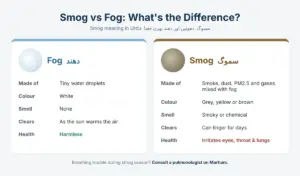
5 Main Causes of Smog in Lahore and Punjab
Smog forms when pollution builds up faster than the air can clear it. The main causes of smog in Punjab are:
- Vehicle exhaust
- Factory emissions
- Brick kiln smoke
- Crop residue burning
- Burning of waste and plastic
Winter weather makes all of this worse. Cool air settles near the ground under a layer of warmer air, which works like a lid and stops the smoke from rising.
Low wind adds to the problem. That is why smog in Lahore peaks in early winter and eases once rain or wind returns.
Smog Effects on Your Health
The most harmful part of smog is fine particulate matter, known as PM2.5. These particles are about 30 times thinner than a human hair. According to the US Environmental Protection Agency (EPA), they can travel deep into the lungs, and some can enter the bloodstream.
The World Health Organization (WHO) estimates that outdoor air pollution caused about 4.2 million early deaths worldwide in 2019. Most of these deaths were from heart disease, stroke and lung disease.
Short Term Side Effects of Smog
Most people feel these within hours of breathing smoggy air:
- Cough
- Sore throat
- Burning eyes
- Watery eyes
- Runny nose
- Shortness of breath
- Headache
- Tiredness
These side effects of smog usually ease once you are in cleaner air.
How Smog Affects Different Parts of the Body
Lungs. Ozone and fine particles inflame the airways and make them narrow, which causes coughing, wheezing and a tight chest.
Eyes. Smoke and gases irritate the surface of the eye, leaving it red, itchy and watery.
Nose and throat. The lining of the nose and throat dries out and swells, which leads to a sore throat, sneezing and a blocked nose.
Heart. WHO links long-term exposure to fine particles with heart disease and stroke, since some particles pass from the lungs into the blood.
Long Term Consequences of Smog
The consequences of smog build up over years of winter exposure. Repeated exposure is linked to asthma, COPD, bronchitis, heart attack and stroke. Chest infections like pneumonia also become more common in smog season.
6 Groups Most at Risk From Smog
Smog affects everyone. However, some people face a much higher risk:
- Children
- Older adults
- Pregnant women
- People with asthma
- People with heart disease
- Outdoor workers
WHO notes that children breathe faster than adults, so they take in more polluted air for their body size. Traffic wardens, rickshaw drivers and street vendors spend whole days in the worst air.
What Do AQI Numbers Mean? 7 Levels Explained
The Air Quality Index (AQI) tells you how polluted the air is on a scale from 0 to 500. The Punjab Environment Protection Agency uses seven levels.
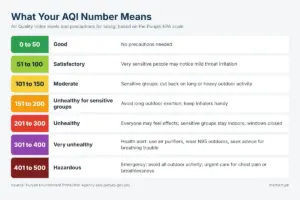
Up to 100, the air is safe for most people and your normal routine can continue. Between 101 and 200, the risk is mainly for sensitive groups. Children, older adults and people with asthma or heart disease should cut long or heavy outdoor activity and keep inhalers close.
Above 200, the air is unhealthy for everyone. Keep windows closed, run an air purifier if you have one and wear an N95 mask whenever you step out. Once the AQI crosses 400, stay indoors as much as you can and get urgent care for chest pain or breathlessness.
Check the AQI on a weather app each morning before you plan school runs, walks or errands.
7 Precautions for Smog Season
These steps lower how much smog you breathe in:
- Stay indoors when the AQI crosses 200, especially in the early morning and evening.
- Wear an N95 mask outdoors. The US EPA notes that surgical and cloth masks do not filter fine particles well.
- Keep doors and windows closed on high AQI days.
- Use an air purifier with a HEPA filter in the room where you sleep.
- Drink plenty of water and rinse your eyes with clean water.
- Keep inhalers and regular medicines with you if you have asthma or COPD.
- Move exercise indoors until the air clears.
Smog prevention also starts at home. Never burn leaves or rubbish, keep your vehicle tuned and share rides when you can.
When Do Smog Symptoms Need a Doctor?
Mild symptoms usually settle in a day or two of cleaner air. Get urgent medical help if you or a family member has:
- Severe breathlessness
- Chest pain
- Bluish lips
- Inhaler giving no relief
A cough that lasts more than two weeks, wheezing or a tight chest needs a check by a pulmonologist, a doctor who treats lung problems.
Key Facts About Smog
Smog forms when smoke from vehicles, factories, brick kilns and crop burning mixes with winter fog. Cold, still air then traps it near the ground for days.
Fine particles in smog reach deep into the lungs and can enter the blood. They cause cough, sore throat, burning eyes and breathing trouble. Children, older adults, pregnant women and people with asthma or heart disease face the highest risk.
To stay safe, check the AQI every morning and stay indoors when it crosses 200. Wear an N95 mask outside, keep windows closed and drink plenty of water. See a doctor if breathing gets hard, the chest hurts or a cough lasts more than two weeks.
Frequently Asked Questions
What is the smog meaning in Urdu?
The smog meaning in Urdu is سموگ, described as دھوئیں اور دھند بھری فضا. It is fog mixed with smoke, dust and harmful gases.
What is the difference between smog and fog?
Fog is made of water droplets and is harmless. Smog contains smoke and fine particles that irritate the eyes, throat and lungs.
Is an N95 mask necessary for smog?
Yes, on high AQI days. A well fitted N95 or KN95 mask filters fine smog particles that surgical and cloth masks let through.
Why is smog worse in winter?
In winter, cold air stays near the ground under a layer of warmer air and traps smoke and dust. Low wind and crop residue burning add to the build up.
سموگ میں کن علامات پر فوراً ڈاکٹر سے رجوع کرنا چاہیے؟
سانس لینے میں شدید دشواری، سینے میں درد یا ہونٹوں کا نیلا پڑ جانا خطرے کی علامات ہیں۔ ایسی صورت میں فوراً معالج سے رجوع کریں۔
Final Thoughts
Now you know the smog meaning in Urdu, what causes it and how it affects your health. Small daily habits help most, like checking the AQI each morning and keeping an N95 mask in your bag.
Smog is a seasonal problem in Punjab, and the same steps work every winter. Most symptoms fade once the air clears, so watch for the warning signs listed above and get medical help if they appear.