
When the temperature crosses 40°C and the kitchen feels like a furnace, the last thing any Pakistani family wants is a heavy, oily meal. Choosing the best summer foods is not just about comfort — it directly affects your hydration, energy levels, digestion, and ability to handle the heat. The right foods cool you from the inside, replace lost electrolytes, and keep your gut healthy through the most demanding months of the year. This guide lists the top summer foods and traditional Pakistani cooling drinks backed by nutrition science, so your family stays energised and well-nourished from April through September.…
Author: Sameed Chaudhary
Tossing, turning, sweating through your sheets, and waking up exhausted — poor sleep in summer heat is something nearly every Pakistani deals with between May and September. When nighttime temperatures refuse to drop below 30°C and load-shedding kills the fan or AC, getting quality sleep feels impossible. Yet sleep is not a luxury — it is a biological necessity. Chronic sleep deprivation weakens your immune system, impairs concentration, raises blood pressure, and increases the risk of accidents. This guide shares 12 science-backed strategies to help you sleep better in Pakistani summer heat, even without 24/7 electricity. The National Sleep Foundation…
Staying fit in a Pakistani summer feels like a contradiction — it is too hot to walk, too humid to run, and too drained to lift weights. But skipping exercise for five months is not the answer. Summer fitness in Pakistan requires a shift in strategy, not a shutdown. With the right timing, hydration plan, and workout choices, you can maintain your fitness — and even improve it — without risking heat exhaustion, dehydration, or injury. This guide gives you a practical, Pakistan-specific approach to safe summer exercise. The American College of Sports Medicine warns that exercising in heat above…
Summer holidays mean one thing for millions of Pakistani families: road trips to northern areas, beach outings to Hawkes Bay, or flights to visit relatives. But summer travel safety is often an afterthought — until someone collapses from heat exhaustion on the motorway, a child falls ill from contaminated roadside food, or a medical emergency strikes far from the nearest hospital. Whether you are driving to Naran, flying to Gilgit, or heading to a local resort, this complete checklist ensures your family stays healthy, safe, and prepared for anything. According to the National Highway and Motorway Police, road accidents increase…
For millions of Pakistanis, summer is not just about heat — it is about enduring hours of load-shedding without fans, air conditioning, or refrigeration. Surviving load-shedding in summer is a daily battle that affects sleep, nutrition, hydration, mental health, and even child safety. While the electricity crisis is beyond individual control, the health consequences are not. This practical, evidence-based guide helps Pakistani families protect their physical and mental wellbeing during power outages, using low-cost, high-impact strategies that anyone can adopt. A 2023 survey by the Pakistan Institute of Development Economics found that 78% of urban households reported negative health effects…
Every Pakistani summer brings a surge in three serious diseases: typhoid, dengue, and malaria. Recognising typhoid symptoms early — along with those of dengue and malaria — can mean the difference between a simple recovery and a life-threatening hospital stay. These three illnesses share one feature: a high fever that keeps returning. Yet each has different causes, different treatments, and different dangers. This guide explains what every Pakistani family should know between May and September, when cases peak. According to the National Institute of Health Pakistan, typhoid cases rise 3x in summer, while dengue and malaria outbreaks are tied directly…
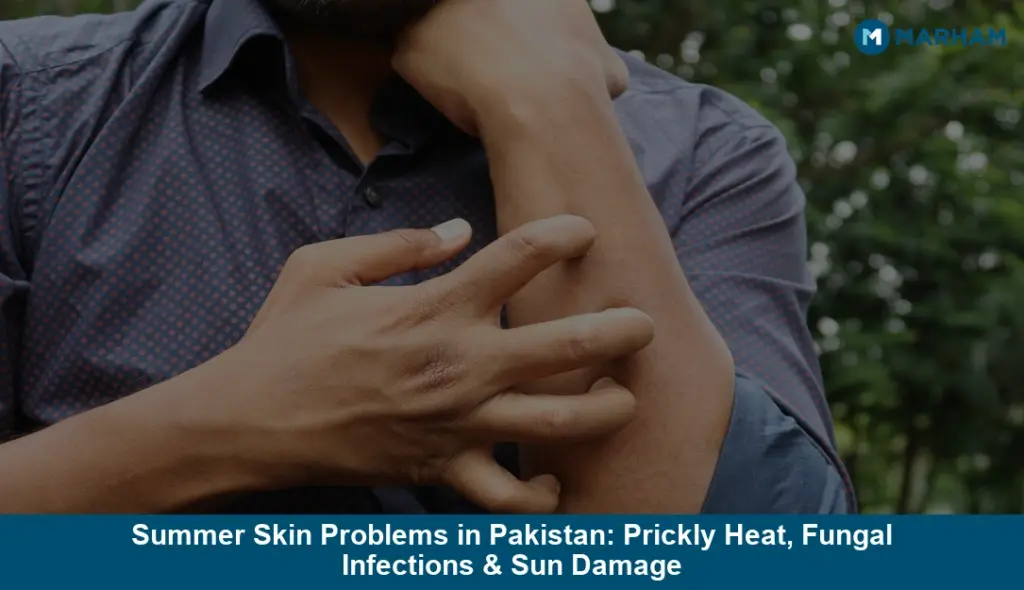
Prickly heat treatment is the most-searched dermatology question in Pakistan between April and August, and for good reason. Summer transforms Pakistani skin: sweat glands work overtime, pores clog, fungi thrive in humid folds, and the sun damages collagen in minutes. From infants with red rashes on the neck to adults battling fungal infections in the groin, summer skin problems affect nearly every household. This dermatologist-guided article explains the top three summer skin issues, evidence-based treatment, and when self-care isn’t enough. Dermatology clinics in Karachi and Lahore report a 40–60% rise in patient visits during summer [Source: Journal of Pakistan Medical…
A CBC test in Pakistan costs between PKR 640 and PKR 1,050. Through Marham Health+ you can book it from PKR 640 with home sample collection in Lahore. No fasting is required, and your report is usually ready within 2 to 6 hours. Quick Facts Details Full form Complete Blood Count Also called Blood CP, Blood C/E, Complete Picture, FBC Price in Pakistan PKR 640 to PKR 1,050 Marham Health+ price From PKR 640 Sample Blood from a vein in your arm Fasting Not required Time taken Under 5 minutes Report time 2 to 6 hours Home sample Available in…
Paragis grass (Eleusine indica), also known as goose grass or wire grass, is a wild tropical plant that has been used in traditional medicine across Asia and Africa for centuries. A comprehensive literature review published in the Journal of Pharmacognosy and Phytochemistry (2021) confirmed that Eleusine indica contains antioxidant, anti-inflammatory, antibacterial, antidiabetic, hepatoprotective, and diuretic properties, making it one of the most pharmacologically diverse wild grasses studied in herbal medicine. Despite being considered a common weed, paragis grass has gained significant attention on social media and in herbal wellness communities for its wide range of potential health benefits. It contains…
Maintaining weight loss after Ramadan means transitioning gradually from fasting routines to regular eating patterns over 7 to 10 days, while preserving the metabolic benefits your body gained during 30 days of intermittent fasting. A meta analysis published in the British Journal of Nutrition found that Ramadan fasting results in an average weight loss of 1.24 kg, but most of this weight is regained within 2 to 3 weeks when previous eating habits resume immediately. The key to keeping the weight off is acting in the first week after Eid, which is right now. According to nutritionists at Marham.pk, the…