

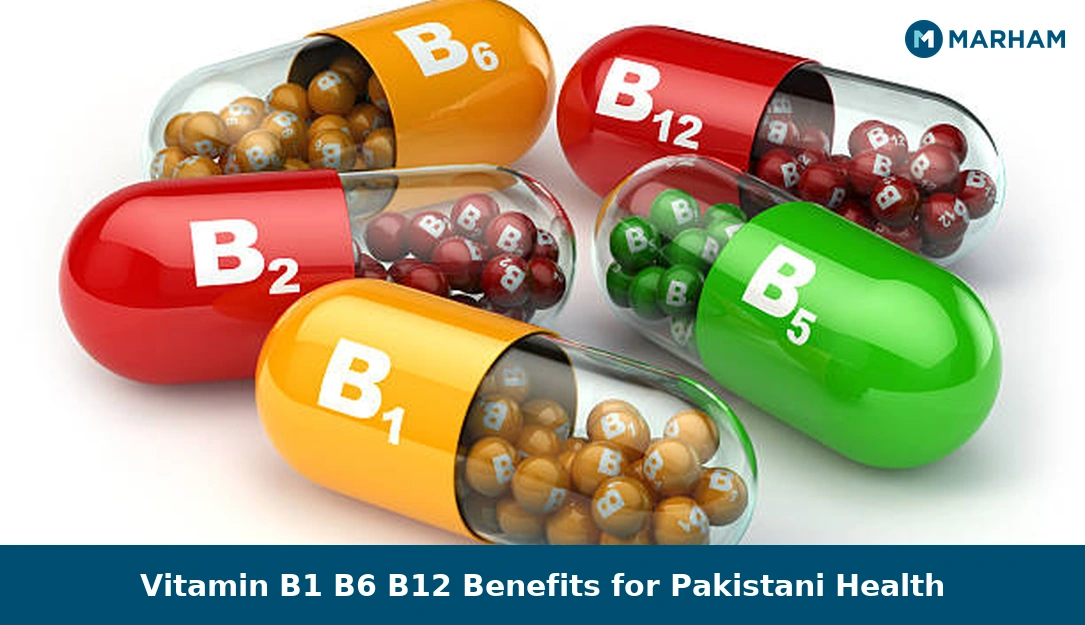
Numbness in the feet. A constant tiredness that chai can’t fix. A pins-and-needles feeling that wakes you up at night. These are the kinds of complaints Pakistani patients bring to clinics every day, and three vitamins sit quietly at the centre of many of them: B1, B6, and B12.
These three are often called the neurotropic B vitamins because their most important shared job is keeping the nervous system working properly. A cross-sectional study conducted at the Indus Hospital and Health Network in Karachi (2023, n=252) found that fatigue, muscle weakness, and numbness or tingling were the most frequent symptoms in patients with B12 deficiency or insufficiency. That’s not a rare clinical picture — it’s a very common one in Pakistani primary care.
What makes B1, B6, and B12 worth understanding together is that they work as a team. Each has its own role, but research published in 2025 in a peer-reviewed journal found that the combination enhances nerve cell repair more than any single vitamin does alone. Knowing what each one does, where to get it, and when deficiency becomes a real concern can save you months of unexplained symptoms.
وٹامن بی 1، بی 6 اور بی 12: اہم معلومات
وٹامن بی 1 (تھیامین)، بی 6 (پیریڈاکسین) اور بی 12 (کوبالامین) اعصابی نظام کی صحت کے لیے ضروری غذائی اجزاء ہیں۔ یہ تینوں وٹامن مل کر اعصاب کی مرمت، توانائی کی پیداوار اور خون کے سرخ خلیات کی تشکیل میں مدد کرتے ہیں۔ پاکستان میں ذیابیطس کے مریضوں اور سبزی خور افراد میں وٹامن بی 12 کی کمی خاص طور پر عام ہے۔ اگر آپ کو تھکاوٹ، ہاتھ پاؤں میں سوئیاں چبھنے کا احساس یا کمزوری محسوس ہو تو اپنے ڈاکٹر سے خون کا ٹیسٹ کروائیں۔
What Vitamins B1, B6, and B12 Each Do
Think of these three as specialists on the same medical team. They share a broad goal — protecting the nervous system — but each brings something the others can’t.
Vitamin B1 (Thiamine): The Energy Supplier
Thiamine converts carbohydrates into the energy that nerve cells need to function. Nerves can’t store energy, so they depend on a constant supply — and B1 is what makes that conversion happen. A diet heavy in refined flour (maida) and white rice, common in many Pakistani households, provides very little thiamine because processing strips it away. Whole wheat roti, daal (lentils), and brown rice are meaningfully better sources.
Vitamin B2 (Pyridoxine): The Signal Carrier
B6 helps produce neurotransmitters, the chemical messengers that carry signals from the brain to the rest of the body. It also plays a role in making serotonin and GABA, which partly explains why low B6 levels have been linked to mood changes and irritability. For Pakistani women who are pregnant, B6 is particularly relevant: it supports fetal brain development and may reduce nausea in the first trimester.
Vitamin B12 (Cobalamin): The Nerve Repairman
B12 builds and maintains the myelin sheath, the protective coating around nerve fibres. Without enough myelin, nerve signals slow down or misfire — which is why B12 deficiency so often presents as tingling, numbness, or a burning sensation in the hands and feet. A hospital-based study from Lady Reading Hospital, Peshawar (2025, n=139) found B12 deficiency in 48.2% of patients with diabetic peripheral neuropathy, underscoring how common this gap is in Pakistani clinical settings.
Pakistani patients on metformin for type 2 diabetes deserve a specific mention here. Research published in the Pakistan Journal of Medical Sciences documented that metformin reduces B12 absorption through its effect on the gut, and the risk increases with higher doses and longer duration of use. If you’ve been on metformin for more than a year, ask your doctor to check your B12 level at your next visit.
Key Benefits of Taking B1, B6, and B12 Together
Here is what the research actually supports — stated plainly, without overstating the evidence.
- Nerve repair and protection. The combination supports myelin maintenance, axonal repair, and energy supply to nerve cells. A 2025 study in a peer-reviewed journal found the B1+B6+B12 combination improved neural cell maturation more than B12 alone.
- Reduced peripheral neuropathy symptoms. Studies suggest the trio may help reduce pain, tingling, and numbness in peripheral neuropathy, particularly in diabetic patients.
- Red blood cell production. B12 and B6 both contribute to healthy red blood cell formation. Deficiency in either can contribute to anaemia, which is already common among Pakistani women.
- Homocysteine reduction. B6 and B12 help break down homocysteine, an amino acid that at high levels is associated with cardiovascular risk. This is a meaningful benefit for a population where heart disease rates are rising.
- Mood and cognitive support. A systematic review found higher dietary intake of B1, B6, and B12 was associated with a lower risk of depression, with stronger associations in women. This doesn’t mean these vitamins treat depression — but adequate levels appear to matter for mental wellbeing.
- Energy metabolism. B1 and B6 help convert food into usable energy. Chronic fatigue is one of the earliest signs that one or more of these vitamins is running low.
For a broader picture of how B vitamins work together, the Vitamin B Complex with Zinc: Benefits, Uses and Side Effects guide on Marham covers the full eight-vitamin family in detail.
Foods Rich in Vitamin B1, B6, and B12 in a Pakistani Diet
The good news: a varied Pakistani diet can cover most of these needs without supplements. The problem is that many urban Pakistani eating patterns — heavy on refined carbohydrates, light on meat and dairy — create gaps, especially for B12.
| Vitamin | Best Pakistani Food Sources | Daily Requirement (Adults) |
|---|---|---|
| B1 (Thiamine) | Whole wheat roti, daal (masoor, moong), brown rice, peas | 1.1 mg (women), 1.2 mg (men) |
| B6 (Pyridoxine) | Chicken, beef liver, chickpeas (chana), banana, spinach | 1.3 mg (adults under 50) |
| B12 (Cobalamin) | Beef, mutton, eggs, milk, dahi (yogurt), fish | 2.4 mcg (adults) |
Sources: NIH Office of Dietary Supplements; daily requirement figures are the US Recommended Dietary Allowance, which aligns with WHO guidance.
A practical note for Pakistani households: dahi (yogurt) is one of the most accessible and affordable B12 sources, especially for families who eat less red meat. A cup of plain dahi daily contributes meaningfully to B12 intake. Eggs — whether in a morning omelette or a salan — are a reliable B1 and B12 source that fits comfortably into most budgets in Lahore, Karachi, or smaller cities.
Vegetarians and those who rarely eat meat or dairy face a real risk of B12 deficiency over time, since B12 is found almost exclusively in animal products. Supplementation is worth discussing with a doctor in those cases.
Who Is Most at Risk of B1, B6, or B12 Deficiency in Pakistan?
Certain groups face a higher risk and should be more proactive about checking their levels.
- Diabetic patients on metformin — long-term metformin use reduces B12 absorption.
- Older adults — stomach acid decreases with age, reducing B12 absorption from food.
- Pregnant women — requirements for B6 and B12 increase during pregnancy.
- People with a low-meat or dairy-free diet — the main dietary risk factor for B12 deficiency.
- Those with gastrointestinal conditions — conditions affecting the gut lining can impair absorption of all three vitamins.
- People with diabetes — both the disease and its common treatment can deplete B12.
Side Effects and Precautions
All three vitamins are water-soluble, meaning the body excretes what it doesn’t use. Toxicity from food is not a realistic concern. Supplements are a different matter.
A narrative review published in the journal Therapeutic and Clinical Risk Management (Dove Medical Press, 2020) concluded that B1 is generally safe even at higher doses. For B6, neurological side effects are rare and typically occur only with very high daily doses above 500 mg per day taken for more than six months — far above any standard supplement dose. The same review found no confirmed causal link between standard B12 supplementation and serious adverse outcomes.
That said, taking high-dose B-vitamin supplements without a confirmed deficiency is not recommended. A blood test is the right first step. Your doctor can check serum B12, and B6 and B1 status can be inferred from symptoms and dietary history when needed.
One important precaution: patients who have recently had a coronary stent placed should avoid combining B12, B6, and folate supplements unless specifically advised by their cardiologist, as some evidence suggests this combination may affect blood vessel healing post-procedure.
Get Expert Advice on Marham
If you’ve been experiencing persistent fatigue, tingling in the hands or feet, or unexplained mood changes, it’s worth getting a blood test before reaching for a supplement. Self-diagnosing a B-vitamin deficiency and self-medicating with high-dose supplements can mask other conditions or, in the case of B6, cause the very nerve symptoms you’re trying to treat.
Marham connects you with verified nutritionists in Pakistan who can review your diet, interpret your lab results, and recommend a supplement plan that actually matches your needs. A short online consultation typically takes 15 to 20 minutes and can be done from anywhere in Pakistan, which matters if you’re outside a major city and don’t have easy access to a specialist.
Frequently Asked Questions
What is vitamin B1, B6, and B12 good for?
These three vitamins are best known for supporting nerve health, energy production, and red blood cell formation. Together they help maintain the myelin sheath around nerve fibres and support neurotransmitter production.
Can I take vitamin B1, B6, and B12 every day?
Yes, daily intake is safe for most people, either through food or a standard-dose supplement. Because these are water-soluble vitamins, the body excretes any excess through urine, making daily use at recommended doses generally well tolerated.
Is vitamin B1, B6, and B12 good for nerve pain?
Research suggests the combination may help reduce symptoms of peripheral neuropathy, such as tingling, numbness, and burning pain, particularly in diabetic patients. It’s not a standalone treatment, so consult a doctor to rule out other causes.
What are the side effects of taking B1, B6, and B12?
At standard supplement doses, side effects are uncommon. Very high doses of B6 (above 500 mg daily for months) can paradoxically cause nerve symptoms. B12 and B1 are considered safe at doses found in typical supplements.
Who should take a B1, B6, B12 supplement in Pakistan?
People most likely to benefit include diabetic patients on long-term metformin, older adults, vegetarians, and those with persistent fatigue or tingling. A blood test should confirm deficiency before starting supplementation.
What foods in Pakistan are richest in B12?
Beef, mutton, eggs, milk, and dahi (yogurt) are the most accessible B12-rich foods in Pakistani diets. Dahi is a practical daily option and fits most household budgets. Fish is also a good source for coastal communities.
When should I see a doctor about B vitamin deficiency?
See a doctor if you have persistent fatigue, numbness or tingling in your hands or feet, unexplained mood changes, or if you’re a diabetic patient who has been on metformin for more than a year. A simple blood test can confirm whether supplementation is needed.
Conclusion
Vitamin B1, B6, and B12 aren’t glamorous supplements, but they do quiet, important work — keeping nerves firing correctly, converting food into energy, and supporting the blood and brain. For Pakistani patients, the risk of deficiency is real, particularly among diabetics on metformin, older adults, and those with limited meat or dairy in their diet. Eating whole wheat roti, daal, eggs, and dahi regularly covers much of the need. When symptoms suggest a gap, a blood test and a conversation with a qualified nutritionist or physician is always the right next step.