

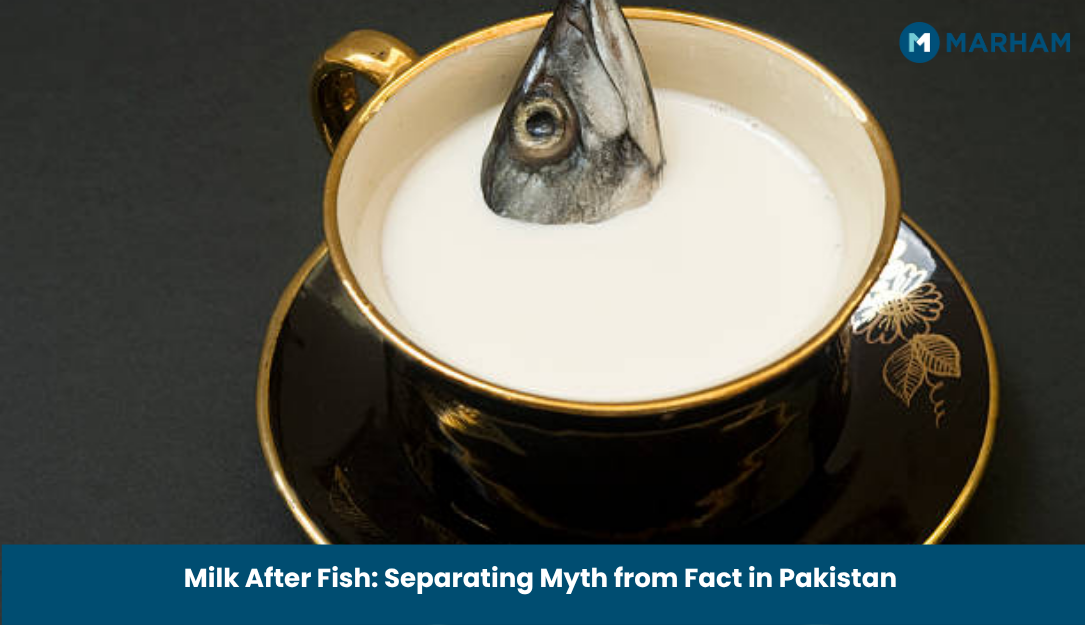
Almost every Pakistani household has heard it at least once: “Machli ke baad doodh mat peena — phulbehri ho jaayegi.” The warning gets passed from grandmothers to mothers to children, repeated so often that most people accept it without question. It’s one of those beliefs that feels too specific and too old to be wrong.
The thing is, it is wrong. Or at least, the part about vitiligo is. The science on this is clear, and it has been for years. What’s less clear to most people is why the myth exists, what the body actually does when you combine these two foods, and whether there’s any grain of truth buried inside it. Those are the questions worth answering properly.
This piece covers the origin of the belief, what modern nutrition and dermatology say, who genuinely needs to be cautious, and what the Islamic perspective actually holds. No alarm, no drama. Just the facts.
دودھ اور مچھلی: اہم نکات
دودھ اور مچھلی کو ایک ساتھ کھانے یا مچھلی کے بعد دودھ پینے سے پھلبہری (vitiligo) نہیں ہوتی — یہ ایک پرانا عقیدہ ہے جس کی کوئی سائنسی بنیاد نہیں۔ جدید طب کے مطابق پھلبہری ایک خودکار مدافعتی بیماری ہے جس کا تعلق خوراک کے کسی مجموعے سے نہیں۔ البتہ جن لوگوں کو لیکٹوز عدم برداشت ہو یا مچھلی سے الرجی ہو، انہیں ان دونوں کو ملا کر کھانے سے ہاضمے کی تکلیف ہو سکتی ہے۔ اسلامی نقطہ نظر سے بھی دودھ اور مچھلی کا ایک ساتھ استعمال ممنوع نہیں ہے۔ صحت مند افراد دونوں کو بے فکری سے کھا سکتے ہیں۔
Where Did This Belief Come From?
The milk-and-fish myth has two main roots, and neither of them is modern medicine.
The older source is Ayurveda, the traditional South Asian system of medicine that has influenced Pakistani and Indian food culture for centuries. In Ayurveda, foods are described as “heating” or “cooling.” Fish is considered heating and milk cooling, and mixing the two was believed to create an imbalance in the body. This was a philosophical framework, not a biochemical one, but it stuck. Over time, this symbolic warning turned into a hard household rule, one that refuses to die.
The second thread is cultural reinforcement. When someone in the family developed white patches on their skin, the most recent “unusual” food combination they’d eaten got the blame. Confirmation bias did the rest. Today, social media keeps the myth alive, with viral posts in Urdu and Hindi repeating the claim to millions of viewers.
There is no mention in Islamic texts prohibiting doodh and machli together. Islam recognises that anything not specifically prohibited may be consumed, in the same way that it is acceptable to eat food and drink together or to eat different sorts of food at the same meal. Scholars and Islamic nutritionists consistently confirm this.
What Does Science Actually Say?
The short answer: there is no scientific evidence that drinking milk after eating fish harms a healthy person.
According to several studies, there isn’t any scientific evidence that drinking milk after eating fish is harmful to one’s health in any way. Scientists have even noted that the Mediterranean diet, heralded as one of the healthiest diets in the world, contains a mixture of fish, milk and yogurt. Dishes like creamy fish chowder, yogurt-marinated grilled fish, and fish cooked in cream-based sauces are staples across European and Mediterranean cuisines. If the combination were toxic, these food traditions would have shown measurable harm long ago.
From a digestion standpoint, the body handles both foods through well-established enzyme pathways. The digestive enzymes break down both proteins and sugars effectively, without any unusual reactions. When we consume fish and milk, our digestive system treats them as separate entities. Fish provides protein and fats, and whole milk provides calcium, fat, and lactose. The digestive system releases different enzymes to break down these nutrients. There’s no chemical reaction between fish protein and milk protein that produces anything harmful.
The concern about two high-protein foods being “heavy” together is real but misunderstood. The actual issue may be in the digestion process, as milk and fish are both protein-rich foods, which may be heavy on the stomach. But this is true for any two major protein sources, like fish and meat taken together, or chicken and milk, or beef and eggs. It’s not unique to this combination.
Does Fish and Milk Cause Vitiligo (Phulbehri)?
No. This is the claim that most Pakistani families worry about, and it has no medical basis.
Vitiligo is an autoimmune condition, not something caused by food pairing. From a modern medical perspective, there is no scientific proof that consuming milk and fish together causes skin diseases or pigmentation problems. Vitiligo, for example, is an autoimmune condition and has no link to diet combinations.
What actually happens in vitiligo is that the immune system mistakenly attacks melanocytes, the cells that produce skin pigment. The actual cause of the melanocytes’ disappearance from the skin’s affected regions is still unknown, but researchers point to genetic factors, autoimmune triggers, and oxidative stress as the most likely contributors. Diet combinations are not among them.
“This is an old saying we all have grown up hearing but there is no truth to it. Vitiligo or such diseases are not caused by diets even if one is predisposed to an allergy. There are visible conditions that are caused by dietary factors, but vitiligo is not among them.”
If you or someone in your family has noticed white patches on the skin, the cause is almost certainly unrelated to what they ate after a fish meal. A dermatologist can properly assess and diagnose the condition.
Myth vs. Fact: A Quick Comparison
| Claim | What Science Says |
|---|---|
| Milk after fish causes phulbehri (vitiligo) | False. Vitiligo is autoimmune, not diet-related |
| The combination is toxic or poisonous | False. No toxic reaction occurs in healthy individuals |
| Islam prohibits fish and milk together | False. No such prohibition exists in Islamic texts |
| Both foods are hard to digest together | Partly true — only for those with lactose intolerance or fish allergy |
| You must wait 2 hours between fish and milk | No medical basis. A gap may help sensitive stomachs, not healthy ones |
| Mediterranean diet safely combines fish and dairy | True. Fish chowder and yogurt-fish dishes are common globally |
Who Should Actually Be Careful?
For most people, this combination is completely safe. There are two groups who genuinely need to be mindful.
People with lactose intolerance. Lactose intolerance means the body doesn’t produce enough lactase, the enzyme needed to break down lactose (the sugar in milk). Some individuals with lactose intolerance or digestive sensitivities may experience bloating, gas, or mild indigestion if they eat milk after fish. This is not because of the combination itself, but due to the body’s difficulty in processing dairy products. In Pakistan, lactose intolerance is more common than many people realise, particularly in adults. If you regularly feel bloated after drinking plain milk, that’s worth checking with a doctor regardless of what you ate before.
People with fish or seafood allergies. If you’re allergic to seafood, even a small amount of fish can trigger reactions like rashes, nausea, or swelling. This reaction has nothing to do with milk and would happen with or without the dairy. Allergic reactions to fish are managed by avoiding fish, not by avoiding milk.
For healthy adults and children with no known intolerances or allergies, drinking a glass of doodh after a plate of machli ka salan carries no proven risk.
Nutritional Value of Fish and Milk Together
Both foods are genuinely nutritious, and eating them on the same day or even at the same meal actually covers a wide nutritional base.
| Nutrient | Fish (per 100g, rohu/tilapia) | Milk (per 100ml, full-fat) |
|---|---|---|
| Protein | 18 to 20g | 3.2g |
| Calcium | 20 to 30mg | 113mg |
| Omega-3 fatty acids | 300 to 500mg | Trace amounts |
| Vitamin D | 5 to 10 mcg | 1 to 2 mcg (fortified) |
| Vitamin B12 | 2 to 3 mcg | 0.4 mcg |
According to the USDA FoodData Central database, fish such as rohu (common in Pakistani markets from Lahore’s Ichhra bazaar to Karachi’s Burns Road fish stalls) is a strong source of omega-3 fatty acids and B12. Milk contributes calcium and phosphorus. Together they complement each other rather than conflict. A heart healthy diet for Pakistani eating habits regularly includes both fish and dairy for exactly this reason.
When to See a Specialist
If you experience persistent bloating, stomach cramps, or skin reactions after eating dairy products, that’s worth investigating properly. These symptoms may point to lactose intolerance, a food sensitivity, or, less commonly, an allergy. A nutritionist in Pakistan can assess your diet, run relevant tests, and give you a personalised plan that fits Pakistani eating habits, including whether you need to limit dairy or adjust how you eat fish.
If white patches have appeared on your skin, please don’t assume it’s from a food combination. A dermatologist or general physician should examine them. Vitiligo, fungal infections like tinea versicolor, and other skin conditions each look similar but need different treatment. Early evaluation makes a real difference.
Get Expert Dietary Advice from Marham
Sorting through food myths can feel confusing, especially when the belief has been in the family for generations. Many Pakistani adults carry genuine uncertainty about which food combinations are safe, which intolerances they might have, and how to structure a diet that works for their lifestyle and health goals.
Marham connects you with verified nutritionists in Pakistan who consult online, so you can get evidence-based dietary guidance without travelling to a clinic. A short online consultation typically takes 15 to 20 minutes and can help clarify whether symptoms you’ve been experiencing after meals are due to a food intolerance, a sensitivity, or simply a habit worth adjusting. If you’re also dealing with a skin concern that’s been worrying you, Marham’s dermatologists in Pakistan are available for online appointments as well.
Frequently Asked Questions
Does drinking milk after fish cause vitiligo (phulbehri)?
No, it does not. Vitiligo is an autoimmune condition caused by the immune system attacking melanocytes, the pigment-producing skin cells. No dietary combination, including fish and milk, has been shown to cause or trigger it.
How long should you wait after eating fish to drink milk?
There’s no medically established waiting period for healthy individuals. If you have a sensitive stomach or mild lactose intolerance, waiting 1 to 2 hours may reduce the chance of bloating, but this is a comfort measure, not a medical requirement.
Is fish and milk together haram in Islam?
No. Islamic dietary guidelines do not prohibit this combination. There is no Quranic verse or authentic hadith that forbids eating fish and drinking milk together or one after the other.
Can children drink milk after eating fish?
Yes, for children without lactose intolerance or fish allergies, there’s no reason to avoid this combination. Both foods are nutritious and support growth. If a child shows any reaction after eating either food, consult a paediatrician.
What actually causes white patches on the skin if not fish and milk?
White patches can result from vitiligo (autoimmune), tinea versicolor (a fungal infection common in Pakistan’s humid climate), post-inflammatory hypopigmentation, or other dermatological conditions. A dermatologist can diagnose the specific cause.
Is it safe to eat fish cooked in milk or cream?
Yes. Fish cooked in milk, cream, or yogurt is common in many cuisines and is safe for people without lactose intolerance or fish allergies. The cooking process doesn’t create any harmful compound.
Can someone with lactose intolerance eat fish and milk together?
No, that’s not advisable. Someone with lactose intolerance will likely experience bloating, gas, or cramping from the milk regardless of what they eat with it. The fish isn’t the problem; the dairy is. A nutritionist can suggest suitable dairy alternatives.
Conclusion
The belief that doodh and machli don’t mix is one of the most persistent food myths in Pakistani households, but it doesn’t hold up to scrutiny. Science finds no harmful reaction between the two foods in healthy individuals, dermatologists confirm no link to vitiligo or phulbehri, and Islamic dietary guidance raises no objection. The only people who genuinely need to be careful are those with lactose intolerance or a fish allergy, and in those cases, the issue is the individual food, not the combination. Eat your machli ka salan, and if you want a glass of doodh after, go ahead.