
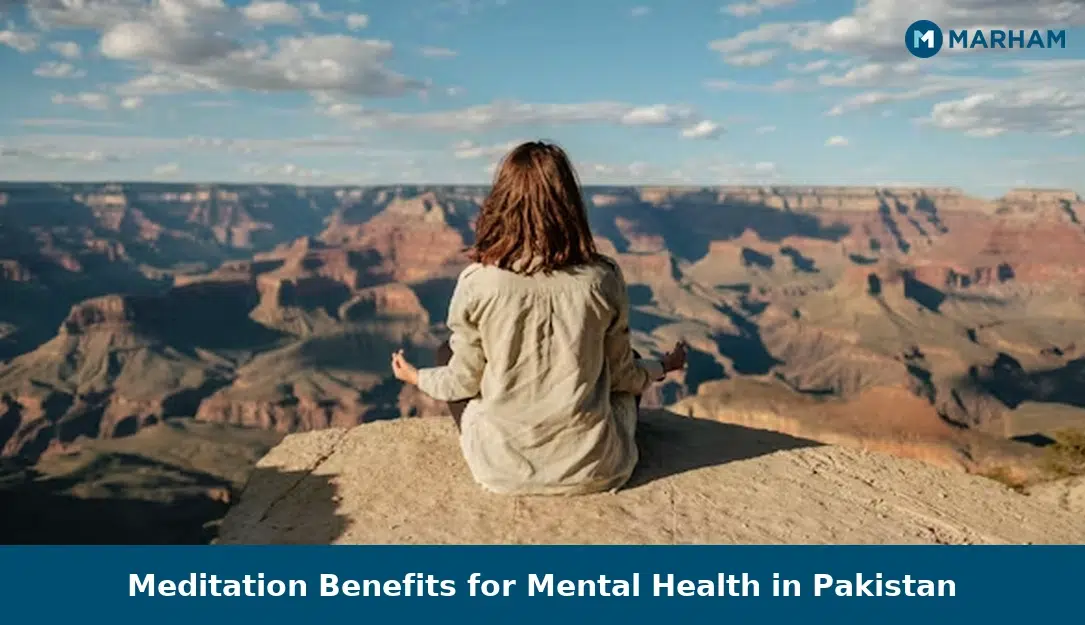

Stress is quietly one of the most common health complaints among Pakistanis today. Whether it’s the pressure of a 12-hour workday in Karachi’s traffic, exam season in Lahore, or the financial weight many families carry, the mind rarely gets a genuine break. Meditation is one of the few tools that costs nothing, requires no equipment, and can be practiced anywhere — from a quiet corner of your home to a few minutes before Fajr.
According to a Gallup and Gilani Pakistan survey, roughly 14% of Pakistanis frequently experience elevated stress in their daily lives, and mental health experts believe the real figure is considerably higher because many people don’t recognise stress as a health issue at all. That gap between lived experience and awareness is exactly where meditation can make a practical difference. It won’t replace professional treatment for serious conditions, but as a daily habit it supports the mind in ways that are now well-documented by research.
Below you’ll find the key benefits, a simple starter routine, and honest guidance on when meditation alone isn’t enough.
مراقبہ کے فوائد (Meditation in Urdu)
مراقبہ ایک آسان اور سائنسی طور پر ثابت شدہ مشق ہے جو ذہنی اور جسمانی صحت دونوں کے لیے فائدہ مند ہے۔ یہ تناؤ اور اضطراب کو کم کرتی ہے، نیند بہتر بناتی ہے، اور بلڈ پریشر کو قابو میں رکھنے میں مدد دیتی ہے۔ پاکستان میں بڑھتے ہوئے ذہنی دباؤ کے پیشِ نظر، روزانہ صرف دس سے پندرہ منٹ کا مراقبہ ذہنی سکون اور توجہ میں نمایاں بہتری لا سکتا ہے۔ اگر آپ کے ذہنی مسائل زیادہ سنگین ہوں تو کسی ماہرِ نفسیات سے رابطہ کریں۔
Key Takeaways
- Regular meditation can lower cortisol, the body’s primary stress hormone, according to a 2017 review of 45 studies published in peer-reviewed literature.
- Even 10 to 15 minutes a day produces measurable improvements in focus and emotional regulation over 8 weeks.
- Meditation may help reduce blood pressure and support heart health, making it relevant for the many Pakistanis managing hypertension.
- It is a supportive practice, not a standalone treatment. Anxiety disorders, depression, and other clinical conditions need professional care alongside any self-help routine.
- The best time to meditate in a Pakistani household is typically early morning, before the day’s noise begins, or after Isha prayers when the home is quiet.
- Anyone can start without prior training, a special app, or a paid class.
Meditation Benefits for Mental Health: What the Research Shows
Meditation is a practice of deliberately directing your attention — to your breath, a word, or a physical sensation — to calm the mind and build awareness. It’s not about emptying your thoughts completely. The goal is simply to notice when the mind wanders and gently return focus. That small act, repeated daily, produces real neurological changes over time.
A 2023 review published in the National Institutes of Health’s PubMed database found that MRI scans of regular meditators show measurable positive changes in brain structure and function. The same review noted improvements in blood pressure, cholesterol levels, and inflammatory markers. These aren’t minor findings.
Reduces Stress and Lowers Cortisol
Stress reduction is the most well-documented benefit of meditation. The mechanism is direct: focused breathing and mental stillness signal the nervous system to shift out of the fight-or-flight state, which lowers cortisol, the hormone your body releases under pressure. A 2017 review of 45 controlled studies found that various forms of meditation consistently reduced physiological markers of stress, per research indexed on PubMed.
For Pakistani professionals navigating long commutes, power outages, and economic uncertainty, this isn’t a luxury. It’s a practical coping tool.
Eases Anxiety Without Medication
Meditation won’t replace medication or therapy for diagnosed anxiety disorders. What it can do is reduce the background noise of everyday worry. Research suggests it helps people become more aware of anxious thoughts without being swept away by them — a skill psychologists call metacognitive awareness. Over time, this reduces the intensity of anxiety in daily life.
Psychiatrists in Pakistan increasingly recommend mindfulness-based practices as a complement to therapy, particularly for patients who can’t access weekly sessions due to cost or distance.
Supports Better Sleep
Poor sleep is a growing complaint in Pakistani cities, where late-night screen use and irregular schedules are common. Meditation before bed can shorten the time it takes to fall asleep and improve sleep quality, according to UC Davis Health. The mechanism is similar to stress reduction: slowing the breath and relaxing the body tells the nervous system it’s safe to rest.
A short body-scan meditation — lying down and mentally relaxing each part of the body from feet upward — takes about 10 minutes and can be done in bed without any app or audio guide.
May Help Manage Blood Pressure
Hypertension is extremely common in Pakistan, with estimates suggesting it affects roughly 1 in 3 adults. Meditation can contribute to lower blood pressure over time, particularly when practised consistently. A published review in PubMed found improvement in both systolic and diastolic blood pressure in regular meditators. This doesn’t replace antihypertensive medication, but it can be a meaningful addition to a broader management plan.
Patients already on blood pressure medication should continue it and discuss any lifestyle additions with their doctor.
Improves Focus and Working Memory
One study found that meditating for just 13 minutes daily improved attention and memory after 8 weeks. For students preparing for board exams in Lahore or Karachi, or for professionals managing complex workloads, this is a genuinely useful edge. The improvement comes from repeatedly training the brain to return to a chosen point of focus — the same mental muscle used when studying or problem-solving.
Builds Emotional Resilience
Regular meditation practice is associated with increased positive emotion and better emotional regulation, per research published in PubMed. People who meditate tend to respond to difficult situations with less reactivity. They still feel frustration or sadness — they just don’t get stuck in it as long. In a cultural context where emotional expression is often suppressed, especially among Pakistani men, meditation offers a private, stigma-free way to process feelings.
Helps with Mild Depression Symptoms
Research from Johns Hopkins University found that general meditation programs helped ease psychological symptoms of depression, anxiety, and stress-related pain. Meditation appears to work partly by reducing the overactivity between the brain’s “me centre” and its “fear centre” — two regions that are often hyperlinked in people experiencing depression.
This is a supportive finding, not a treatment claim. If you’re experiencing persistent low mood, loss of interest, or thoughts of self-harm, please speak with a qualified mental health professional.
Supports Immune Function
This is the benefit most people don’t expect. A 2023 PubMed review found that meditation can improve immune function by reducing inflammatory cytokines — proteins that, when chronically elevated, contribute to a range of health problems. The effect is modest, but it adds to the broader picture of meditation as a genuinely whole-body practice.
How to Start Meditating: A Simple 7-Step Routine for Pakistani Beginners
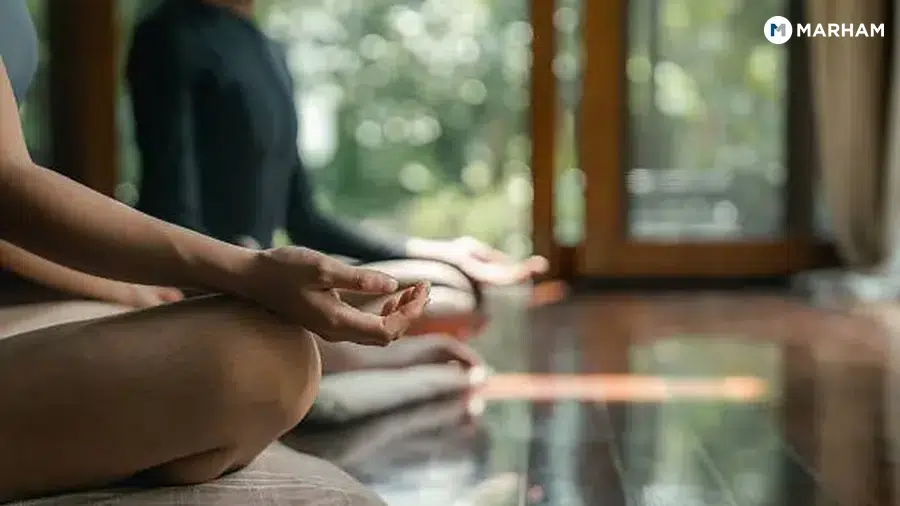
No paid app, no special cushion, no class required. Here’s how to begin.
- Pick a consistent time. Early morning before the household wakes up works well in most Pakistani homes. After Fajr is a natural quiet window many people already have. Alternatively, just after Isha prayers when the day has wound down.
- Find a quiet spot. A bedroom corner, a rooftop, or even a bathroom works. The goal is minimal interruption for 10 to 15 minutes.
- Sit comfortably. Cross-legged on a prayer mat or a folded dupatta works perfectly. You don’t need a yoga mat or meditation cushion. Keep your back reasonably straight so you don’t doze off.
- Set a gentle timer. Start with 10 minutes. Use your phone’s built-in timer with a soft alarm tone, such as a simple beep rather than a jarring ringtone. No need to download anything.
- Focus on your breath. Breathe in slowly through the nose for 4 counts, hold for 2, breathe out for 6. When your mind wanders — and it will — simply notice it without judgment and return to the breath. That return IS the practice.
- Add a grounding phrase if helpful. Some people find it easier to silently repeat a simple phrase, such as “I am calm” or a dhikr phrase they already use. This is a form of mantra meditation and is well-suited to those already familiar with Islamic remembrance practices.
- Build the habit gradually. Start at 10 minutes for two weeks. Then extend to 15 or 20 minutes if it feels right. Consistency matters far more than duration. Ten minutes every day beats 45 minutes once a week.
Meditation vs Other Stress-Relief Methods: A Comparison
| Method | Cost | Time per session | Evidence base | Requires equipment |
|---|---|---|---|---|
| Meditation | Free | 10 to 20 minutes | Strong (PubMed, NIH) | No |
| Exercise | Low to free | 30 to 45 minutes | Very strong | Minimal |
| Deep breathing alone | Free | 5 to 10 minutes | Moderate | No |
| Journaling | Very low | 15 to 20 minutes | Moderate | Pen and paper |
| Professional therapy | PKR 2,000 to 5,000 per session | 45 to 60 minutes | Very strong | No |
Meditation sits at a unique intersection: free, portable, evidence-backed, and compatible with other approaches. It works well alongside therapy, not instead of it.
When Meditation Isn’t Enough: Seeing a Specialist
Meditation is a supportive habit, not a clinical treatment. If you’re experiencing persistent anxiety that interferes with daily life, low mood lasting more than two weeks, panic attacks, intrusive thoughts, or any symptoms you can’t manage on your own, it’s time to speak with a professional.
Accessing mental health care in Pakistan has become easier with online consultations. Consulting a psychiatrist in Pakistan can help you understand whether what you’re experiencing needs structured therapy, medication, or simply a better daily routine. A nutritionist in Pakistan can also help if stress is affecting your eating habits, which is common in high-pressure periods like Ramadan or exam season.
Get Expert Mental Health Support on Marham
Many Pakistanis dealing with stress and anxiety don’t seek help because they assume they need to visit a clinic in person, wait weeks for an appointment, or explain themselves to someone who may not understand the local context. That barrier is real, and it keeps a lot of people stuck.
Marham connects you with verified psychiatrists in Pakistan who consult online from anywhere in the country. A short online consultation typically takes 15 to 30 minutes and can clarify whether your stress and anxiety are something you can manage with lifestyle changes like meditation, or whether you’d benefit from a structured treatment plan. You can also speak to a nutritionist in Pakistan if you’d like guidance on how diet, sleep, and mindfulness work together for mental wellbeing.
Frequently Asked Questions
How long should you meditate per day for results?
Ten to fifteen minutes daily is enough to see measurable benefits over 6 to 8 weeks. One study found that 13 minutes a day improved memory and attention after 8 weeks. Consistency matters more than long sessions.
Can meditation help with anxiety in Pakistan?
Yes, meditation can reduce everyday anxiety by building awareness of anxious thoughts without being overwhelmed by them. It works best as a complement to professional care, not a replacement, especially for diagnosed anxiety disorders.
Is meditation good for sleep problems?
Meditation before bed can shorten the time it takes to fall asleep and improve sleep quality. A simple body-scan or slow breathing practice done lying down takes 10 minutes and needs no app or equipment.
Can meditation lower blood pressure?
Regular meditation is associated with modest reductions in both systolic and diastolic blood pressure, per research published in PubMed. It should complement, not replace, prescribed medication for hypertension.
What types of meditation are easiest for beginners?
Breath-focused meditation and body-scan meditation are the easiest starting points. Both require no prior training, no app, and no special setting. Sitting quietly and following the breath for 10 minutes is a complete beginner practice.
Is meditation allowed in Islam?
Meditation as a health practice, focused on breath and mental calm, is generally considered permissible. Many Muslims integrate it with existing dhikr or after-prayer quiet time. Islamic scholars distinguish between secular mindfulness and practices tied to other religious traditions, so individuals are encouraged to consult their own religious guidance if uncertain.
When should you see a doctor instead of meditating?
See a doctor if your stress, anxiety, or low mood persists for more than two weeks, interferes with work or relationships, or includes symptoms like panic attacks, intrusive thoughts, or loss of appetite. Meditation is a supportive habit, not a clinical intervention.
Conclusion
Meditation is one of the most accessible mental health tools available, and its benefits for stress, anxiety, sleep, and focus are well-supported by research. For Pakistanis navigating the pressures of urban life, financial stress, or academic demands, even 10 minutes a day can make a tangible difference over time. Start small, stay consistent, and treat it as one part of a broader approach to wellbeing — not a cure, but a genuinely useful daily practice.