

Overthinking is something most Pakistanis know intimately, even if they describe it as “zyada sochna” rather than a mental health concern. You lie down after a long day in Karachi or Lahore, and instead of resting, your mind replays an awkward conversation from three days ago or starts building worst-case scenarios about tomorrow.
The problem is real and common. According to the National Psychiatric Morbidity Survey of Pakistan (2022), roughly 1 in 4 Pakistanis meets criteria for a neurotic or stress-related disorder, a category that includes the excessive worry and rumination that drives chronic overthinking. Yet most people never seek help because “zyada sochna” is treated as a personality trait rather than something that can be managed.
The good news: overthinking is not a fixed state. There are specific, evidence-backed techniques that quiet the mental noise, and knowing which ones work makes a real difference.
زیادہ سوچنا: اہم باتیں
زیادہ سوچنا یا overthinking ایک ایسی کیفیت ہے جس میں ذہن ایک ہی مسئلے کو بار بار دہراتا رہتا ہے اور کوئی حل نہیں نکلتا۔ پاکستان میں یہ مسئلہ بہت عام ہے، خاص طور پر نوجوانوں، طالب علموں اور کام کرنے والی خواتین میں۔ رات کو سونے سے پہلے ذہن میں خیالات کا طوفان آنا، فیصلے نہ کر پانا اور ماضی کی غلطیوں پر پچھتاوا یہ سب زیادہ سوچنے کی علامات ہیں۔ اگر یہ کیفیت ہفتوں تک جاری رہے تو کسی ماہر نفسیات سے مشورہ کرنا ضروری ہے۔
What Is Overthinking and Why Does It Happen?
Overthinking means your mind gets stuck in a loop, replaying past events or rehearsing future ones without reaching any useful conclusion. It’s not the same as careful planning or problem-solving. The key difference: productive thinking moves toward a decision; overthinking circles the same ground repeatedly.
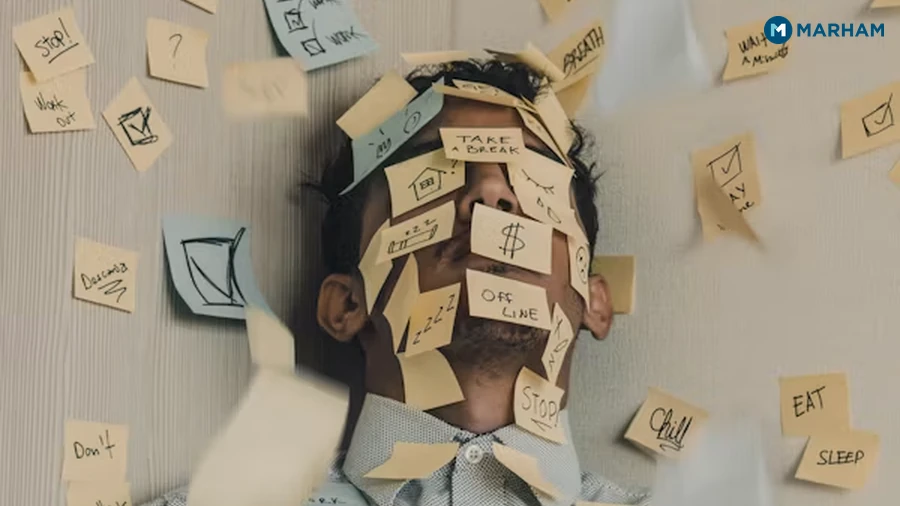
Research in cognitive psychology identifies two main patterns. Rumination focuses on the past (“Why did I say that?”). Worry focuses on the future (“What if I fail?”). Both are driven by the same underlying mechanism: your brain perceives a threat and tries to “think its way out” of it, even when no action is possible.
In the Pakistani context, several specific triggers make this worse. Exam pressure in cities like Lahore and Karachi, financial stress, joint family dynamics, and the cultural expectation to appear composed and not “burden” others all create conditions where thoughts get suppressed during the day and flood in at night.
Signs You Are Overthinking (Not Just Thinking Carefully)
Not every period of deep thought is overthinking. These signs suggest the pattern has become unhelpful:

- Replaying conversations and imagining different outcomes
- Making decisions feels exhausting, even small ones
- Sleep disruption because your mind won’t settle at night
- Physical tension: headaches, tight shoulders, fatigue
- Asking others for reassurance repeatedly, then still feeling unsure
- Difficulty concentrating on the present task
If you recognise most of these, the techniques below are worth trying consistently, not just once.
How to Stop Overthinking: 7 Steps That Actually Work
- Name the pattern, don’t fight it. The moment you notice a thought looping, say to yourself: “I’m overthinking right now.” This single act of labelling, called “metacognitive awareness” in psychology, creates a small gap between you and the thought. You don’t need to stop the thought; you just need to stop treating it as urgent fact.
- Schedule a 15-minute worry window. Instead of fighting intrusive thoughts all day, pick a fixed time (after Asr or after dinner works well for many Pakistani households) and allow yourself to think through your worries only then. When a worry surfaces outside that window, note it briefly and tell yourself you’ll address it at the scheduled time. This technique, supported by research in cognitive behavioural therapy (CBT), reduces the total time spent in anxious thought.
- Do a brain dump before bed. Keep a small notebook by your bedside. Ten minutes before sleep, write down everything on your mind: pending tasks, unresolved worries, things you need to remember. The act of writing transfers the load from your working memory onto paper, and your brain can stop holding on. This is particularly effective for the “zyada sochna at night” pattern that so many people in Pakistan describe.
- Use the 4-7-8 breathing technique. Inhale through your nose for 4 seconds, hold for 7, exhale slowly through your mouth for 8. This activates the parasympathetic nervous system, which is your body’s rest-and-digest response, and lowers cortisol levels. Do three cycles. It takes under two minutes and works in any setting, whether you’re at your office desk in Islamabad or sitting in traffic on Karachi’s main roads.
- Ask: can I act on this right now? When a worry surfaces, ask yourself one question: “Is there something I can do about this in the next 24 hours?” If yes, write down one small action step and move on. If no, consciously redirect your attention. This moves the brain from rumination mode into problem-solving mode, which feels less threatening and more grounded.
- Reduce your information load. Scrolling through news and social media, especially late at night, feeds the overthinking cycle. Pakistani social media timelines often carry a heavy load of political news, financial anxiety, and comparison content. Set a screen cutoff 30 to 45 minutes before bed. Replace the scroll with something low-stimulation: a cup of chamomile tea, light reading, or a short walk.
- Move your body, even briefly. A 20-minute walk, whether around your neighbourhood in Gulberg or along a park in Islamabad, reduces cortisol and raises serotonin. You don’t need a gym. Physical movement gives the nervous system a legitimate outlet for the tension that overthinking builds up.
Overthinking vs Anxiety Disorder: Key Differences
| Feature | Everyday Overthinking | Generalised Anxiety Disorder (GAD) |
|---|---|---|
| Duration | Comes and goes | Persistent, most days for 6+ months |
| Triggers | Specific stressors | Multiple areas of life simultaneously |
| Control | Can redirect with effort | Feels uncontrollable |
| Physical symptoms | Mild tension | Muscle tension, fatigue, sleep problems |
| Impact on daily life | Manageable | Significantly affects work and relationships |
| Needs professional help? | Self-help often sufficient | Yes, CBT or specialist support needed |
If your pattern looks more like the right column, self-help techniques alone may not be enough. A study conducted at Aga Khan University Hospital in Karachi found that roughly 28% of participants showed borderline or pathological anxiety, and women were twice as likely to screen positive as men. These are not rare cases.
When to See a Mental Health Specialist
Self-help strategies work well for mild to moderate overthinking. Seek professional support if your thoughts are causing persistent sleep disruption for more than two weeks, if you’re unable to concentrate at work or in your studies, or if the worry is accompanied by low mood, physical fatigue, or a sense of dread that doesn’t lift.

A psychiatrist in Pakistan can assess whether what you’re experiencing is everyday stress or something that benefits from structured therapy like CBT. Recognising the difference is not weakness; it’s accurate self-assessment. If you’re also experiencing persistent low mood alongside the overthinking, it’s worth reading about depression to understand how the two often overlap.
Consult a Specialist on Marham
Finding a mental health professional in Pakistan can feel difficult, especially outside Karachi, Lahore, and Islamabad, where waiting lists at clinics are long and in-person appointments aren’t always practical. Marham connects you with verified psychiatrists in Pakistan who offer online consultations from anywhere in the country, so you can speak to one without travelling.
A short online consultation typically takes 15 to 20 minutes and can clarify whether what you’re experiencing needs structured therapy, a short course of treatment, or simply a consistent self-management plan you can follow on your own. You can also consult a nutritionist in Pakistan if stress-related eating or disrupted appetite is part of the picture.
Frequently Asked Questions
Is overthinking a sign of anxiety?
Overthinking can be a symptom of anxiety, but not always. Occasional overthinking is a normal human experience. When it becomes persistent, hard to control, and affects sleep or daily functioning, it may indicate an anxiety disorder like generalised anxiety disorder (GAD) and is worth discussing with a doctor.
How do I stop overthinking at night?
Keep a notebook by your bed and write down your worries before you lie down. This “brain dump” offloads your mental to-do list onto paper. Pair it with the 4-7-8 breathing technique and a screen-free 30 minutes before sleep for the best effect.
What causes overthinking?
Overthinking is usually triggered by uncertainty, past negative experiences, or high-stakes situations like exams, job loss, or relationship stress. In Pakistan, cultural pressure to appear strong and not share problems can also cause thoughts to build up internally rather than being expressed.
Can overthinking affect your physical health?
Yes. Chronic overthinking keeps the body in a low-level stress state, raising cortisol levels. Over time this can contribute to poor sleep, tension headaches, fatigue, and digestive discomfort. It’s not just a mental experience; it has real physical effects.
How do I stop overthinking in a relationship?
Focus on what you can observe and verify rather than what you imagine. Communicate directly instead of assuming. If relationship anxiety is persistent and causing distress, a few sessions with a therapist trained in CBT can help you identify the thought patterns driving it.
Conclusion
Overthinking is not a character flaw and it’s not permanent. The techniques above, from the worry window to the 4-7-8 breath, are practical and backed by evidence. Start with one or two that feel manageable rather than trying all seven at once. Most people notice a real shift within a week of consistent practice. If the pattern persists despite your efforts, speaking to a specialist is the sensible next step, not a last resort.