

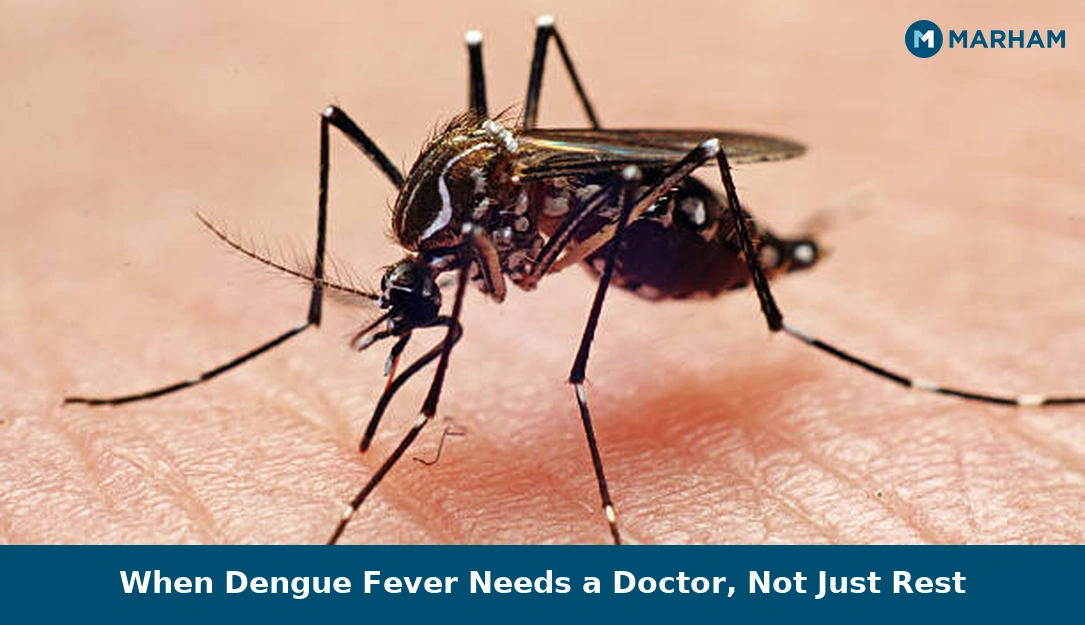
Every monsoon, dengue returns to Pakistan, and every year families treat it like an ordinary fever until it suddenly is not. Rest and fluids help in most cases, but knowing the dengue warning signs can be the difference between a smooth recovery and a hospital emergency.
In Urdu, this is ڈینگی بخار (dengue bukhaar).
Most dengue gets better with rest and fluids, but you must see a doctor urgently if you have severe tummy pain, repeated vomiting, any bleeding, or sudden weakness, as these can be signs of severe dengue. If you notice any of these, consult a doctor on Marham without waiting.
Why dengue is not always just rest
Dengue often starts with high fever, body aches, and tiredness that feel like a bad flu. For many people it stays mild and settles on its own. The danger is that a small number of cases can turn severe, and that turn can happen fast.
The most important thing to understand is the timing. Severe dengue warning signs often appear around day three to seven, frequently just as the fever starts to drop. Many people mistake this for recovery, relax their guard, and miss the exact window when care matters most.
Dengue warning signs that need a doctor now
If you or a family member with dengue develops any of the signs below, do not wait it out. Contact a doctor the same day.
| Warning sign | Why it matters |
|---|---|
| Severe or worsening tummy pain | Can signal internal fluid leak or bleeding |
| Repeated vomiting, cannot keep fluids down | Leads to dangerous dehydration |
| Bleeding gums or nose, or red spots on the skin | May mean platelets have dropped too low |
| Blood in vomit, stool, or urine | Points to internal bleeding, an emergency |
| Sudden extreme tiredness or restlessness | Can be an early sign of severe dengue |
| Little or no urine for many hours | A sign of serious dehydration |
Worried It Might Be Dengue?
Book a PMC verified doctor on Marham or consult online from home. Get assessed quickly, before symptoms worsen.
Or call the Marham helpline: 0311 1222398
What to do while you monitor at home

If a doctor has confirmed mild dengue and advised home care, a few simple steps help you recover safely.
- Drink plenty of fluids like water, fresh juice, and oral rehydration solution to avoid dehydration.
- Rest well and let your body fight the virus.
- Use paracetamol for fever if advised. Avoid aspirin and ibuprofen, as they can raise the risk of bleeding.
- Track your platelet count with a CBC test as your doctor recommends.
An NS1 or dengue antibody test confirms the infection, and a CBC keeps an eye on your platelets. You can book a dengue test and CBC with Health+ by Marham and have the sample collected at home, which is far easier when you are unwell.
When to go straight to the emergency room
Some signs are too serious to manage with a booking. Go to the nearest emergency room right away if there is cold or clammy skin, fast or difficult breathing, fainting or confusion, or heavy uncontrolled bleeding. These can be signs of dengue shock, which needs urgent hospital care.
Consult a Doctor on Marham
16,000+ PMC verified doctors across 100+ specialties. Book in person or online in minutes.
Helpline: 0311 1222398 (9:00 AM to 11:00 PM)
ڈینگی میں ڈاکٹر سے کب رجوع کریں
ہر مون سون میں پاکستان میں ڈینگی بخار پھیلتا ہے، اور اکثر لوگ اسے عام بخار سمجھ کر نظر انداز کر دیتے ہیں۔ زیادہ تر کیسز آرام اور پانی سے ٹھیک ہو جاتے ہیں، لیکن کچھ علامات ایسی ہیں جن میں فوراً ڈاکٹر سے رجوع ضروری ہے۔ ان میں شدید پیٹ درد، بار بار الٹی، مسوڑھوں یا ناک سے خون آنا، جلد پر سرخ دھبے، پیشاب میں کمی، اور اچانک شدید کمزوری شامل ہیں۔
سب سے اہم بات یہ ہے کہ ڈینگی اکثر تیسرے سے ساتویں دن خطرناک ہوتا ہے، خاص طور پر جب بخار کم ہونے لگتا ہے، اور لوگ اسے صحتیابی سمجھ لیتے ہیں۔ اگر جلد ٹھنڈی ہو، سانس تیز ہو، یا بے ہوشی محسوس ہو تو فوراً ایمرجنسی جائیں۔ آپ Marham پر ویریفائیڈ ڈاکٹر سے آن لائن یا کلینک پر مشورہ کر سکتے ہیں، اور Health+ by Marham سے گھر پر ڈینگی ٹیسٹ بھی کروا سکتے ہیں۔
Frequently Asked Questions
Can dengue be treated at home?
Mild dengue often improves with rest, fluids, and paracetamol, but you must watch for warning signs and stay in touch with a doctor. See a doctor promptly if you are unsure.
When is dengue most dangerous?
Often around day three to seven, frequently as the fever drops. This is when severe dengue can develop, so do not lower your guard when you start feeling better.
Which medicine should I avoid in dengue?
Avoid aspirin and ibuprofen, as they can increase the risk of bleeding. Paracetamol is usually preferred for fever, but confirm the dose with a doctor.
Which test confirms dengue?
An NS1 or dengue antibody test confirms the infection, and a CBC tracks your platelet count. You can book both with Health+ by Marham with free home sample collection.
Which doctor should I see for dengue?
A general physician can assess and manage dengue. Book one on Marham online or in person, and go to the emergency room for any severe signs.
Final Thoughts
Dengue is common in Pakistan, but it should never be taken lightly. Learn the dengue warning signs, keep watching even as the fever settles, and get medical help early rather than waiting. Rest and fluids matter, but a timely doctor visit can save a life.