

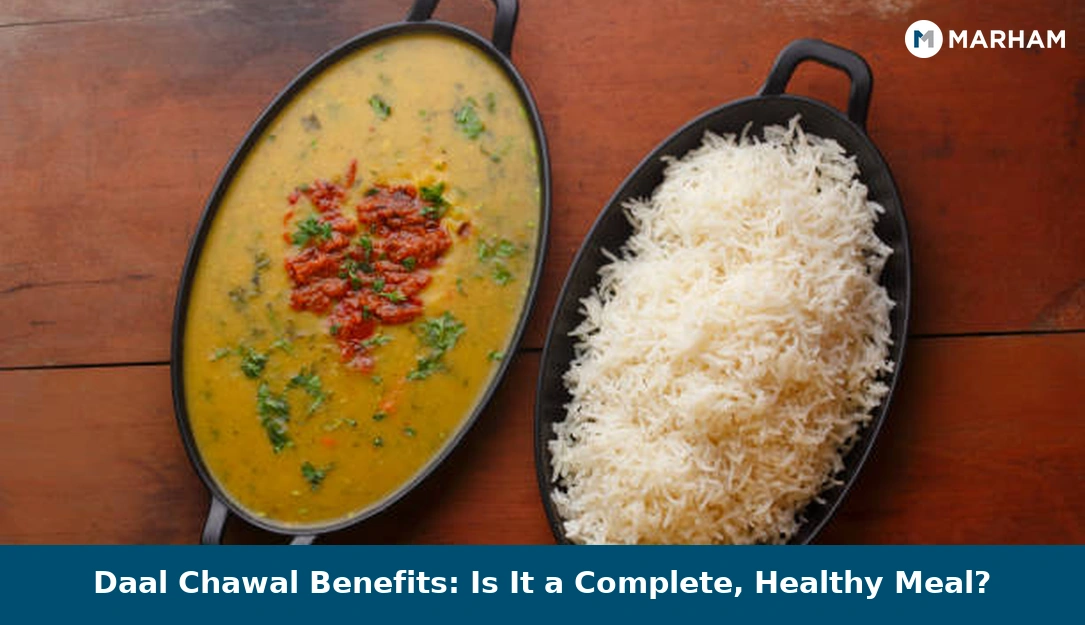

Daal chawal is probably the most eaten meal in Pakistan, and yet it gets almost no respect. People call it the fallback dinner, the lazy lunch, the thing you cook when nothing else is planned. Nutritionally, though, it deserves a second look.
Across Pakistani households, from a small flat in Karachi’s Gulshan to a family home in Lahore’s Model Town, a pot of masoor or moong daal with plain basmati rice is on the stove several times a week. It costs very little, takes under 30 minutes, and keeps the stomach full for hours. That combination alone makes it worth understanding properly.
What follows is a plain-language breakdown of what daal chawal actually gives your body, where it falls short, and how small changes in how you cook it can make a real nutritional difference.
دال چاول: صحت کے لیے کتنا فائدہ مند ہے؟
دال چاول پاکستان کا سب سے عام اور سستا کھانا ہے جو نہ صرف پیٹ بھرتا ہے بلکہ جسم کو پروٹین، فائبر، آئرن اور بی وٹامنز بھی فراہم کرتا ہے۔ دال میں لائسین نامی امینو ایسڈ ہوتا ہے جو چاول میں نہیں ہوتا، جبکہ چاول میں میتھیونین اور سسٹین ہوتے ہیں جو دال میں کم ہوتے ہیں۔ ان دونوں کو ملا کر کھانے سے جسم کو تمام ضروری امینو ایسڈز مل جاتے ہیں۔ ذیابیطس کے مریضوں کو حصے کا خیال رکھنا چاہیے اور بھوری دال یا بھورے چاول کا انتخاب بہتر رہتا ہے۔ مجموعی طور پر دال چاول ایک متوازن غذا ہے جسے تھوڑی سی توجہ سے اور بھی صحت بخش بنایا جا سکتا ہے۔
Is Daal Chawal Actually a Complete Protein?
Yes, when eaten together, daal and chawal provide all nine essential amino acids your body cannot make on its own. Neither food does this alone.
Lentils are rich in lysine, an amino acid that rice lacks. Rice, on the other hand, contains methionine and cysteine, which are present in only small amounts in most lentils. Rice is a rich source of cysteine and methionine, while dals are loaded with lysine, which cannot be traced in rice. When you eat them at the same meal, the two proteins complement each other and together cover the full essential amino acid profile.
This is the science behind what Pakistani grandmothers have always known intuitively. You don’t need a protein shake to get a complete protein. A bowl of daal chawal, cooked properly, does the job.
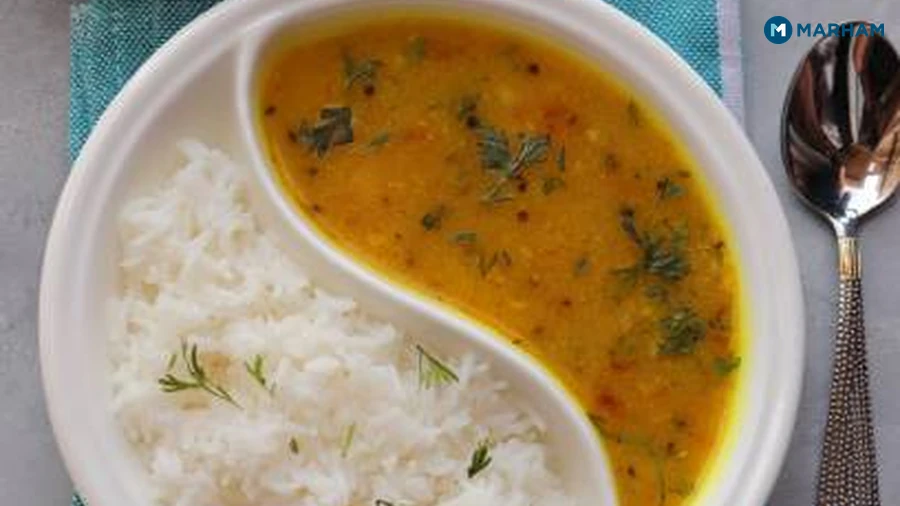
One nuance worth knowing: the type of daal changes the protein content noticeably. Chana daal (split chickpeas) and toor daal (split pigeon peas) are higher in protein per serving than masoor daal (red lentils), though masoor cooks faster and is the most common choice in Pakistani kitchens. Moong daal is the lightest and easiest to digest, which is why it’s typically recommended after illness or for young children.
Daal Chawal Nutrition Facts at a Glance
The numbers below are approximate per standard serving: one cup of cooked daal plus one cup of cooked white basmati rice.
| Nutrient | Amount (approx. per serving) | Main Source |
|---|---|---|
| Calories | 350 to 420 kcal | Both |
| Protein | 12 to 18 g | Daal |
| Carbohydrates | 65 to 75 g | Chawal |
| Dietary Fibre | 7 to 10 g | Daal |
| Iron | 3 to 5 mg | Daal |
| Folate (B9) | 150 to 200 mcg | Daal |
| Magnesium | 50 to 70 mg | Both |
| Fat | 1 to 3 g (without ghee) | Minimal |
Figures based on USDA food composition data for cooked lentils and white rice. Actual values vary by daal type, rice variety, and cooking method.
Daal chawal is low in fat while being rich in essential nutrients like dietary fibre, iron, potassium, and B vitamins. That nutrient density at a modest calorie count is what makes it genuinely useful as a daily meal, not just a cheap one.
For Pakistani women in particular, the iron content matters. Iron-deficiency anaemia is common across Pakistan, especially among women of reproductive age, according to Pakistan’s National Nutrition Survey. Daal is one of the most accessible plant-based iron sources in the average Pakistani diet. Pairing your daal chawal with a small amount of something acidic, like a squeeze of lemon over the daal or a side of tomato kachumber, can improve iron absorption because vitamin C helps the body absorb non-haem (plant) iron more effectively. This is a practical tip most Pakistani nutrition guides skip entirely.
Health Benefits of Daal Chawal for Pakistani Diets
Supports Digestive Health
The fibre in lentils supports regular bowel movements and feeds beneficial gut bacteria. Lentils are rich in both soluble and insoluble fibre. Soluble fibre forms a gel in the digestive tract that captures cholesterol and removes it, while insoluble fibre helps increase stool bulk and may help prevent conditions like irritable bowel syndrome. For people who eat a lot of maida-based foods (parathas, naan, biscuits), adding a daily bowl of daal is one of the simplest ways to increase fibre intake.
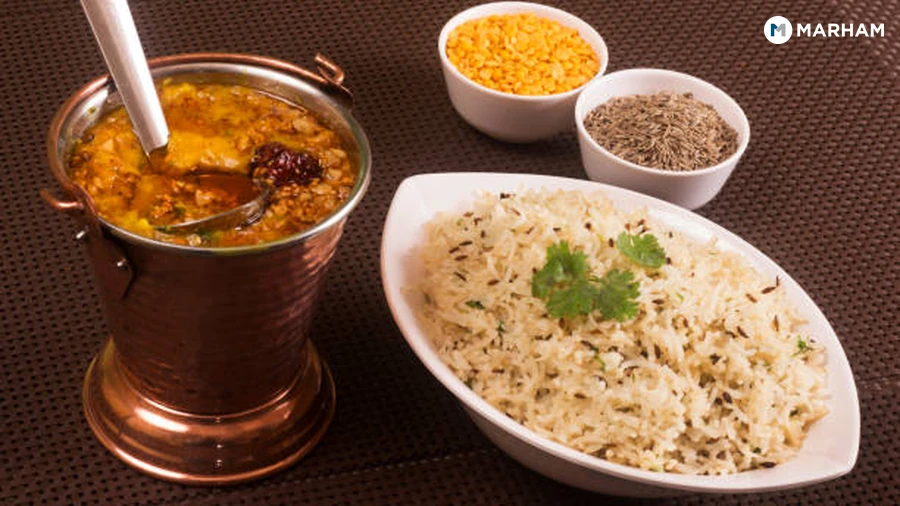
Helps with Satiety and Weight Management
Daal chawal keeps you full. The combination of protein and fibre slows digestion, which means you’re less likely to reach for a snack an hour after eating. The combination of protein from lentils and the satiating effect of rice helps in controlling appetite and preventing overeating, and the fibre content in lentils also contributes to a feeling of fullness.
Portion size is the real variable here. A standard plate of daal chawal at a Pakistani dhaba is often double the serving size in the table above. If weight management is a concern, using a smaller amount of rice and a larger portion of daal shifts the balance toward more protein and fibre with fewer simple carbohydrates.
Supports Heart Health
Lentils contain folate and magnesium, both of which play a role in cardiovascular health. Lentils’ contribution to heart health lies not only in their fibre content but also in the significant amounts of folate and magnesium they contain. Folate helps lower levels of homocysteine, an amino acid linked to cardiovascular risk. For Pakistani readers following a heart-healthy diet for Pakistani eating habits, daal chawal fits naturally as a low-fat, high-fibre base meal.
Budget-Friendly and Nutritionally Efficient
A kilogram of masoor daal in Lahore or Karachi typically costs between PKR 300 and 450, and it yields many servings. Few foods in Pakistan deliver this level of protein and micronutrients at that price. It’s one reason daal chawal features prominently in any discussion of cheap healthy food in Pakistan.
How to Make Daal Chawal Healthier: Practical Pakistani Tips
The basic recipe is already nutritious. A few small changes make it noticeably better.
- Use basmati rice but measure it. Long-grain basmati has a lower glycaemic index than short-grain or broken rice. Stick to one cup of cooked rice per serving rather than a heaped plate.
- Add a tarka of mustard seeds, cumin, and a dried red chilli in a teaspoon of desi ghee. Ghee in small amounts (half a teaspoon to one teaspoon per serving) adds fat-soluble vitamins and makes the meal more satisfying without dramatically increasing calories. This is how it’s traditionally eaten in Pakistani homes, and it works.
- Squeeze half a lemon over the daal before eating. As noted above, the vitamin C helps your body absorb the iron from the lentils. A small habit, but meaningful for anyone at risk of anaemia.
- Swap white rice for brown basmati occasionally. Brown basmati, available at most Utility Stores and larger supermarkets in Islamabad and Karachi, adds extra fibre and a lower glycaemic response. It takes about 10 minutes longer to cook.
- Rotate your daal type each week. Moong, masoor, chana, toor: each has a slightly different micronutrient profile. Variety across the week means you’re drawing on a wider range of nutrients than any single daal provides.
- Add a handful of spinach or methi (fenugreek leaves) to the daal while cooking. This is common in winter kitchens across Punjab and KPK. It adds folate, vitamin K, and extra iron with almost no effort.
- Serve with a side of raw onion, tomato, and green chilli kachumber. This adds vitamin C, raw fibre, and antioxidants that the cooked daal and rice alone don’t provide.
Who Should Be Careful with Daal Chawal?
Daal chawal is safe for most people, but a few groups need to pay attention to portions and preparation.
People with diabetes or prediabetes should watch the rice portion carefully. White basmati rice has a moderate to high glycaemic index, and a large serving raises blood sugar faster than a smaller one. Individuals with diabetes or high blood sugar should monitor their portion size due to the meal’s glycaemic load. Using brown rice, reducing the rice portion, and increasing the daal portion all help moderate the glycaemic response. If you have diabetes and are unsure how much rice is appropriate for your specific situation, this is worth discussing with a doctor.
People with gout should moderate their intake of certain daals, particularly chana and toor, which are higher in purines. Moong daal is generally better tolerated.
People with kidney disease may need to limit high-potassium and high-phosphorus foods, and lentils contain both. A nephrologist or dietitian should advise on safe amounts.
People with irritable bowel syndrome (IBS) may find that large portions of lentils worsen bloating and gas. Soaking the daal for 30 minutes before cooking and discarding the soaking water can reduce this effect noticeably.
Consult a Nutritionist on Marham
Daal chawal is a genuinely healthy meal for most Pakistani adults, but individual needs vary. Someone managing diabetes, recovering from anaemia, or trying to lose weight may need to adjust portions, daal type, or cooking method in ways that a general guide can’t fully personalise.
Marham connects you with verified nutritionists in Pakistan who can review your current diet and give you a specific, practical plan that fits your health situation and your household’s cooking habits. A short online consultation typically takes 15 to 20 minutes and can answer questions that a blog simply can’t resolve, like exactly how much rice is appropriate for your blood sugar levels, or which daal type is best if you’re managing a specific condition.
Frequently Asked Questions
Is daal chawal good for weight loss?
Yes, it can support weight management when portions are controlled. The protein and fibre in lentils promote satiety, which helps reduce overall calorie intake. Keep the rice portion to one cup and increase the daal portion for a better protein-to-carb ratio.
Can diabetics eat daal chawal?
Yes, but portion control matters. White rice raises blood sugar faster in larger amounts, so people with diabetes should use a smaller rice serving, consider brown basmati, and pair the meal with vegetables. Always follow your doctor’s or dietitian’s specific guidance.
Is daal chawal a complete protein?
Yes, when eaten together. Lentils supply lysine, which rice lacks, while rice provides methionine and cysteine, which lentils lack. Combined in one meal, they cover all nine essential amino acids the body needs.
Is it okay to eat daal chawal every day?
For most healthy adults, yes. Rotating the type of daal each day adds nutritional variety. Problems mainly arise when portions are very large or when the meal consistently replaces more diverse food groups like vegetables and dairy.
What is the best type of daal for daal chawal?
It depends on your goal. Moong daal is easiest to digest and good for children or recovery. Chana and toor daal are higher in protein. Masoor daal is the quickest to cook and widely available. Rotating between them gives the broadest nutritional benefit.
Can I eat daal chawal at night?
Yes. Daal chawal is light and easy to digest, which makes it suitable as an evening meal. Keep the portion moderate at night, as activity levels are lower and a very large carbohydrate serving before sleep may not suit everyone.
When should I see a nutritionist about my diet?
Consult a nutritionist if you have a chronic condition like diabetes, kidney disease, or anaemia and are unsure how daal chawal fits your meal plan. A professional can personalise portion sizes and daal types to your specific health needs.
Conclusion
Daal chawal earns its place on the Pakistani table. It provides a complementary protein, meaningful fibre and iron, and a range of B vitamins at a cost that almost any household can manage. The meal isn’t perfect on its own, and a squeeze of lemon, a rotation of daal types, and a measured portion of rice go a long way toward making it even better. Treat it as a solid nutritional base rather than a compromise, and it will serve you well most days of the week.