


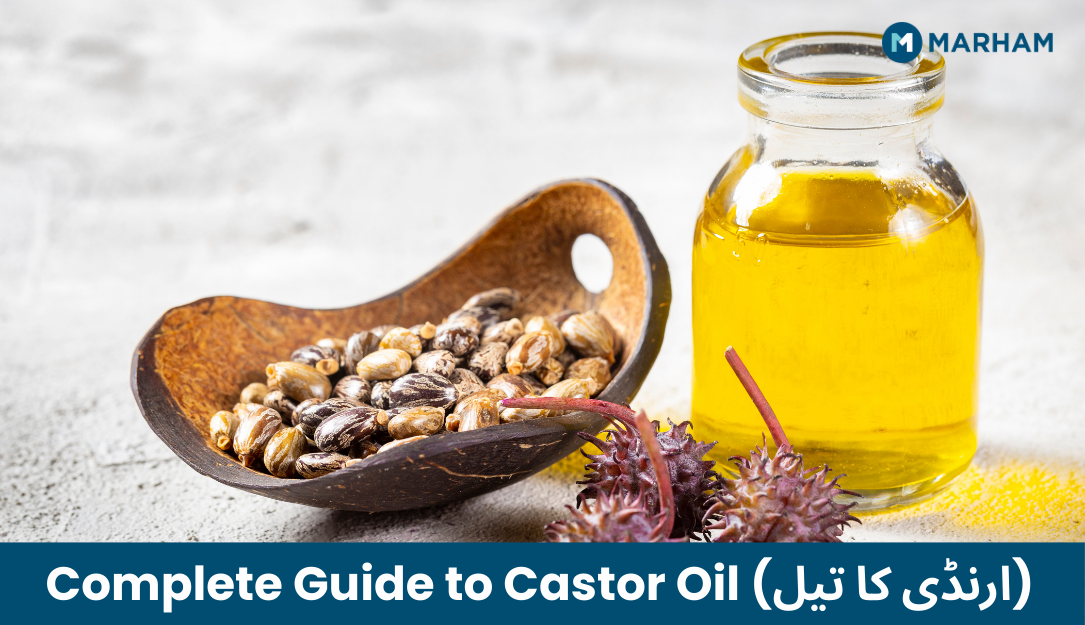
You have probably seen castor oil bottles at every medical store in Pakistan. Your grandmother may have told you to use it for constipation or hair. But what is castor oil in Urdu, and does it actually work? This guide separates facts from myths using verified medical research.
Castor Oil Meaning in Urdu
Castor oil meaning in Urdu is ارنڈی کا تیل (Arandi ka tel). Some people also call it روغن ارنڈ (Roghan Arandi). The oil comes from pressing seeds of the Ricinus communis plant, which grows commonly in Pakistan, India, and Africa. The name “arandi” refers to the castor plant itself, while “tel” means oil.
کاسٹر آئل کو اردو میں ارنڈی کا تیل کہا جاتا ہے۔ یہ تیل ارنڈی کے بیجوں سے حاصل کیا جاتا ہے اور روایتی طور پر صحت، بالوں اور جلد کی دیکھ بھال کے لیے استعمال ہوتا ہے۔ ارنڈی کا تیل اپنی گاڑھی ساخت اور طاقتور خصوصیات کی وجہ سے مشہور ہے، خاص طور پر قبض کے علاج، بالوں کی نشوونما، اور جلد کی خشکی دور کرنے کے لیے۔
What Makes Castor Oil Different?
Castor oil contains a fatty acid called ricinoleic acid. It is about 85-90% of the oil’s total composition. This percentage is unusually high compared to other vegetable oils. The remaining 10-15% includes linoleic acid (4%), oleic acid (3%), and stearic acid (1%).
This ricinoleic acid gives castor oil its thick, sticky texture and most of its medicinal properties. According to research published in the Proceedings of the National Academy of Sciences, ricinoleic acid activates specific receptors (EP3 prostanoid receptors) in intestinal and uterine smooth muscles.
FDA-Approved Use: Constipation Relief
The U.S. Food and Drug Administration (FDA) has approved only one medical use for castor oil: as a stimulant laxative for occasional constipation.
How it works: When you swallow castor oil, intestinal enzymes break it down and release ricinoleic acid. This acid stimulates muscle contractions in the intestines, pushing stool through your system.
Dosage (for adults): 15 to 60 mL as a single dose. Mix it with juice to mask the taste. Results typically appear within 2-6 hours.
Important: Doctors do not recommend castor oil as a first-line treatment for constipation. Modern laxatives have fewer side effects. Use castor oil only occasionally, not regularly.
Castor Oil Benefits for Hair

Many Pakistanis apply castor oil to their scalp expecting faster hair growth. However, a 2022 systematic review published in the Journal of Drugs in Dermatology examined scientific evidence for this claim.
The finding: There is no strong evidence that castor oil promotes hair growth. The review found only “weaker evidence for castor oil improving hair quality by increasing hair luster.”
What castor oil can do for hair:
- Add shine and luster to dry hair.
- Moisturize the scalp due to its thick, occlusive nature.
- Reduce scalp inflammation.
What it cannot do:
- Speed up hair growth beyond normal rates.
- Reverse hair loss or baldness.
- Regrow hair in bald patches.
If you use castor oil for hair, apply a small amount to your scalp, massage gently, and leave for 30-60 minutes before washing. The massage itself may improve blood circulation, which could benefit scalp health.
Castor Oil Benefits for Skin

Castor oil uses in different communities often include skin care. Here is what research shows:
Moisturizing:
A study on skin explants found that castor oil reduced transepidermal water loss by 50 µg/cm² within one hour of application. The fatty acids create a protective barrier that locks in moisture.
Dark circles:
A 2023 clinical trial at Shiraz University of Medical Sciences tested castor oil cream on 22 patients with dark circles under their eyes. After 2 months of twice-daily application, participants showed reduced melanin levels, fewer wrinkles, and improved skin laxity.
Chapped lips:
The American Academy of Dermatology lists castor oil as an ingredient to look for in products that heal chapped lips.
Wound healing:
A 2018 laboratory study found that ricinoleic acid may promote wound healing due to its anti-inflammatory and pain-relieving properties. However, this study was done on rats, not humans.
How to Use Castor Oil on Skin
For dry skin or lips, apply a thin layer of castor oil directly. Because the oil is thick and sticky, many people mix it with a lighter carrier oil like coconut or almond oil (1:1 ratio).
- Do a patch test first.
- Apply a small amount to your inner forearm and wait 24 hours.
- If you notice redness, itching, or swelling.
- Do not use it on your face.
Side Effects and Warnings
Castor oil is generally safe when used correctly, but it can cause problems if misused.
When taken orally:
- Abdominal cramping
- Diarrhea (can be severe)
- Nausea and vomiting
- Dehydration
- Electrolyte imbalances
- Dizziness
When applied to skin:
- Allergic reactions (rare)
- Skin irritation in sensitive individuals
- Clogged pores if applied too heavily
Who Should Avoid Castor Oil?

Pregnant women:
Castor oil is contraindicated during pregnancy. According to NCBI StatPearls, ingesting castor oil may induce labor and cause complications including meconium staining (when the baby passes stool before birth).
Never use castor oil during pregnancy without your doctor’s supervision.
People with intestinal problems:
Do not take castor oil if you have abdominal pain, nausea, vomiting, or rectal bleeding. Avoid it if you have inflammatory bowel disease, appendicitis, or intestinal obstruction.
Children:
The administration of castor oil to infants is risky and should be avoided. For children ages 2-12, only use under a doctor’s guidance.
Myths About Castor Oil
| Myths | Reality | |
| 1 | Castor oil grows hair 3-5 times faster | No clinical evidence supports this claim. Hair grows about 1 cm per month regardless of what oil you apply. |
| 2 | Castor oil detoxifies the liver | Your liver and kidneys naturally detoxify your body. No scientific evidence shows castor oil provides additional detox benefits. |
| 3 | Castor oil treats cancer | According to MD Anderson Cancer Center, castor oil has no role as a cancer treatment, whether taken orally or applied externally. |
| 4 | Castor oil improves eyesight | Ophthalmologists warn that using castor oil in eyes can lead to infections, corneal ulcers, or even blindness. |
Where to Buy Castor Oil in Pakistan
Castor oil (Arandi ka tel) is available at:
- Local pharmacies
- Pansari shops (traditional herbal stores)
- Online marketplaces
- Supermarkets in the health section
Look for cold-pressed, pure castor oil without additives. Check the expiration date before purchasing.
Frequently Asked Questions About Castor Oil
What is castor oil called in Urdu?
Castor oil in Urdu is called ارنڈی کا تیل (Arandi ka tel) or روغن ارنڈ (Roghan Arandi).
Can I drink castor oil daily?
No. Castor oil should only be used occasionally for constipation relief. Regular use can damage your intestines and cause your body to depend on laxatives for bowel movements.
Does castor oil help with hair growth?
Scientific evidence does not support castor oil for hair growth. It may add shine and moisture to existing hair but will not make hair grow faster.
Is castor oil safe during pregnancy?
No. Castor oil may induce labor and is contraindicated during pregnancy. Always consult your doctor before using any remedy while pregnant.
How much castor oil should I take for constipation?
Adults can take 15-60 mL as a single dose. Mix with juice. Do not exceed this amount, and do not use it regularly.
Consult a Doctor Before Using Castor Oil!
Castor oil has been used in Pakistani households for generations. However, traditional use does not always mean safe use. The only FDA-approved purpose for castor oil is occasional constipation relief.
If you experience digestive problems that require frequent laxative use, or if you have concerns about hair loss or skin conditions, speak with a qualified healthcare provider. They can recommend treatments backed by stronger evidence.
Need guidance on if castor oil is right for your specific situation? Consult with a doctor at Marham. Call 0311-1222398 to schedule your appointment for online or in-person consultation.
