
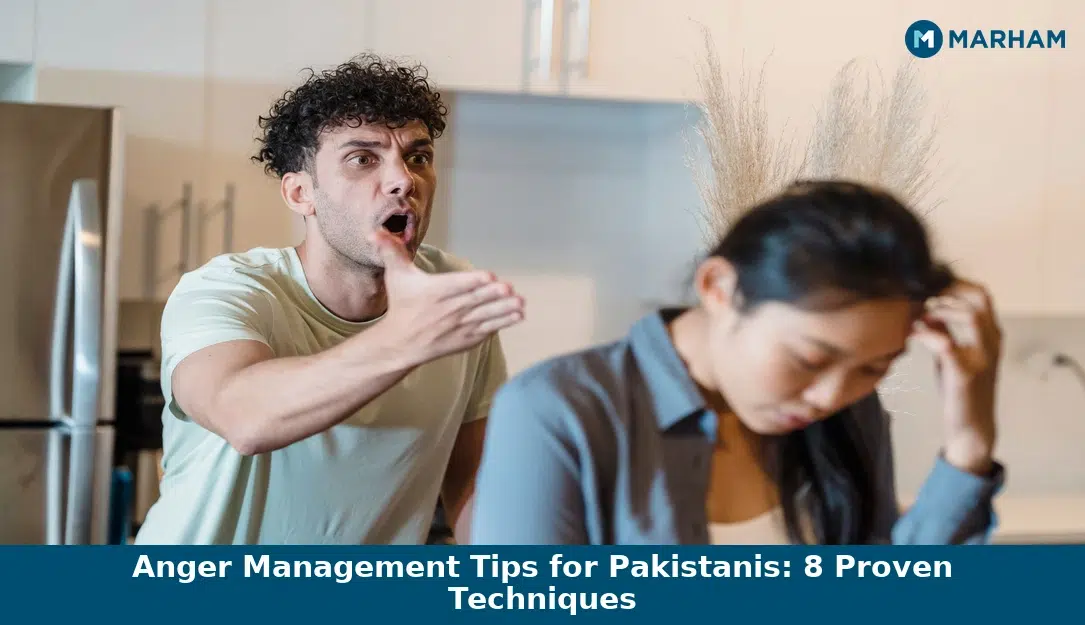

Ghusa — the kind that makes your heart pound and your jaw clench — is something most Pakistanis know well. Whether it’s a rickshaw that cuts you off on Lahore’s Canal Road, a power outage during a summer heatwave, or a disagreement at the dinner table with extended family, daily life here comes loaded with triggers that can push anyone’s patience to its edge.
What makes anger management genuinely hard in Pakistan is the cultural layer on top of the physiological one. Many people grew up in households where anger was either expressed loudly or suppressed entirely, with little middle ground. Neither extreme is healthy. Suppressed anger tends to surface as chronic stress, headaches, or strained relationships; explosive anger damages trust and, over time, raises cardiovascular risk.
The good news is that anger is a normal emotion, not a character flaw. It becomes a problem only when it’s uncontrolled or disproportionate. The eight techniques below are grounded in evidence and adapted to the realities of Pakistani everyday life.
Quick Answer
Anger management means learning to recognise your anger triggers early and responding to them in a way that doesn’t harm you or the people around you. For most people in Pakistan, a combination of controlled breathing, a brief physical timeout, and identifying the real source of the frustration can reduce an anger episode within minutes. Persistent or intense anger that affects relationships or daily life deserves professional support from a psychiatrist or psychologist.
Gusse Par Qabu | غصے پر قابو
غصہ ایک فطری جذبہ ہے، لیکن جب یہ بے قابو ہو جائے تو صحت، رشتے اور کام سب متاثر ہوتے ہیں۔ پاکستان میں روزمرہ کا دباؤ، ٹریفک، لوڈشیڈنگ اور خاندانی مسائل اکثر غصے کو بھڑکاتے ہیں۔ گہری سانس لینا، جسمانی ورزش اور اپنے خیالات کو پہچاننا غصے کو کنٹرول کرنے کے مؤثر طریقے ہیں۔ اگر غصہ بار بار ہو اور رشتوں کو نقصان پہنچائے تو کسی ماہر نفسیات سے مشورہ لینا ضروری ہے۔
What Happens in Your Body When You Get Angry
Anger isn’t just a feeling. It’s a full-body physiological event. When you perceive a threat or injustice, your brain’s amygdala fires an alarm signal, triggering a release of adrenaline and cortisol. Your heart rate climbs, blood pressure rises, muscles tense, and breathing becomes shallow and fast. This is the classic fight-or-flight response, and it’s the same mechanism that kept our ancestors alive.
The problem is that the same system activates whether you’re facing a real physical danger or sitting in Karachi traffic for the third hour. According to the American Psychological Association, chronic, unmanaged anger is associated with higher risk of hypertension, heart disease, and weakened immune function. For Pakistani men and women already at elevated risk of hypertension, this connection matters.
Common Anger Triggers in Pakistani Daily Life
Recognising your personal triggers is the first practical step in any anger management plan. Triggers vary by person, but several patterns come up repeatedly in Pakistani urban and semi-urban contexts.
- Traffic congestion and reckless driving, especially during Karachi and Lahore rush hours
- Load-shedding during summer heat, when temperatures in cities like Multan and Faisalabad regularly exceed 42°C
- Financial pressure and job insecurity, which Pakistan’s National Mental Health Survey 2016 identified as a leading source of psychological distress
- Joint family dynamics, where boundaries between nuclear and extended family roles can create daily friction
- Perceived disrespect, particularly in workplace settings where hierarchy is rigid
- Sleep deprivation, which lowers the brain’s ability to regulate emotion
Keeping a simple trigger log for one week, just a few notes on your phone after each anger episode, can reveal patterns you hadn’t noticed. Most people find two or three situations account for the majority of their outbursts.
8 Anger Management Techniques That Work
These techniques are drawn from cognitive-behavioural therapy (CBT), a structured psychological approach that has strong clinical evidence for reducing anger, and from relaxation science. They don’t require any equipment or cost.
- Use the 4-7-8 breathing method. When you feel anger rising, inhale through your nose for 4 counts, hold for 7, and exhale slowly through your mouth for 8. This activates your parasympathetic nervous system, the body’s natural brake on the stress response. Do it twice before you say or do anything. It takes under 30 seconds and works anywhere, including in a meeting room or at a family dinner table.
- Take a physical timeout before you speak. Step away from the situation for at least 10 minutes. Walk to another room, go outside, or sit quietly. This is not avoidance; it’s giving your prefrontal cortex, the rational part of your brain, time to come back online after the amygdala hijack. In joint-family homes, having a pre-agreed signal with your spouse or sibling (“I need 10 minutes”) prevents the timeout from being misread as hostility.
- Move your body. Physical activity metabolises the adrenaline and cortisol that anger floods your system with. A brisk 20-minute walk in a local park, a few rounds of the neighbourhood, or even climbing stairs in your building all work. For those who prefer structured exercise, a morning session at a local gym in Islamabad or Lahore typically costs between Rs. 1,500 and Rs. 3,000 per month and is one of the most cost-effective mental health investments available.
- Identify the emotion beneath the anger. Anger is almost always a secondary emotion. Underneath it sits hurt, fear, embarrassment, or a sense of injustice. Ask yourself: “What am I actually feeling right now?” Naming the real emotion, even silently, reduces its intensity. This is one of the core skills taught in CBT for anger, and it’s something a psychiatrist or psychologist can help you practise systematically.
- Challenge the thought, not just the feeling. Anger is often driven by cognitive distortions, thinking patterns that exaggerate threat or injustice. “He always does this” or “She never respects me” are examples. When you catch a thought like that, ask: “Is always or never actually true here?” Replacing absolute language with more accurate language (“He sometimes does this, and it bothers me”) reduces the emotional charge significantly.
- Use “I” statements when you do speak. Instead of “You made me furious”, say “I felt disrespected when that happened.” This is not about being soft; it’s about being precise. “You” statements put the other person on the defensive and escalate conflict. “I” statements describe your experience without attacking, which makes resolution far more likely.
- Practice a daily stress-reduction habit. Anger threshold drops sharply when overall stress is high. Building a daily buffer, whether that’s 15 minutes of Fajr-time quiet reflection, a short walk after Asr, or reading for 20 minutes before bed, keeps your baseline calm higher. For practical techniques, the stress management guide for Pakistani readers on Marham covers several approaches that fit into a local routine.
- Try progressive muscle relaxation (PMR) at night. PMR involves tensing and releasing each muscle group from feet to face over about 15 minutes. It’s particularly useful for people who carry anger as physical tension in the shoulders, neck, or jaw. Done before sleep, it also improves sleep quality, which in turn raises your emotional tolerance the next day.
How Anger Affects Relationships in Pakistani Families
Unmanaged anger does its most lasting damage in close relationships. In Pakistani households, where multiple generations often live under one roof, a single explosive episode can create rifts that take months to repair. Children who witness frequent parental anger are more likely to develop anxiety and to model the same behaviour themselves, according to research published in the Journal of Family Psychology.
The Islamic tradition offers a specific and practical framework here. The Prophet Muhammad (PBUH) advised sitting when angry, and making wudu (ablution) if the anger persists. These actions interrupt the physical momentum of an anger episode: sitting lowers physiological arousal, and the cool water of wudu activates the body’s calming response. Many Pakistani families find this framework easier to adopt than clinical language, and it carries the same functional logic.
Anger Management Techniques vs. Suppression: Key Differences
| Approach | What It Looks Like | Long-Term Effect |
|---|---|---|
| Healthy management | Naming the emotion, taking a timeout, expressing calmly | Reduced conflict, better relationships, lower blood pressure |
| Suppression | Swallowing the feeling, pretending nothing happened | Chronic stress, resentment, physical tension, eventual outbursts |
| Explosion | Shouting, slamming, verbal aggression | Damaged trust, regret, escalating pattern of conflict |
| Therapy-assisted | CBT sessions with a psychologist, 8 to 10 weeks | Lasting change in thought patterns and emotional response |
When Anger Needs Professional Attention
Self-help techniques work well for ordinary situational anger. But some patterns signal that professional support is needed. Seek help if your anger leads to physical aggression, if it’s causing serious damage to your marriage or job, if you feel anger almost every day, or if you’re using alcohol or substances to cope with it. These are not signs of weakness; they’re signs that the underlying emotional regulation system needs more targeted support than self-help can provide.
Cognitive-behavioural therapy for anger typically runs over 8 to 10 weeks of structured sessions, according to the American Psychological Association, and produces measurable improvements in most people. A qualified psychiatrist in Pakistan can assess whether therapy, medication for an underlying condition, or a combination is the right path forward.
If your anger is affecting your relationships, work, or physical health, speaking to a specialist is a practical next step, not a last resort. Marham connects you with verified psychiatrists and psychologists across Pakistan for online or in-person consultations.
Frequently Asked Questions
What are the best anger management techniques for immediate relief?
The fastest-acting techniques are controlled breathing (inhale 4 counts, hold 7, exhale 8) and a physical timeout of at least 10 minutes away from the trigger. These work because they interrupt the physiological stress response before it peaks.
Can anger damage your physical health?
Yes. Chronic unmanaged anger is associated with elevated blood pressure, increased risk of heart disease, and weakened immune function, according to the American Psychological Association. For Pakistanis already at higher risk of hypertension, managing anger is a direct health priority.
What causes sudden anger with no obvious reason?
Sudden anger often has a hidden trigger: sleep deprivation, hunger, chronic stress, or an underlying condition such as depression or anxiety. If you find yourself frequently angry without a clear cause, a mental health evaluation can help identify what’s driving it.
Is anger a mental health problem?
Anger itself is a normal emotion, not a disorder. It becomes a clinical concern when it’s frequent, intense, and disproportionate to the situation, or when it causes harm. In those cases it may be a symptom of depression, PTSD, or another condition that benefits from professional treatment.
How does exercise help with anger?
Exercise metabolises the adrenaline and cortisol released during an anger response, lowering physiological arousal. Even a 20-minute brisk walk can measurably reduce anger intensity and improve mood for several hours afterward.
When should I see a doctor for anger issues?
See a doctor if anger is happening almost daily, leading to physical aggression, damaging important relationships, or if you’re using substances to cope. A psychiatrist can assess whether therapy, medication for an underlying condition, or both is appropriate for your situation.
How long does anger management therapy take to work?
According to the American Psychological Association, most people see meaningful improvement in anger levels within 8 to 10 weeks of structured CBT sessions. The timeline varies depending on the severity of the anger and the presence of any underlying conditions.
Conclusion
Anger is not the enemy. It’s a signal that something matters to you or that a boundary has been crossed. The goal of anger management isn’t to stop feeling angry; it’s to respond to that signal in a way you won’t regret. For most Pakistanis, a combination of recognising personal triggers, using a breathing or timeout technique in the moment, and building a daily stress buffer is enough to shift the pattern significantly. When the anger runs deeper, professional support is available, effective, and nothing to delay.
This article is for general informational purposes only and does not constitute medical advice. Please consult a qualified healthcare professional for personalised guidance.