


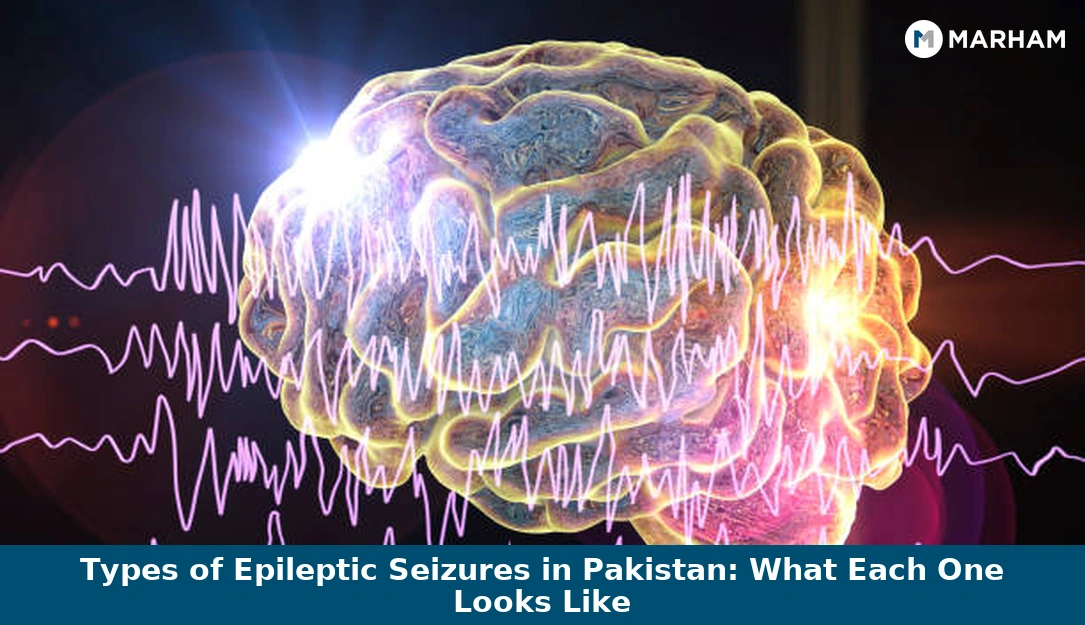
Epilepsy is one of the most common chronic neurological disorders in Pakistan, yet the seizures it causes are frequently misread. A child who stares blankly for a few seconds gets labelled inattentive in class. A teenager whose hand jerks at breakfast is told they slept badly. These are not personality quirks — they may be seizures.
According to the World Health Organization, approximately 50 million people worldwide live with epilepsy. A population-based study published in PubMed, covering over 24,000 individuals from southern Pakistan, estimated the prevalence at roughly 9.99 per 1,000 people, with the highest burden falling on those under 30 years of age. Pakistan’s national epilepsy guidelines, published through the Aga Khan University, estimate around 2 million Pakistanis are living with active epilepsy — roughly one-tenth of the global burden.
The single most important thing families and patients can do is recognise what type of seizure they are seeing. The International League Against Epilepsy (ILAE), the global body that sets seizure classification standards, updated its classification system in April 2025. It now recognises four main seizure classes and 21 distinct seizure types. This guide walks through the ones Pakistani patients and caregivers encounter most.
مرگی کے دورے اردو میں
مرگی ایک دماغی بیماری ہے جس میں دماغ کے اعصابی خلیوں میں اچانک اور بے قابو برقی سرگرمی ہوتی ہے۔ پاکستان میں یہ بیماری لاکھوں افراد کو متاثر کرتی ہے، خاص طور پر تیس سال سے کم عمر کے لوگوں میں۔ مرگی کے دورے کئی قسم کے ہوتے ہیں، جیسے کہ جھٹکے والا دورہ، غیر حاضر ذہنی کی کیفیت، اور پٹھوں کی اچانک کمزوری۔ ہر قسم کی علامات الگ ہوتی ہیں، اس لیے صحیح تشخیص کے لیے کسی ماہر نیورولوجسٹ سے رجوع کرنا ضروری ہے۔
How Are Epileptic Seizures Classified?
Seizures are classified first by where in the brain they begin, then by whether the person remains conscious, and then by what the body does. The 2025 ILAE classification uses four onset categories: focal, generalized, unknown, and unclassified.
Understanding this framework matters because the seizure type directly determines which anti-epileptic medication a neurologist will prescribe. A drug that controls tonic-clonic seizures may do nothing for absence seizures, and vice versa.
| Feature | Focal Seizure | Generalized Seizure |
|---|---|---|
| Brain origin | One hemisphere (side) | Both hemispheres simultaneously |
| Consciousness | May be preserved or impaired | Usually impaired |
| Duration | Seconds to a few minutes | Seconds to several minutes |
| Aura (warning) | Common | Rare |
| Common subtypes | Focal aware, focal impaired awareness | Tonic-clonic, absence, myoclonic, atonic |
| EEG pattern | Localised abnormal discharge | Widespread bilateral discharge |
Focal Seizures: When Only Part of the Brain Is Involved
Focal seizures, formerly called partial seizures, begin in a specific area of one brain hemisphere. According to CURE Epilepsy, focal seizures affect approximately 60% of people with epilepsy worldwide.
There are two main subtypes based on awareness:

Focal aware seizures (the older term was simple partial seizures): the person stays fully conscious throughout. They may feel a sudden wave of fear, smell something that is not there, notice their hand twitching, or experience a strange rising sensation in the stomach. These sensory or emotional experiences are sometimes called an aura. Many people with generalised seizures report an aura just before losing consciousness — that aura is itself a focal aware seizure spreading to both hemispheres.
Focal impaired awareness seizures (formerly complex partial seizures): consciousness is disrupted. The person may stare blankly, make repetitive automatic movements such as lip-smacking, picking at clothing, or walking in circles. They cannot respond normally to their name and will have little or no memory of the event afterward. These episodes last roughly one to three minutes.
A focal seizure can sometimes spread from one hemisphere to both, becoming a focal to bilateral tonic-clonic seizure. This is what older textbooks called secondary generalisation.
Generalised Seizures: When Both Sides of the Brain Fire at Once
Generalised seizures involve both brain hemispheres from the very start. They typically cause some loss of consciousness and vary widely in what the body does.
Tonic-Clonic Seizures (Grand Mal)
This is the most recognised seizure type and, in Pakistan, the most common. The PubMed population study from southern Pakistan found tonic-clonic seizures in 77% of cases — 59% primary generalised and 18% secondarily generalised. The seizure has two phases:
- Tonic phase: the body suddenly stiffens. The person may cry out as air is forced through the vocal cords, then falls.
- Clonic phase: rhythmic jerking of the arms and legs follows, typically lasting one to three minutes.
Afterward, the person enters a postictal state: deep confusion, exhaustion, and sometimes a severe headache that can last 30 minutes to several hours. Some people experience Todd’s paralysis — a temporary weakness or paralysis on one side of the body that can last up to 36 hours and is sometimes mistaken for a stroke, according to the National Institute of Neurological Disorders and Stroke (NINDS).
Absence Seizures (Petit Mal)
Absence seizures are brief, sudden lapses in awareness, most common in children. The child stops mid-sentence, stares into space with a blank expression, and may blink rapidly or make small chewing movements. The episode typically lasts 5 to 30 seconds, then stops just as abruptly as it started, with no postictal confusion.
In Pakistani school settings, absence seizures are regularly dismissed as daydreaming or inattention, and children are sometimes referred for ADHD assessment before the neurological cause is identified. If a child has many such episodes daily and cannot recall them, that is a red flag for absence epilepsy, not a behavioural problem.
Myoclonic Seizures
Myoclonic seizures produce sudden, brief, shock-like jerks of one or more muscle groups — most commonly the arms and shoulders. They usually last less than a second. Many patients describe it as being startled by an electric shock. These jerks typically occur in the morning, shortly after waking, and can cause a person to drop or fling objects. They may appear in isolation or as part of a broader epilepsy syndrome such as juvenile myoclonic epilepsy.
Atonic Seizures (Drop Attacks)
Atonic seizures cause a sudden, complete loss of muscle tone. The person’s head may drop forward, or they may collapse to the ground without any warning. These episodes last less than 15 seconds, and the person typically regains consciousness immediately. The danger is the fall itself: repeated drop attacks cause head injuries, which is why some patients require protective headgear. Neurologists in Pakistan managing patients with frequent atonic seizures take fall prevention very seriously.
Tonic Seizures
Tonic seizures involve sustained stiffening of muscles, usually in the back, arms, and legs, without the clonic jerking phase. They tend to occur during sleep and last 20 seconds to a few minutes. The person may fall if standing.
Clonic Seizures
Clonic seizures consist of rhythmic, repetitive jerking movements without the preceding tonic stiffening. They are less common than tonic-clonic seizures and typically affect the neck, face, and arms.
Epileptic Spasms: A Type Seen Mainly in Infants
Epiliptic spasms are brief, sudden flexing or extending of the trunk and limbs, lasting about one second each. They cluster in groups, repeating every few seconds over 5 to 10 minutes, and may occur multiple times a day. When they appear in infants under two years old, they are called infantile spasms, a serious condition that requires urgent neurological evaluation. Early treatment is linked to better developmental outcomes.

Seizure First Aid: What to Do in Pakistan
Knowing how to respond is as important as knowing the type. These steps apply to most convulsive seizures:
- Stay calm and stay with the person.
- Clear the area of hard or sharp objects.
- Gently turn the person onto their side (recovery position) to keep the airway clear.
- Do not put anything in their mouth — this is a common and dangerous misconception in Pakistan.
- Time the seizure. If it lasts more than 5 minutes, call emergency services immediately.
- Do not restrain the person’s movements.
- Stay with them through the postictal confusion and reassure them gently when they regain awareness.
According to NINDS, evidence shows that five minutes of continuous seizure activity is sufficient to damage neurons, making it a medical emergency.
Do You Need to See a Specialist? A Quick Self-Check
Consider booking a neurological evaluation if any of the following apply:
- You or a family member has had more than one unexplained episode of staring, jerking, falling, or confusion
- Seizure-like episodes are happening during sleep and going unnoticed until someone reports them
- A child is being flagged for inattention or behavioural issues but cannot recall episodes during the day
- A known seizure lasted more than 5 minutes
- Recovery after an episode takes longer than 30 minutes
- A new type of episode has appeared in someone already diagnosed with epilepsy
If 3 or more of these apply, a specialist evaluation is warranted.
Speak to a Neurologist on Marham
Getting access to a neurologist in Pakistan can mean long waiting times, particularly outside Lahore, Karachi, and Islamabad. Many families in smaller cities spend weeks waiting for an appointment while a child continues having daily absence episodes or a young adult avoids driving because of uncontrolled focal seizures.
Marham connects you with verified neurologists in Pakistan through online consultations, so you can get a specialist opinion without travelling. A short online consultation typically takes 15 to 20 minutes and can clarify whether what you are observing warrants an EEG, a brain MRI, or an adjustment to existing medication. If the neurologist suspects a specific epilepsy syndrome, they can refer you for in-person testing. You can also use Marham to learn more about epilepsy and seizure disorders and related neurological conditions while you wait for your appointment.
Frequently Asked Questions
What is the difference between focal and generalised seizures?
Focal seizures start in one specific area of the brain and may or may not affect consciousness, while generalised seizures involve both hemispheres from the beginning and almost always cause some loss of awareness. The distinction matters because the two types respond to different medications.
Can absence seizures go undiagnosed for years?
Yes, they can. Absence seizures are brief and leave no postictal confusion, so they are frequently mistaken for daydreaming, inattention, or ADHD, particularly in school-age children in Pakistan. A video EEG can confirm the diagnosis definitively.
What triggers epileptic seizures?
Common triggers include sleep deprivation, missed anti-epileptic medication, fever, flashing lights (photosensitivity), alcohol, and significant psychological stress. Triggers vary between individuals, and not every seizure has an identifiable trigger.
What happens after a tonic-clonic seizure — the postictal phase?
After a tonic-clonic seizure, the person enters a postictal state: deep confusion, fatigue, headache, and sometimes temporary weakness on one side of the body (Todd’s paralysis). This phase can last from 30 minutes to several hours and is a normal part of the seizure, not a separate emergency.
How is the type of seizure diagnosed?
Diagnosis relies on a detailed description of the episode from the patient and a witness, combined with an EEG (electroencephalogram, a brain electrical activity test) and often a brain MRI. Video-EEG monitoring, where the brain activity and body movements are recorded simultaneously, is the most reliable method for classifying seizure type.
Conclusion
Epileptic seizures are not one thing. A blank stare in a child, a morning hand jerk in a teenager, and a full convulsion in an adult can all be epilepsy — but each is a different seizure type requiring a different clinical approach. Recognising what you are seeing is the first step toward getting the right diagnosis and the right treatment. If something looks like a seizure, it deserves a neurological evaluation, not a wait-and-see approach.
