


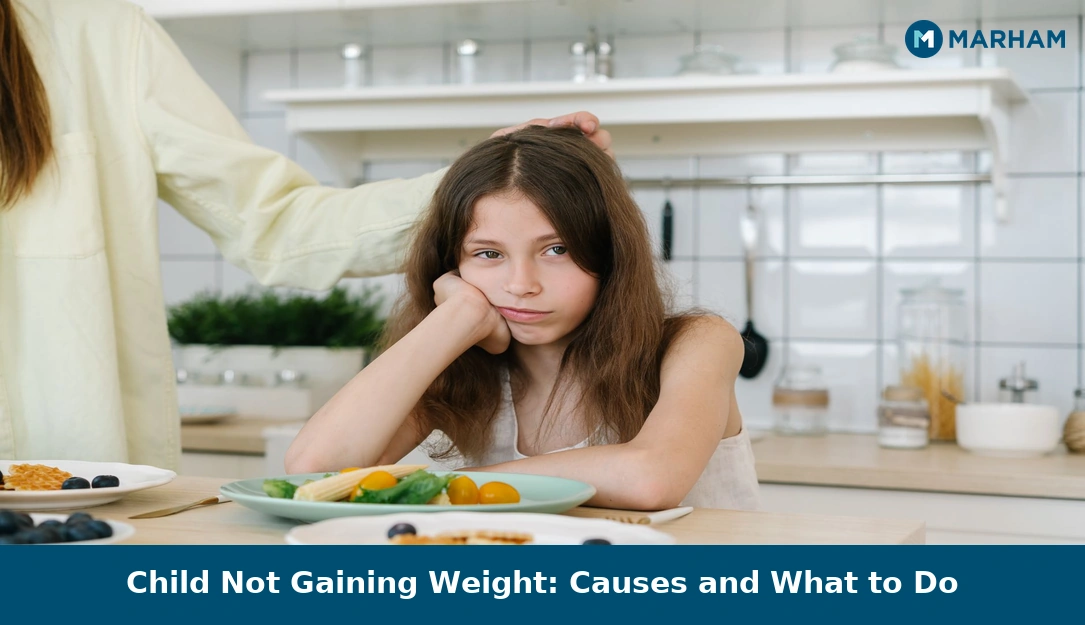
Many Pakistani parents notice at some point that their child’s weight has stayed the same for weeks, or that the growth chart at the clinic shows a worrying plateau. It’s one of the most common reasons families visit a paediatrician, and the anxiety it brings is completely understandable.
The scale of the problem in Pakistan is real. According to the Pakistan Demographic and Health Survey (2017-18), over 23% of children under five years were underweight, and the Global Nutrition Report places Pakistan’s under-5 stunting rate at 37.6%, well above the regional average for Asia. These numbers reflect a mix of dietary gaps, feeding practices, and underlying health conditions that vary widely from Karachi’s urban households to rural Punjab.
Most of the time, the reason a child isn’t gaining weight is simpler than parents fear. But knowing when a slow growth curve is normal and when it signals something that needs attention is the difference between unnecessary worry and catching a real problem early.
بچے کا وزن نہ بڑھنا: اہم باتیں
بچے کا وزن نہ بڑھنا پاکستان میں بہت عام مسئلہ ہے جس کی زیادہ تر وجہ ناکافی غذا یا غلط کھانے کی عادات ہیں۔ بعض اوقات آنتوں کے کیڑے، بار بار اسہال، یا معدے کی بیماریاں بھی وزن بڑھنے میں رکاوٹ بنتی ہیں۔ والدین کو چاہیے کہ بچے کی نشوونما کا باقاعدہ جائزہ لیں اور اگر وزن کئی ہفتوں تک نہ بڑھے تو ڈاکٹر سے رابطہ کریں۔ بروقت تشخیص اور مناسب خوراک سے بچے کی صحت بہتر کی جا سکتی ہے۔
What Does “Not Gaining Weight” Actually Mean?
A child not gaining weight doesn’t automatically mean something is wrong. Doctors track growth using WHO growth charts, which plot weight, height, and head circumference over time. What matters most is the trend, not a single number.
A child who has always sat at the 10th percentile and stays there is growing consistently. A child who drops from the 50th percentile to the 10th over a few months is a different story. Doctors sometimes call persistent poor weight gain “failure to thrive” or, more recently, “growth faltering,” a term that describes a pattern rather than a diagnosis.
For Pakistani parents, a practical rule is this: if your child’s weight has not moved at all over two to three consecutive monthly checks, or if they seem to be losing ground compared to their height, that deserves a proper evaluation.
Common Causes of Poor Weight Gain in Children
Not enough calories is the reason in the vast majority of cases. Research published in peer-reviewed paediatric literature consistently shows that over 90% of children with poor weight gain are simply not consuming enough calories for their age and activity level. This can happen even when a child appears to eat regularly.
For Pakistani families, a few patterns come up again and again in clinical practice:
- Picky eating or small portions. Many toddlers go through a phase where they refuse foods they previously accepted. A child who eats only roti with a little daal at every meal may not be getting enough fat, protein, or calories.
- Too much milk or juice. Children who drink large amounts of buffalo milk, packaged juice, or sweet chai throughout the day often feel full without getting adequate solid nutrition.
- Early introduction of watered-down foods. Thin, watery khichdi or diluted porridge given to infants transitioning to solids provides very few calories per serving.
- Intestinal worms (helminth infections). This is a major and often overlooked cause in Pakistan. Worm infestations, particularly roundworm and hookworm infections, are widespread in children across Punjab, Sindh, and KPK. They compete for nutrients in the gut and can cause chronic low-grade malabsorption, meaning a child eats adequately but absorbs far less than they should.
- Repeated infections and diarrhoea. Each episode of gastroenteritis sets a child back. In areas with poor sanitation or unfiltered water, repeated gut infections keep breaking the cycle of weight gain.
- Malabsorption conditions. Some children have conditions that prevent the gut from absorbing nutrients properly. Coeliac disease, which causes intolerance to gluten, and chronic giardiasis (a common parasitic gut infection in Pakistan) are two examples worth ruling out if dietary changes don’t help.
- Underlying medical conditions. Less commonly, heart conditions, thyroid problems, or kidney disease can interfere with normal growth. A child with congenital heart disease, for example, may burn extra calories just breathing and pumping blood, making it hard to gain weight even with adequate intake.
Warning Signs That Need Prompt Attention
Not every slow-gaining child needs urgent investigation. But certain signs should prompt a visit to a paediatrician without delay:
- Weight loss (not just plateau) over two or more weeks
- Visible wasting: loose skin on the thighs and upper arms, sunken cheeks
- Persistent diarrhoea lasting more than two weeks
- Bloated abdomen with poor appetite
- Delayed milestones: not sitting, walking, or talking at the expected age
- Pale skin, fatigue, or unusual irritability
- Frequent vomiting after feeds
If a child is losing weight alongside any of these signs, a same-day or next-day appointment is appropriate, not a wait-and-see approach.
Practical Steps Pakistani Parents Can Take at Home
If a doctor has assessed your child and ruled out an underlying medical condition, the focus shifts to improving caloric density and feeding habits. These steps are grounded in paediatric nutrition guidance and adapted for a typical Pakistani household.
- Add healthy fats to every meal. A teaspoon of pure desi ghee stirred into daal, khichdi, or mashed vegetables adds roughly 40 to 45 calories without increasing the volume of food. Full-fat dairy, including yogurt made from buffalo milk, is also calorie-dense and easy for most children to eat.
- Offer eggs daily. Eggs are one of the most affordable and complete protein sources available in Pakistan, typically priced at Rs. 20 to 30 per egg in most cities. Scrambled, boiled, or mixed into porridge, they suit children from around 6 months of age onward.
- Reduce liquid calories before meals. Offer water or milk after food, not before. Filling a child with milk or juice before a meal kills appetite for solid food.
- Increase meal frequency, not just portion size. Small children have small stomachs. Five to six small meals and snacks across the day, rather than three large ones, often work better. A mid-morning snack of mashed banana with a little full-fat yogurt is practical and calorie-rich.
- Choose calorie-dense local foods. Peanut butter (mungphali ka makhan), available at most kiryana stores for around Rs. 300 to 400 per jar, is an excellent high-calorie spread. Mashed avocado, lentils cooked with oil, and rice cooked with a little ghee are all good options.
- Ask about deworming. If your child hasn’t received a deworming tablet (such as albendazole or mebendazole, available at most pharmacies for under Rs. 50) in the last six months, discuss this with your doctor. The WHO recommends periodic deworming for children aged 1 to 5 in high-risk areas, and most of Pakistan qualifies.
- Track weight consistently. Weigh your child at the same time of day, once a week, and note it down. A consistent record helps the doctor see the trend clearly rather than relying on memory.
Growth Chart Comparison: Normal vs. Concerning Patterns
| Pattern | What It Means | Action Needed |
|---|---|---|
| Steady weight gain, even at low percentile | Normal constitutional growth | Routine monitoring |
| Weight plateau for 4 to 8 weeks | May be dietary or temporary | Review diet, see doctor if persists |
| Dropping 2 or more percentile lines | Growth faltering | Paediatric evaluation needed |
| Active weight loss | Potentially serious | See a doctor promptly |
| Weight low relative to height | Wasting (acute malnutrition) | Urgent medical assessment |
When to See a Specialist
If your child’s weight has not improved after two to four weeks of dietary changes, or if the doctor suspects an underlying cause, a referral to a specialist is the right next step. A nutritionist in Pakistan can build a structured meal plan based on your child’s exact caloric needs and food preferences, which is far more effective than general advice. If malabsorption or a gut condition is suspected, a paediatric gastroenterologist may be needed to run tests such as stool analysis, blood count, thyroid function, or coeliac screening. These tests are available at most government hospitals in Lahore, Karachi, and Islamabad, and at private labs for Rs. 1,500 to 5,000 depending on the panel.

Don’t wait for the situation to become severe. Early evaluation, even if it turns out to be nothing serious, gives you a clear plan and removes the guesswork.
Get Specialist Guidance on Marham
Finding a reliable paediatric nutritionist or child specialist in Pakistan can take time, especially outside major cities. Many parents in smaller towns like Multan, Faisalabad, or Quetta have limited access to specialist clinics, and long waiting times at government hospitals are common.
Marham connects you with verified nutritionists in Pakistan who can assess your child’s growth, review their diet, and provide a structured feeding plan through an online consultation. If an underlying medical condition is suspected, you can also consult a gastroenterologist to discuss whether further testing is needed. A short online session typically takes 15 to 20 minutes and can give you a clear direction without the wait.
Frequently Asked Questions
Why is my child eating well but still not gaining weight?
The most likely reasons are either that the food isn’t calorie-dense enough, or that the body isn’t absorbing nutrients properly. Intestinal worms, chronic diarrhoea, and conditions like giardiasis or coeliac disease can all cause poor absorption even when a child eats regularly. A doctor can investigate with simple stool and blood tests.
When should I worry about my child not gaining weight?
Worry if your child’s weight has not changed over two to three consecutive monthly checks, if they are actively losing weight, or if you notice visible wasting, persistent diarrhoea, or missed developmental milestones. Any of these signs warrants a prompt visit to a paediatrician.
Can intestinal worms cause a child not to gain weight?
Yes. Worm infestations are a common and underappreciated cause of poor weight gain in Pakistani children. Roundworms and hookworms compete for nutrients in the gut. Deworming with albendazole or mebendazole, as recommended by your doctor, is a straightforward first step in high-risk settings.
What foods help a child gain weight quickly?
Calorie-dense foods that suit Pakistani households include eggs, full-fat yogurt, desi ghee added to daal or khichdi, mashed banana with yogurt, lentils cooked with oil, and peanut butter. Increasing meal frequency to five or six times a day often helps more than increasing portion sizes at three meals.
Is it normal for toddlers to slow down in weight gain?
Yes, some slowdown in the rate of weight gain between ages 1 and 3 is normal, as toddlers become more active and their appetite naturally fluctuates. What’s not normal is a complete plateau or actual weight loss. If you’re unsure, checking your child’s position on a WHO growth chart with a doctor provides a clear answer. You can also read about healthy weight and BMI in Pakistan for broader context on growth monitoring.
Conclusion
A child not gaining weight is rarely a reason for panic, but it’s always a reason to pay attention. In Pakistan, where dietary gaps, intestinal infections, and limited access to specialist care all play a role, the most useful thing a parent can do is track growth consistently, improve caloric density in everyday meals using locally available foods, and consult a doctor early if the plateau persists. Catching the cause at four weeks is far easier than managing it at four months.
