
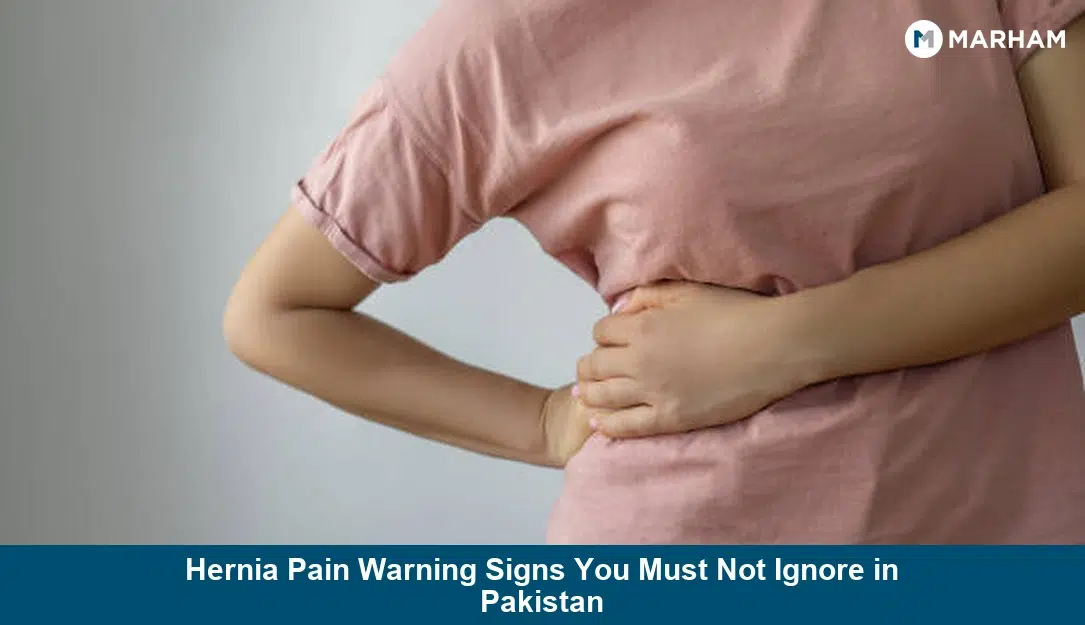
Hernia pain is something many Pakistani men and women quietly live with for months, assuming the groin bulge or abdominal ache will sort itself out. A visit to a general surgeon often gets delayed, especially in cities like Lahore and Rawalpindi where long clinic queues are common. That delay can sometimes turn a manageable condition into a medical emergency.
Hernias are among the most frequently operated conditions in Pakistan, with inguinal (groin) hernias being especially common in men who do heavy physical labour. According to clinical data, inguinal hernias affect roughly 25% of men at some point in their lives. Most cases are not immediately dangerous, but certain warning signs mean the situation has changed and urgent care is needed.
Knowing which symptoms are routine and which are red flags can make a real difference. The sections below walk through those signals clearly.
ہرنیا کے درد کے بارے میں اہم نکات
ہرنیا ایک ایسی حالت ہے جس میں کوئی اندرونی عضو یا بافت پٹھوں کی کمزور جگہ سے باہر نکل آتی ہے، اور اکثر پیٹ یا کمر کے قریب ابھار کی صورت میں نظر آتی ہے۔ پاکستان میں ہرنیا کے زیادہ تر مریض ابتدائی مراحل میں ڈاکٹر سے رجوع نہیں کرتے، جو کہ پیچیدگیوں کا سبب بن سکتا ہے۔ اگر ابھار اچانک سخت ہو جائے، واپس اندر نہ جائے، یا شدید درد کے ساتھ متلی اور قے شروع ہو جائے تو یہ ہنگامی طبی صورتحال ہے جس میں فوری سرجری کی ضرورت پڑ سکتی ہے۔ جنرل سرجن سے جلد مشورہ کرنا ہمیشہ بہتر ہوتا ہے تاکہ پیچیدگیوں سے بچا جا سکے۔
What Does Normal Hernia Pain Feel Like?
Not all hernia pain is alarming. Most hernias produce a dull ache or a feeling of pressure near the bulge, and that discomfort often gets worse during activities that strain the abdomen.
Common sensations include:
- A pulling or heavy feeling in the groin or belly
- Mild pain that worsens when coughing, sneezing, lifting, or bending
- Discomfort that eases when you lie down or rest
- A visible bulge that flattens when you lie flat
This pattern, where pain comes and goes with activity, is typical of a reducible hernia, meaning the tissue can move back through the gap on its own. It still needs medical attention, but it’s not an immediate emergency.
General surgeons in Pakistan frequently see patients who have managed mild hernia discomfort for years without complications. That said, a hernia does not resolve on its own. Per established clinical guidance, hernias tend to enlarge over time, and the risk of serious complications increases as they grow.
6 Hernia Pain Warning Signs That Need Urgent Attention
Some symptoms signal that a hernia has moved beyond mild discomfort and into dangerous territory. Seek emergency care if you notice any of the following.
Sudden, severe pain that does not ease with rest
A sharp or burning pain that comes on quickly and does not settle when you lie down is a serious warning. This type of pain may indicate that tissue has become trapped inside the hernia gap, a condition called incarceration.
The bulge becomes firm and cannot be pushed back in
A hernia that was previously soft and reducible but is now hard, fixed, and stuck in place may be incarcerated. Do not try to force it back in yourself.
Skin over the hernia turns red, purple, or dark
Discolouration of the skin above the bulge suggests that blood supply to the trapped tissue may be compromised. Per guidance from the Mayo Clinic, a hernia bulge that turns red, purple, or dark requires care right away.
Nausea, vomiting, or inability to pass gas or stool
These symptoms suggest the hernia may be obstructing the intestine. An inability to pass gas or have a bowel movement alongside hernia pain is a recognised sign of intestinal blockage and requires emergency evaluation.

Fever with increasing tenderness around the hernia
Fever combined with a warm, tender, swollen hernia site may indicate infection or tissue death beginning in the trapped area. This combination warrants immediate hospital care.
Scrotal or testicular swelling and pain in men
In men, an inguinal hernia can extend into the scrotum, causing swelling and pain in the testicles. As noted on the Marham hernia resource, scrotal and testicular pain and swelling from hernia are a medical emergency requiring urgent surgery.
Incarcerated vs Strangulated Hernia: Key Differences
Understanding these two terms helps explain why some hernia emergencies are more urgent than others.
| Feature | Incarcerated Hernia | Strangulated Hernia |
|---|---|---|
| Definition | Tissue trapped, cannot be pushed back | Trapped tissue has lost blood supply |
| Blood supply | Intact but at risk | Cut off |
| Pain level | Moderate to severe | Severe and constant |
| Skin changes | Possible firmness | Redness, darkening |
| Bowel symptoms | May be present | Often present |
| Urgency | Surgical emergency | Immediate surgical emergency |
An incarcerated hernia occurs when the herniated tissue gets stuck and can no longer be pushed back into the abdomen. A strangulated hernia is the next, more dangerous stage: the trapped tissue loses its blood supply, which can lead to tissue death (necrosis) within hours. According to Cleveland Clinic, the intestine trapped in a strangulated hernia can begin to die in as little as four hours after blood supply is reduced.
A strangulated hernia is life-threatening and requires emergency surgery. It cannot improve on its own.
How Hernia Is Diagnosed and Treated in Pakistan
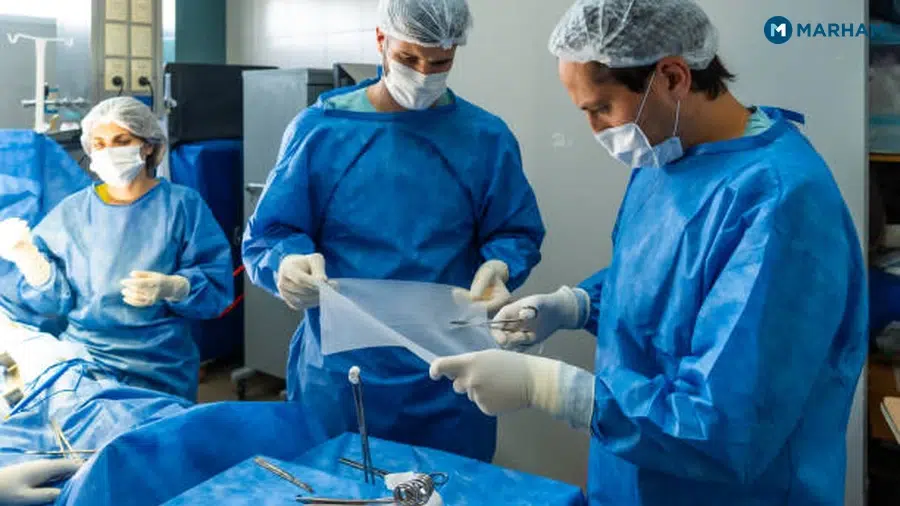
Diagnosis typically begins with a physical examination. A surgeon will check whether the hernia is reducible, firm, or tender. If complications are suspected, an ultrasound or CT scan may be requested. In major Pakistani cities like Karachi, Lahore, and Islamabad, both open and laparoscopic hernia repair are available. Laparoscopic surgery, which uses small incisions and a camera, generally allows faster recovery than open repair, though the right approach depends on the patient’s condition and the surgeon’s assessment.

Hernia surgery does not cure the underlying muscle weakness, but it repairs the defect and prevents the hernia from enlarging or becoming incarcerated. A general surgeon will advise whether surgery is needed immediately or can be planned electively based on symptoms.
If you have a known hernia and your symptoms suddenly change, consult a general surgeon in Pakistan without delay rather than waiting for a routine appointment.
Reducing Your Risk of Hernia Complications
While you can’t always prevent a hernia, certain habits reduce the chance of complications.
- Avoid heavy lifting without proper technique. Bend at the knees, not the waist, especially if you do physical work on a daily basis.
- Manage chronic coughing. A persistent cough from untreated conditions like asthma or smoking strains the abdominal wall repeatedly. Seek treatment for the underlying cause.
- Maintain a healthy body weight. Obesity increases pressure on abdominal muscles and is a recognised risk factor for hernia development and recurrence, per Brown University Health guidelines.
- Eat a fibre-rich diet to avoid constipation. Straining during bowel movements puts repeated pressure on abdominal muscles. In a typical Pakistani diet, adding more sabzi, daal, and whole-grain roti can help maintain regularity.
- Do not ignore a known hernia. If you have been told you have a hernia, attend follow-up appointments and report any change in symptoms promptly, particularly if pain increases or the bulge changes in character.
Consult a Surgeon Through Marham
Many patients across Pakistan, particularly in smaller cities and rural areas, find it hard to access a general surgeon quickly. Waiting lists at government hospitals can stretch for weeks, and by the time an appointment comes through, a manageable hernia may have worsened.
Marham connects patients with verified general surgeons in Pakistan who offer online consultations, allowing you to describe your symptoms, share any imaging reports, and get a professional opinion on whether your hernia needs urgent review or can be managed electively. A short online consultation can clarify whether your symptoms require an emergency visit or a planned surgical referral, saving you unnecessary anxiety and helping you act at the right time.
Frequently Asked Questions
When should I worry about hernia pain?
You should worry about hernia pain if it becomes sudden, severe, or constant and does not ease with rest. Other reasons to seek urgent care include a bulge that turns firm or cannot be pushed back in, skin discolouration over the hernia, nausea or vomiting, inability to pass gas or stool, or fever alongside increasing tenderness. Any of these signs may indicate an incarcerated or strangulated hernia, which requires emergency medical attention.
What are the signs of a strangulated hernia?
A strangulated hernia typically presents with sudden, severe, and constant pain at the hernia site, a firm bulge that cannot be reduced, redness or darkening of the skin over the bulge, nausea and vomiting, and inability to pass gas or have a bowel movement. Fever may also develop. Per Mayo Clinic guidance, a hernia bulge that turns red, purple, or dark requires immediate care. Do not wait to see if symptoms improve on their own.
Can hernia pain come and go?
Yes, hernia pain can come and go, particularly in the early stages. Discomfort often worsens during activities that strain the abdomen, such as lifting, coughing, or bending, and may ease when you lie down or rest. This pattern is typical of a reducible hernia. However, if the pain stops coming and going and becomes constant or suddenly much worse, that change in character is a warning sign that should be evaluated promptly.
What is the difference between an incarcerated and a strangulated hernia?
An incarcerated hernia is one where the herniated tissue is trapped and cannot be pushed back in, but blood supply to the tissue is still present. A strangulated hernia is more serious: the trapped tissue has lost its blood supply, which can lead to tissue death within hours. Both conditions require urgent surgical attention, but a strangulated hernia is a true surgical emergency with a higher risk of life-threatening complications if treatment is delayed.
Can I live with a hernia without surgery in Pakistan?
Some people with small, symptom-free hernias can be monitored without immediate surgery, depending on the surgeon’s assessment. However, hernias do not heal on their own and tend to enlarge over time. Most surgeons in Pakistan will recommend repair when the hernia is causing pain, growing larger, or interfering with daily activities. If a hernia is causing no symptoms at all, your surgeon may suggest watchful waiting, but regular follow-up is still necessary to catch any changes early.
Conclusion
Hernia pain that comes and goes with activity is common and not always an emergency. The warning signs that matter most are a sudden change in pain character, a bulge that becomes firm and irreducible, skin discolouration, vomiting, or inability to pass gas. These symptoms can indicate incarceration or strangulation, both of which need surgical attention without delay. If you have a known hernia in Pakistan and notice any of these changes, contact a general surgeon the same day rather than waiting.