

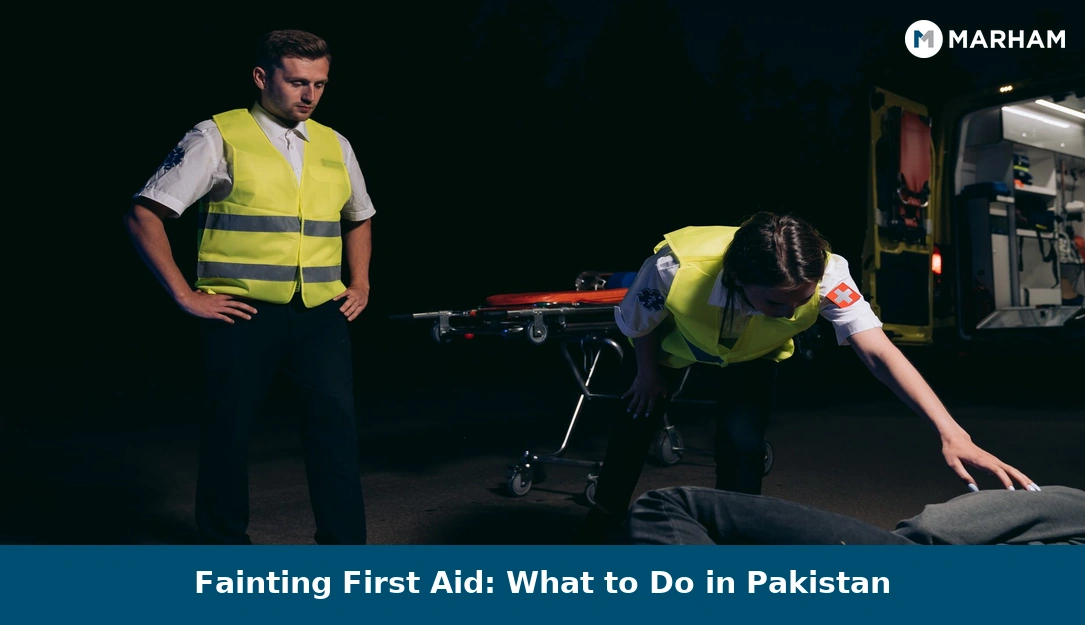
Someone collapses in front of you at a wedding in Lahore, or slumps over during Friday prayers in the summer heat. Your heart races. Most people freeze in that moment because they don’t know what to do in the first 60 seconds.
Fainting (known in Urdu as بے ہوشی, or behoshi) is a sudden, brief loss of consciousness caused by a temporary drop in blood flow to the brain. It usually lasts only a few seconds to a couple of minutes. In Pakistan, it’s especially common during the long summer months in Karachi and Lahore, during Ramadan fasts, and in crowded, poorly ventilated spaces. Knowing the right response can prevent a fall injury and, in rare cases, save a life.
This guide covers the warning signs before a faint, the correct first aid steps, what you must never do, and when to call 1122.
بے ہوشی کی ابتدائی طبی امداد
بے ہوشی اس وقت ہوتی ہے جب دماغ تک خون کی فراہمی عارضی طور پر کم ہو جاتی ہے۔ پاکستان میں گرمی، روزے کی حالت میں پانی کی کمی اور ہجوم والی جگہوں پر یہ کیفیت عام ہے۔ اگر کوئی بے ہوش ہو جائے تو اسے آہستہ سے زمین پر لٹائیں، ٹانگیں تھوڑی اوپر اٹھائیں اور تنگ کپڑے ڈھیلے کریں۔ اگر ایک منٹ کے اندر ہوش نہ آئے تو فوری طور پر 1122 پر کال کریں۔ بے ہوش شخص کو پانی یا کوئی چیز منہ میں نہ دیں۔
Warning Signs Before Someone Faints
Fainting rarely happens without warning. Recognising the signs early gives you time to guide the person safely to the ground before they fall.
Common warning signs include:
- Sudden paleness or a grey, washed-out face
- Cold, clammy sweat on the forehead
- Dizziness or lightheadedness (chakkar aana)
- Blurred or tunnelling vision
- Nausea or a sinking feeling in the stomach
- Weakness in the legs, a feeling of going limp
- Ringing in the ears
If you spot these in someone, act immediately. Help them sit or lie down before they fall. That single step prevents most fall-related injuries.
Common Causes of Fainting in Pakistan
Fainting (medically called syncope) happens when blood pressure drops suddenly and the brain receives too little oxygen-rich blood. The most frequent causes Pakistani patients encounter include:
Vasovagal syncope is the most common type. It’s triggered by pain, emotional shock, the sight of blood, prolonged standing, or extreme heat. A student standing at assembly in a Karachi school in June, or someone receiving an injection at a clinic, can experience this.
Dehydration reduces blood volume, which lowers blood pressure. During Ramadan, people who fast from sehri to iftar without adequate fluid intake are at real risk, especially in the May to August heat. Rescue 1122 Punjab sees a spike in fainting calls during Ramadan summer months.
Orthostatic hypotension is a sudden blood pressure drop when standing up quickly from a sitting or lying position. It’s common in older adults and in people taking blood pressure medications.
Low blood sugar (hypoglycaemia) can cause fainting, particularly in people with diabetes in Pakistan who may miss a meal or take insulin without eating.
Cardiac causes are less common but more serious. Certain heart rhythm problems (arrhythmias) can reduce blood flow to the brain and cause fainting. Fainting during exercise, or fainting with chest pain, points toward a cardiac cause and needs urgent evaluation.
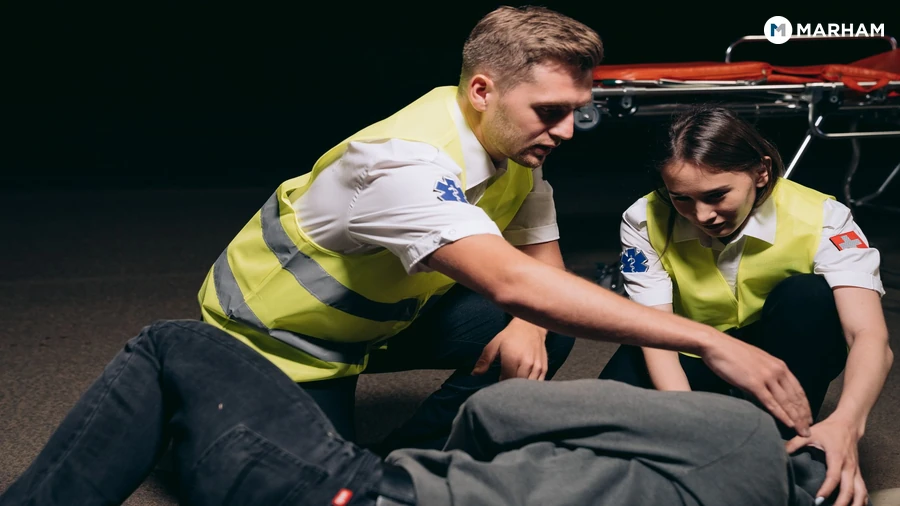
Fainting First Aid: 7 Steps to Follow
These steps are based on guidelines from the American Heart Association and American Red Cross (2024 First Aid Guidelines, published in Circulation, 2024).
- Lower them safely. If the person is standing, guide them gently to the ground. Don’t let them fall. Lay them flat on their back on a clean surface.
- Elevate the legs. Raise their legs about 30 centimetres (roughly 12 inches) above the level of the heart. Use a folded dupatta, a bag, or a cushion from a nearby chair. This helps blood flow back toward the brain.
- Loosen tight clothing. Undo a tight collar, belt, or dupatta around the neck. In Pakistani clothing, a tightly tied shalwar nara or a buttoned kurta collar can restrict circulation.
- Give fresh air. Ask bystanders to step back and give space. If indoors, open a window or door. In a masjid or a crowded Lahore bazaar, clearing the crowd is the single most effective thing bystanders can do.
- Check breathing. Watch the chest rise and fall. If the person is breathing normally, keep them lying flat and stay with them.
- Do not give anything by mouth. Never pour water, sherbet, or anything else into the mouth of an unconscious person. The airway is unprotected and they can choke. Wait until they are fully awake.
- Help them sit up slowly. Once the person regains consciousness and feels steady, help them sit up gradually over two to three minutes. Standing up too quickly can trigger another faint. Offer plain water or, if they haven’t eaten in several hours, a small amount of something sweet like a date or a piece of roti with sugar.
What NOT to Do When Someone Faints
Several common reactions in Pakistani households can make things worse.
| What people often do | Why it’s wrong |
|---|---|
| Splash water on the face | Does not help and can cause choking if unconscious |
| Slap the face to revive them | Can cause injury; has no clinical benefit |
| Sit them up with head between knees | Outdated advice; lying flat with legs raised is more effective |
| Give water or juice while unconscious | Aspiration risk; only give fluids when fully awake |
| Leave them alone | Person may have a second faint or stop breathing |
| Put a pillow under the head | Raises the head, reducing blood flow to the brain |
When to Call 1122 (Emergency)
Most fainting episodes resolve within one to two minutes with the steps above. Call 1122 (the Pakistan emergency number) or take the person to the nearest emergency room immediately if any of the following apply:
- The person does not regain consciousness within one minute
- They were injured in the fall (head injury, bleeding)
- They have chest pain, shortness of breath, or palpitations before or after the faint
- They have slurred speech, facial drooping, or weakness on one side (these suggest a stroke, not a simple faint)
- They have a seizure (jerking movements) during or after the episode
- They faint during exercise or physical activity
- They are pregnant
- They are known to have a heart condition
As per Mayo Clinic first aid guidelines, any loss of consciousness should be treated as a medical emergency until the cause is confirmed. A general physician or cardiologist in Pakistan should evaluate anyone who faints for the first time, even if they recover quickly.
How to Prevent Fainting: Pakistani-Specific Tips
Prevention matters as much as response. These steps are especially relevant in Pakistan’s climate and lifestyle:

- Stay hydrated in summer. In Karachi and Lahore, temperatures can cross 42°C in June and July. Drink at least 2.5 to 3 litres of water daily during hot months. During Ramadan, prioritise fluid intake at sehri and iftar.
- Avoid standing still for long periods. People standing in long queues at utility offices or during taraweeh prayers should shift weight between feet and avoid locking their knees.
- Eat regularly. Skipping meals, common during exam season or long work shifts, drops blood sugar and raises fainting risk.
- Rise slowly from the floor. Getting up quickly after ruku or sajda during prayers can trigger orthostatic hypotension, especially in older adults.
- Manage heat exposure. Avoid direct sun between 12 pm and 4 pm in summer. If you feel dizzy outdoors in Islamabad or Multan heat, sit in the shade immediately.
- Know your triggers. If you have a history of fainting at the sight of blood or needles, tell your doctor and the clinic staff before any procedure. They can have you lie down during the injection rather than sit.
Also see: Nosebleeds in Summer Heat: Causes, First Aid & Prevention for another common heat-related emergency in Pakistan.
Fainting vs. Seizure vs. Cardiac Arrest: Key Differences
These three events can look similar to a bystander but require very different responses.
| Feature | Fainting (Syncope) | Seizure | Cardiac Arrest |
|---|---|---|---|
| Recovery time | Seconds to 2 minutes | Several minutes | Does not self-recover |
| Breathing | Continues normally | May be irregular | Absent |
| Body movements | Still or brief twitching | Rhythmic jerking | None |
| Skin colour | Pale | May be bluish | Blue/grey |
| Action needed | Lie flat, legs raised | Protect from injury, time it | CPR immediately |
If you’re unsure which is happening, call 1122 and follow their instructions.
Get Expert Advice from Marham
A single fainting episode in a young, otherwise healthy person, with an obvious trigger like heat or hunger, often doesn’t need a hospital visit. But recurrent fainting, fainting without a clear cause, or fainting in anyone over 50 or with a known heart condition deserves proper evaluation.
You can consult a cardiologist in Pakistan or a general physician through Marham’s online platform without travelling to a clinic. A short online consultation typically takes 15 to 20 minutes and can help determine whether further tests, such as an ECG or a tilt-table test, are needed. For those in smaller cities where specialist access is limited, this is a practical first step before committing to a full hospital workup.
Frequently Asked Questions
What are the warning signs before fainting?
The most common warning signs are sudden dizziness, cold sweating, blurred vision, nausea, and a feeling of weakness in the legs. If you notice these, sit or lie down immediately to prevent a fall.
How long does fainting usually last?
Most fainting episodes last between a few seconds and two minutes. Recovery is usually quick once the person is lying flat, because blood flow to the brain restores itself. If unconsciousness lasts longer than one minute, call emergency services.
What should you NOT do when someone faints?
Don’t splash water on their face, slap them, or give them anything to drink while they’re unconscious. Don’t put a pillow under their head and don’t leave them alone. These actions can cause harm or delay recovery.
Is fainting dangerous?
Most fainting episodes are not dangerous in themselves, but they can cause injury from falling. Fainting can also be a sign of a serious underlying condition, particularly a heart rhythm problem. Anyone who faints for the first time should see a doctor.
When should I call an ambulance after someone faints in Pakistan?
Call 1122 immediately if the person doesn’t regain consciousness within one minute, if they were injured in the fall, or if they have chest pain, seizures, slurred speech, or difficulty breathing. These signs suggest something more serious than a simple faint.
Can fainting happen during Ramadan fasting?
Yes. Dehydration and low blood sugar from long fasting hours, especially in summer, are common triggers in Pakistan. People with diabetes or low blood pressure are at higher risk. Adequate hydration at sehri and iftar reduces the risk significantly.
Should I see a doctor after fainting once?
Yes, it’s worth a consultation, especially if the cause isn’t obvious. A doctor can check your blood pressure, blood sugar, and heart rhythm to rule out an underlying condition. Consult a general physician or specialist through Marham for a quick assessment.
Conclusion
Fainting first aid comes down to a few simple actions done quickly: lower the person safely, raise their legs, loosen tight clothing, give fresh air, and wait for them to recover fully before sitting them up. Knowing what not to do, especially avoiding water in an unconscious person’s mouth, matters just as much. In Pakistan’s hot climate and during Ramadan, staying hydrated and recognising the early warning signs can prevent most episodes before they happen. When in doubt about the cause, a medical consultation is always the right call.