


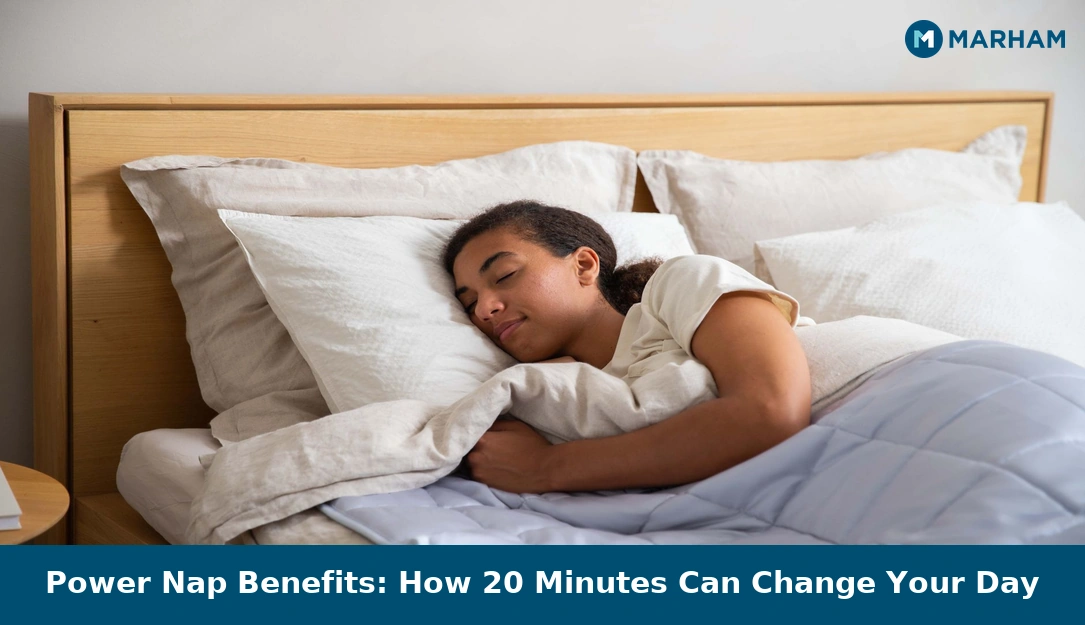
The afternoon slump hits hard in Pakistan. Whether you’re a student in Lahore finishing a long morning of classes, an office worker in Karachi staring at a screen after lunch, or a shopkeeper in Rawalpindi who has been on his feet since Fajr, that post-zuhr heaviness is something most Pakistanis know well.
What many don’t realise is that a short sleep of 20 minutes at this exact time is one of the most well-researched productivity tools in sleep science. It’s also a Sunnah. The Islamic practice of Qailula (قیلولہ), a brief midday rest, aligns remarkably closely with what modern researchers now recommend.
This guide covers what a power nap actually does to your brain and body, how long it should last, the right time to take one, and who should be careful about napping. No filler, just the practical science.
قیلولہ اور پاور نیپ: اہم باتیں
پاور نیپ یا قیلولہ ایک مختصر نیند ہے جو دوپہر کے وقت لی جاتی ہے اور عموماً 10 سے 30 منٹ تک رہتی ہے۔ تحقیق سے ثابت ہوا ہے کہ یہ مختصر نیند دماغ کی کارکردگی، یادداشت اور موڈ کو بہتر بناتی ہے۔ پاکستان میں گرمی اور لمبے کام کے اوقات کے پیش نظر دوپہر کی یہ چھوٹی سی نیند توانائی بحال کرنے کا ایک سستا اور مؤثر طریقہ ہے۔ اسلام میں بھی قیلولہ کو سنت قرار دیا گیا ہے، جو اس بات کی دلیل ہے کہ انسانی جسم کو دن کے وسط میں آرام کی ضرورت ہوتی ہے۔
What Is a Power Nap and How Long Should It Be?
A power nap is a planned short sleep of 10 to 30 minutes taken during the day, designed to restore alertness without entering the deeper stages of sleep. According to the National Sleep Foundation, power naps taken in the early afternoon typically last 15 to 20 minutes and can restore energy during a natural dip in wakefulness.
The length matters more than most people think. Here’s why: sleep happens in stages. The first 20 minutes or so involve lighter NREM (non-rapid eye movement) sleep, which is where the restorative magic of a power nap happens. Push past 30 minutes and you start entering slow-wave (deep) sleep. Waking from that stage causes sleep inertia, the groggy, disoriented feeling that can take 30 to 60 minutes to shake off, according to Harvard Health.

| Nap Duration | What Happens | Best For |
|---|---|---|
| 10 minutes | Stays in lightest sleep stage | Immediate alertness boost |
| 20 minutes | Light NREM sleep, minimal grogginess | Focus, memory, mood |
| 30 minutes | May touch deeper sleep, some inertia risk | Extended afternoon energy |
| 60 to 90 minutes | Full sleep cycle including REM | Creativity, memory consolidation |
For most working adults in Pakistan, 20 minutes is the practical sweet spot. It’s long enough to feel refreshed, short enough to fit between Zuhr prayer and the next task.
Key Power Nap Benefits Backed by Research
A well-timed power nap does more than just reduce tiredness. Research points to several distinct benefits.
Sharper Focus and Alertness
NASA researchers studying military pilots found that a 26-minute nap improved alertness by 54% and job performance by 34%, compared to pilots who did not nap. For Pakistani students preparing for exams or professionals managing back-to-back meetings, that kind of cognitive boost from a short rest is worth paying attention to.
Better Memory Consolidation
Sleep, even in short bursts, helps the brain transfer information from short-term to long-term memory. A 2021 study published in the journal Current Biology found that participants who napped after learning new material retained it significantly better than those who stayed awake. For students in Pakistan studying for board exams or university tests, a brief post-study nap may support retention more than an extra hour of reviewing notes.
Improved Mood and Reduced Stress
Short naps can reduce cortisol (the body’s primary stress hormone) and support serotonin levels, according to research cited by sleep specialists. The mental health benefits of power naps include better mood regulation and a lower risk of burnout. In a country where work hours are long and mental health support is still underutilised, this is a genuinely accessible tool.

Possible Heart Health Support
Additional research has found that power naps may help reduce blood pressure and support heart health, especially when taken in the early afternoon. A study published in the Journal of the American College of Cardiology found that occasional nappers had a lower risk of cardiovascular events than non-nappers. This is particularly relevant for Pakistani adults, given that cardiovascular disease is among the leading causes of death in Pakistan according to the WHO.
Reaction Time and Motor Skills
Power naps can improve reaction time and fine motor skills, which matters for drivers, surgeons, and anyone operating machinery. In cities like Karachi and Lahore where road fatigue is a real safety concern, a short midday rest before an afternoon commute can reduce risk.
How to Take a Power Nap: Step-by-Step
- Pick the right time. Aim for between 1 pm and 3 pm, when the body’s natural circadian rhythm produces a dip in alertness. In Pakistan, this often falls right after Zuhr, making it a natural fit with the prayer schedule.
- Set an alarm for 20 to 25 minutes. Include 5 minutes to fall asleep. This keeps the total rest window at 20 minutes of actual sleep and prevents you from drifting into deep sleep.
- Find a cool, quiet spot. Pakistan’s summer heat makes this trickier, but even a fan-cooled room with curtains drawn works. If you’re at an office, a reclining chair or a prayer room with a mat can do the job.
- Try a chai nap if you need to wake up fast. Drink a small cup of green tea or light chai just before lying down. Caffeine takes about 20 to 30 minutes to enter the bloodstream, so it kicks in right as you wake up, reducing grogginess. This is sometimes called a “caffeine nap” in sleep research.
- Lie down or recline, don’t sit upright. You don’t need a bed. A takht (traditional wooden daybed) or a floor mat works perfectly. The goal is to let your muscles relax fully.
- Avoid napping after 3 pm. Napping too late in the afternoon can interfere with nighttime sleep, especially if you already struggle to fall asleep at night.
- Stay consistent. A daily nap at the same time is more effective than occasional ones. Your body adapts and falls asleep faster when the habit is regular.
Who Should Be Careful About Power Napping?
Power naps are not for everyone. People with chronic insomnia, a diagnosed sleep disorder such as sleep apnea, or those who already sleep 7 to 9 hours at night and feel rested may find daytime napping counterproductive. If you struggle to fall asleep at night or wake frequently, adding a daytime nap can worsen the cycle.
If you frequently feel the need to nap even after a full night of sleep, that’s worth discussing with a doctor. It can occasionally signal an underlying issue such as anaemia, thyroid dysfunction, or a sleep disorder, all of which are common in Pakistan and often go undiagnosed for years. A nutritionist in Pakistan can help assess whether fatigue is diet-related, while a general physician can rule out medical causes.
Power Nap vs Coffee: Which Works Better?
Both caffeine and a short nap boost alertness, but they work differently. Caffeine blocks adenosine receptors in the brain, the chemical that builds up and makes you feel sleepy. A nap actually clears adenosine naturally, which is why the effect feels cleaner and doesn’t come with the crash that follows a large coffee.
Some studies suggest that a power nap is comparable to caffeine for improving alertness and performance, and the two together (the “caffeine nap” mentioned in step 4) can be more effective than either alone. For Pakistanis who already drink multiple cups of chai throughout the day, adding a nap rather than another cup may be the smarter choice.

The Qailula Connection: Islamic Practice Meets Modern Science
Qailula (قیلولہ) refers to the midday rest practiced by the Prophet Muhammad (peace be upon him) and is considered Sunnah in Islam. Scholars describe it as a short rest taken before or after Zuhr, not necessarily involving full sleep.
What’s striking is how precisely this aligns with the science. The post-Zuhr window, roughly 1 pm to 3 pm, corresponds to the body’s natural circadian dip. The recommended duration of 20 minutes matches the sleep research on optimal nap length. For Pakistani Muslims, this is one of those rare cases where religious practice and clinical evidence point in exactly the same direction.
Consult a Sleep or Wellness Specialist on Marham
For most healthy adults, a 20-minute power nap a few times a week is safe and beneficial. But if your fatigue is persistent, if you’re sleeping 8 hours and still exhausted, or if you’re relying on naps to get through every single day, that pattern deserves a professional look.
Marham connects you with verified nutritionists in Pakistan who can assess whether your energy levels are being affected by diet, sleep habits, or an underlying deficiency. For sleep-related concerns that go beyond lifestyle adjustments, a consultation with a qualified physician through Marham can help clarify what’s actually going on. Online consultations are available from anywhere in Pakistan, including smaller cities where specialist access is limited.
Frequently Asked Questions
How long should a power nap be?
The ideal power nap lasts 10 to 20 minutes. This keeps you in lighter sleep stages and means you wake up feeling refreshed rather than groggy. Naps longer than 30 minutes risk sleep inertia, the heavy, disoriented feeling that follows deep sleep.
What is the best time to take a power nap in Pakistan?
The best time is between 1 pm and 3 pm, which aligns with both the body’s natural circadian dip and the post-Zuhr window. Napping after 3 pm can interfere with your ability to fall asleep at night.
Does a power nap affect nighttime sleep?
A short, well-timed nap of 20 minutes taken before 3 pm generally does not disrupt nighttime sleep in healthy adults. Napping too long or too late in the day is what causes problems with night sleep.
Is it okay to take a power nap every day?
For most healthy adults, a daily 20-minute nap is fine and may even be beneficial. If you find you need a nap every day to function, it may be worth checking whether you’re getting enough quality sleep at night.
Can a power nap replace a full night’s sleep?
No. A power nap supplements sleep but does not replace it. Adults need 7 to 9 hours of nighttime sleep for full physical and cognitive recovery. Think of a nap as a top-up, not a substitute.
Who should avoid power naps?
People with chronic insomnia or sleep apnea should be cautious, as daytime napping can worsen nighttime sleep difficulties. If you’re well-rested and sleeping soundly at night, you likely don’t need to nap at all.
Is power napping the same as Qailula?
Qailula is the Islamic midday rest, which may or may not involve actual sleep. Modern power napping specifically refers to a short sleep of 10 to 30 minutes. They overlap significantly in timing and purpose, though Qailula has broader spiritual and lifestyle dimensions beyond the sleep science.
Conclusion
A 20-minute power nap, timed between 1 pm and 3 pm, is one of the simplest and most evidence-backed ways to restore focus and energy in the middle of a long day. For Pakistanis, the Qailula tradition already provides a cultural and religious framework for exactly this kind of rest. The science simply confirms what the Sunnah already recommended: a short midday rest, done right, makes the rest of your day meaningfully better.
