
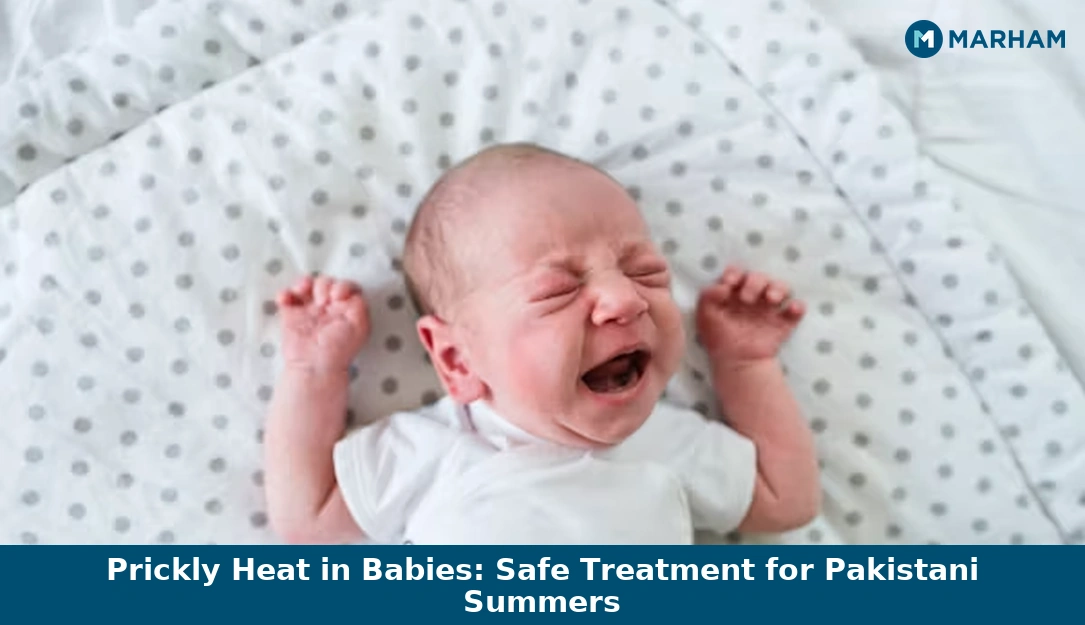
Every May to August, parents across Karachi, Lahore, and Multan deal with the same sight: tiny red bumps clustered on a baby’s neck, chest, or back, with the baby fussier than usual and rubbing against everything in reach. That’s ghamoriyan — and in Pakistan’s summer heat, it’s one of the most common reasons parents call a pediatrician.
Babies are more vulnerable than adults because their sweat ducts are still developing and their bodies can’t regulate temperature as efficiently. When the temperature in Karachi crosses 40°C and humidity climbs above 70%, even a short outing in a pram can trigger a rash. The good news is that most cases resolve quickly with simple, safe steps at home.
This guide covers what ghamoriyan actually looks like, which home remedies are safe and which are not, a step-by-step care routine, and the warning signs that mean it’s time to visit a doctor.
Quick Answer
Prickly heat in babies, known as ghamoriyan (گھمورياں) in Urdu, happens when immature sweat ducts get blocked in hot, humid weather, trapping sweat under the skin. Most cases clear up within 2 to 3 days once the baby is kept cool and dry. You don’t need medicated creams for mild cases — cooling the skin and switching to loose cotton clothing is usually enough. See a doctor if the rash develops pus, spreads rapidly, or your baby runs a fever.
گھمورياں (Ghamoriyan) — اردو میں خلاصہ
گھمورياں گرمیوں میں بچوں کی جلد پر نکلنے والے چھوٹے سرخ دانے ہوتے ہیں جو پسینے کی نالیاں بند ہونے سے پیدا ہوتے ہیں۔ پاکستان میں مئی سے اگست کے درمیان یہ مسئلہ بہت عام ہے، خاص طور پر کراچی اور لاہور جیسے گرم اور مرطوب شہروں میں۔ بچے کو ٹھنڈی اور ہوادار جگہ پر رکھیں، ڈھیلے سوتی کپڑے پہنائیں، اور گنگنے پانی سے نہلائیں۔ اگر دانوں میں پیپ آ جائے، بچے کو بخار ہو، یا دانے تیزی سے پھیل رہے ہوں تو فوری طور پر ڈاکٹر سے رجوع کریں۔
What Does Prickly Heat Look Like in Babies?
Prickly heat, or miliaria, appears as clusters of tiny bumps or blisters on areas where sweat tends to collect. In babies, the most common spots are the neck folds, upper chest, underarms, the crease behind the knees, and the diaper area. On Pakistani babies with darker skin tones, the bumps may look grey, brown, or slightly purple rather than the classic red — so don’t dismiss a rash just because it isn’t bright red.
Doctors recognise three main types. Miliaria crystallina shows up as clear, fragile blisters with no redness and is most common in newborns under two weeks. Miliaria rubra — the type most parents call ghamoriyan — produces red, itchy bumps and is the most frequent form across all ages. A third, less common type called miliaria pustulosa occurs when the bumps fill with pus, which usually signals a secondary bacterial infection and needs a doctor’s attention.
| Type | Appearance | Common Age | Action Needed |
|---|---|---|---|
| Miliaria crystallina | Clear, fragile blisters, no redness | Newborns (0 to 2 weeks) | Home cooling; see a doctor if unsure |
| Miliaria rubra (ghamoriyan) | Red or grey-brown itchy bumps | All ages, peaks in infants | Home care; resolves in 2 to 3 days |
| Miliaria pustulosa | Bumps with yellow or white pus | Any age | See a doctor promptly |
Why Pakistani Babies Get Ghamoriyan So Easily
Babies have a higher skin surface area relative to their body weight, and their sweat ducts are narrower and more easily blocked than an adult’s. According to the American Academy of Pediatrics, heat rash is very common in the first few weeks of life precisely because those ducts are still maturing. Add Pakistan’s summer conditions — Karachi’s coastal humidity regularly sits above 75% from June to August, while Lahore and Multan see dry heat pushing past 42°C — and the risk multiplies fast.
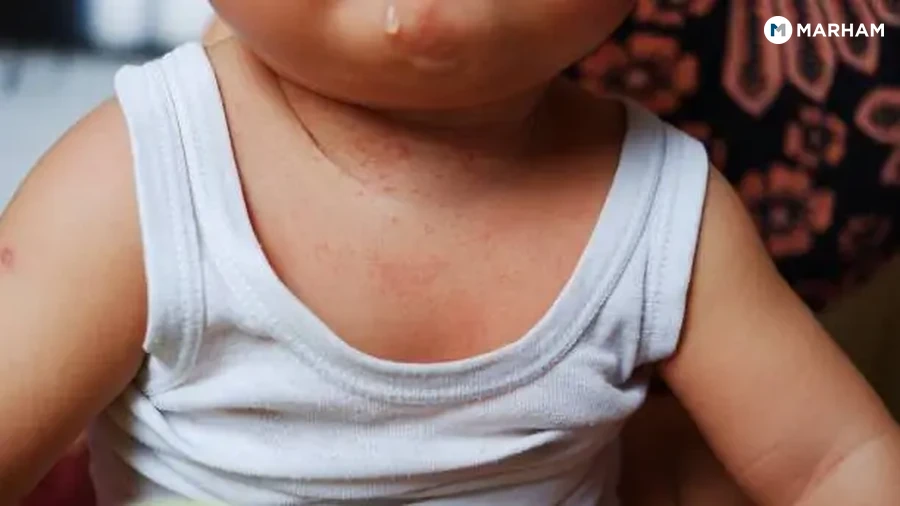
A few Pakistani-specific habits make things worse. Wrapping newborns tightly in multiple layers of cloth (a common practice in many households to “protect” the baby from air) traps heat against the skin. Applying sarson ka tel (mustard oil) as a massage oil is another frequent trigger: thick oils block sweat ducts directly and can worsen the rash significantly. Keeping a baby in a padded pram or car seat for extended periods in the afternoon heat has the same effect, since padded surfaces trap sweat on the back and neck.
Safe Home Treatment for Baby Ghamoriyan: Step-by-Step
Most mild cases of prickly heat in babies respond well to home care within 2 to 3 days. Follow these steps in order:
- Move the baby to a cooler space immediately. Switch on a ceiling fan or air conditioner. If you don’t have AC, a table fan directed away from the baby (so it circulates air in the room rather than blowing directly on the infant) works well. Afternoon heat in Lahore and Karachi peaks between 1 pm and 4 pm — keep the baby indoors during this window.
- Remove extra layers of clothing. Dress the baby in a single layer of soft, loose cotton jhaali (mesh cotton) or plain cotton fabric. Avoid synthetic fabrics entirely. In Pakistani summers, a simple cotton jabba (kurta-style shirt) with no undershirt is often enough for a baby indoors.
- Give a lukewarm bath without soap. Use plain lukewarm water — not cold, which can cause a temperature shock in infants. Bathe for 5 to 10 minutes. You can add a small amount of neem water (prepared by boiling a few neem leaves in water, then cooling to lukewarm) to the bath; neem has mild antibacterial properties that may help soothe irritated skin. Pat dry gently — never rub.
- Let the skin air-dry fully before applying anything. This is the step most parents skip. Any powder or cream applied to damp skin can mix with sweat and worsen duct blockage. Wait at least 5 minutes after patting dry.
- Use a zinc oxide-based powder on fully dry skin only. If you want to use a powder, choose one containing zinc oxide rather than plain talcum powder. Plain talc carries an inhalation risk for infants — the American Academy of Pediatrics advises against using talcum powder near babies’ faces. Zinc oxide-based prickly heat powders are widely available in Pakistani pharmacies for roughly Rs. 150 to Rs. 350 per bottle. Apply a very light dusting to the affected area only, keeping it away from the face and diaper area.
- Skip thick creams, oils, and ointments. Vaseline, sarson ka tel, coconut oil, and heavy moisturisers all block sweat ducts. Do not apply them to rash-affected skin. A very light, non-comedogenic lotion is acceptable on unaffected areas if the skin is dry, but check with your doctor first.
- Keep the baby hydrated. For breastfed babies, nurse on demand — breast milk provides both hydration and comfort. For babies over six months, offer small sips of cooled boiled water between feeds. Adequate hydration supports the body’s ability to regulate temperature.
What Pakistani Parents Should Avoid (Common Mistakes)
Several popular home remedies in Pakistan can make ghamoriyan worse rather than better. Applying multani mitti (fuller’s earth) paste directly to a baby’s skin may seem cooling, but it can dry out the delicate skin barrier and cause irritation if left on too long. Rubbing ice directly on a baby’s rash is also unsafe — the sudden cold can damage fragile infant skin. Use a cool (not ice-cold) damp cloth instead.
Calamine lotion is sometimes recommended in older children for itching, but its safety in infants under six months has not been well-established — consult a pediatrician before using it on a young baby. Similarly, do not apply hydrocortisone cream without a doctor’s prescription. While a short course of mild hydrocortisone is sometimes prescribed for stubborn cases, self-medicating with it on a baby’s skin carries real risks, including skin thinning with repeated use.
When Ghamoriyan Becomes Something More Serious
Prickly heat in babies is almost always mild and self-limiting, but it can occasionally develop into a bacterial skin infection, particularly if the baby scratches and breaks the skin. A rash that turns into miliaria pustulosa — bumps filled with yellow or white pus — is no longer a simple heat rash. It needs medical evaluation and may require antibiotic treatment.
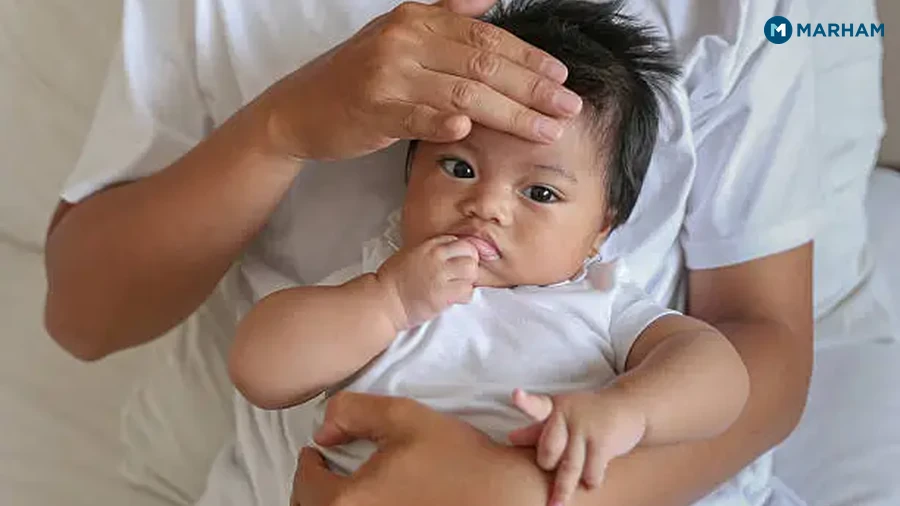
Take your baby to a dermatologist or pediatrician in Pakistan without delay if you notice any of the following: pus-filled bumps, skin that feels warm or swollen around the rash, a fever (any fever in a baby under three months is a medical emergency), the rash spreading rapidly to new areas, or the baby refusing feeds and appearing lethargic. A rash that doesn’t improve after 3 days of proper home care also warrants a professional review. You can also read more about related summer skin conditions in our guide to summer skin problems in Pakistan.
How to Prevent Prickly Heat in Babies During Pakistani Summers
Prevention is far easier than treatment. A few consistent habits can keep ghamoriyan from appearing in the first place, even during Karachi’s monsoon months or Lahore’s peak summer.
- Dress the baby in one loose cotton layer indoors — no bundling.
- Bathe daily during summer, using plain lukewarm water.
- Change wet nappies promptly — a soaked nappy traps heat in the diaper area.
- Keep the baby’s sleeping area ventilated; a ceiling fan on a low setting is fine for babies over one month.
- Avoid taking the baby outside between 11 am and 4 pm from May to August.
- Don’t apply oil massage in summer — save it for the cooler months.
- Pat skin folds (neck, underarms, groin) dry after every bath and nappy change.
If your baby’s rash isn’t clearing up or you’re unsure whether it’s simple ghamoriyan or something that needs treatment, a quick online consultation with a verified pediatrician or dermatologist can give you a clear answer without an unnecessary trip to a clinic in the heat.
Frequently Asked Questions
How long does ghamoriyan take to go away in babies?
Most mild cases of prickly heat clear up within 2 to 3 days once the baby is kept cool and dry. If the rash persists beyond 3 days or seems to be worsening, consult a pediatrician.
Can I use prickly heat powder on a newborn?
Avoid talcum powder near newborns — fine particles can be inhaled and irritate the lungs. A zinc oxide-based powder applied lightly to fully dry skin is a safer option for older infants, but check with your doctor before using anything on a baby under one month.
Is calamine lotion safe for baby ghamoriyan?
Calamine lotion may help relieve itching in older babies, but its use in infants under six months is not well-established. Ask your pediatrician before applying it, especially on a young baby or on large areas of skin.
What are the signs that baby ghamoriyan has become infected?
Look for bumps that fill with yellow or white pus, skin that feels warm or swollen around the rash, a fever, or a baby who seems unwell and is refusing feeds. These signs mean the rash may have developed a bacterial infection and needs a doctor’s assessment.
Can my baby sleep in AC with ghamoriyan?
Yes — a cool, air-conditioned room can actually help the rash heal faster by reducing sweating. Keep the temperature comfortable (around 24°C to 26°C) and dress the baby in a single light cotton layer so they don’t get cold.
Is sarson ka tel (mustard oil) safe to apply on baby ghamoriyan?
No. Thick oils like mustard oil block sweat ducts and can make prickly heat significantly worse. Avoid applying any oil to rash-affected skin until the ghamoriyan has fully resolved.
When should I take my baby to a doctor for prickly heat?
See a doctor if the rash develops pus, your baby has a fever, the rash spreads rapidly, or it hasn’t improved after 3 days of proper home care. Any fever in a baby under three months is a medical emergency regardless of the cause.
Conclusion
Prickly heat in babies is a predictable part of Pakistani summers, but it’s manageable with a few straightforward steps: cool the baby down, dress them in loose cotton, bathe daily in lukewarm water, and resist the urge to apply thick oils or powders on damp skin. Most cases of ghamoriyan resolve on their own within 2 to 3 days. The key is knowing the warning signs — pus, fever, rapid spread — that mean home care isn’t enough and a pediatrician’s review is needed.
This article is for general information only and does not constitute medical advice. Always consult a qualified healthcare professional for diagnosis and treatment of your child’s condition.