

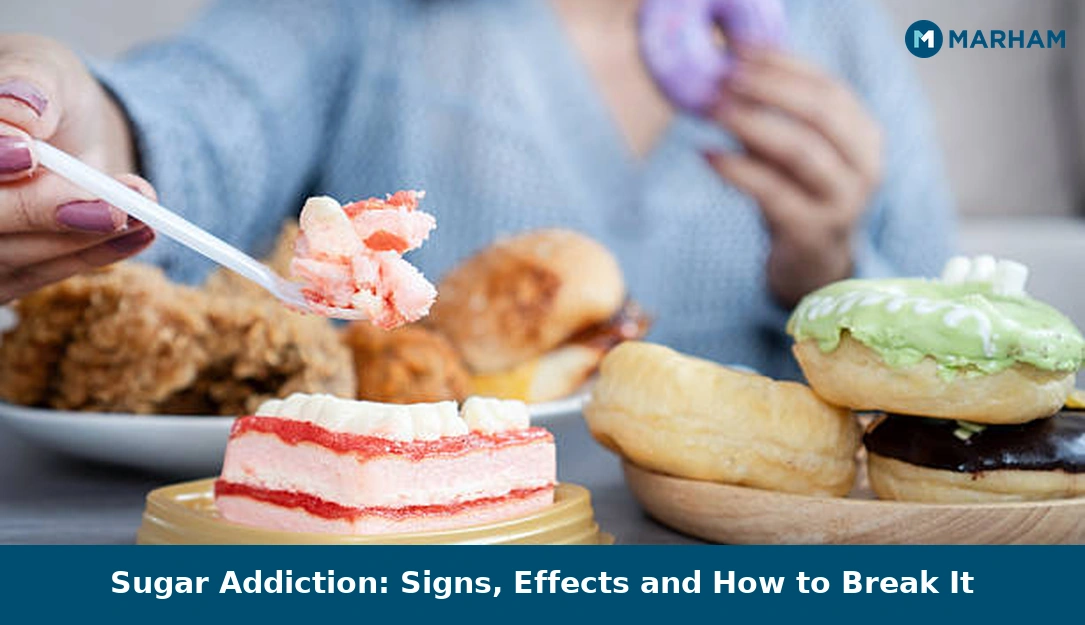

Most Pakistanis would never describe themselves as addicted to sugar. Yet the average cup of doodh patti carries three to four heaped teaspoons of sugar, and most people drink three or four cups a day. Add mithai at every family gathering, Rooh Afza in Ramadan, and the white maida in everyday roti and paratha, and the daily sugar load climbs far beyond what most people realise.
This is not a matter of weak willpower. Sugar acts on the brain’s reward system in ways that make cutting back genuinely difficult, and researchers have spent years debating whether that qualifies as a true addiction. The honest answer sits somewhere in the middle, and understanding it is the first step toward actually changing the habit.
Below you’ll find what the science actually says, how to recognise the signs in your own daily routine, and a practical plan that fits a Pakistani lifestyle rather than a generic Western diet guide.
چینی کی لت: اہم باتیں
چینی کا زیادہ استعمال دماغ میں ڈوپامین خارج کرتا ہے، جو ایک قدرتی انعام کا احساس پیدا کرتا ہے اور بار بار میٹھا کھانے کی خواہش کو تقویت دیتا ہے۔ پاکستان میں چائے، مٹھائی، اور میٹھے مشروبات روزمرہ کی خوراک کا حصہ ہیں، جس سے چینی کی عادت بغیر احساس کے پڑ جاتی ہے۔ عالمی ادارہ صحت (WHO) کے مطابق روزانہ چینی کا استعمال کل کیلوریز کے دس فیصد سے کم رکھنا چاہیے۔ چینی کی لت کی علامات میں مسلسل میٹھے کی خواہش، کھانے کے بعد بھی مٹھائی کی طلب، اور چینی چھوڑنے پر سردرد یا چڑچڑاپن شامل ہیں۔ مناسب غذا، پروٹین کی مقدار بڑھانا، اور کسی ماہرِ غذائیت سے مشورہ ان عادات کو بدلنے میں مددگار ثابت ہو سکتا ہے۔
Is Sugar Addiction Actually Real?
Sugar addiction is a debated topic, and it’s worth being precise about what the evidence does and doesn’t say. The current DSM-5 (the standard psychiatric diagnostic manual) does not recognise sugar addiction as a formal disorder. What researchers do agree on is that sugar powerfully activates the brain’s dopamine reward pathways, the same pathways involved in other compulsive behaviours.
Animal studies have shown bingeing, craving, and withdrawal-like responses when sugar access is intermittent rather than constant. Human neuroimaging studies show that consuming sugary foods activates reward-related brain regions in ways that overlap with patterns seen in substance use. The practical implication: some people genuinely struggle to moderate sugar intake despite wanting to, and that struggle has a neurological basis, even if the word “addiction” is clinically contested.
For Pakistani readers, the cultural layer matters too. Sweet foods carry deep social meaning here. Refusing mithai at a wedding or skipping the sugar in chai at a relative’s house can feel socially awkward. That social reinforcement, layered on top of the neurological reward, is part of why the habit is hard to shift.

Signs of Sugar Addiction to Watch For
You may have a problematic relationship with sugar if several of these patterns apply consistently, not just occasionally.
- Cravings that arrive on schedule. You feel a strong pull toward something sweet at predictable times, typically after meals or mid-afternoon, regardless of whether you’re actually hungry.
- Eating past fullness. You finish a full plate of biryani and still reach for something sweet. The craving isn’t hunger; it’s a conditioned reward signal.
- Mood changes when you skip it. Skipping your morning chai with sugar, or going a day without mithai, leaves you irritable, foggy, or low in energy in a way that feels disproportionate.
- Hiding or minimising the habit. You add an extra spoon of sugar when no one is looking, or you tell yourself the gulab jamun doesn’t count because it’s a special occasion.
- Needing more over time. Two teaspoons in your chai used to feel sweet enough. Now three barely does it. This is tolerance, a recognised feature of compulsive consumption patterns.
- Failed attempts to cut back. You’ve told yourself you’ll stop after Eid, or after Ramadan, and you go back to the same level within days.
None of these signs alone confirms addiction. But if three or more apply consistently, it’s worth taking a closer look at your sugar intake. You can also check normal blood sugar levels before and after eating to understand how your body is responding to the sugar you’re consuming.
Why Sugar Is So Hard to Quit: The Brain Science
When you eat something sweet, your brain releases dopamine, a neurotransmitter associated with pleasure and reward. This is a normal, healthy response. The problem arises with repeated high-sugar intake: the brain gradually reduces its baseline dopamine response, meaning you need more sugar to feel the same level of satisfaction. Researchers describe this as tolerance.
At the same time, refined sugar (sucrose or glucose from processed foods) causes a rapid spike in blood glucose, followed by a drop as insulin kicks in. That drop in blood sugar is what produces the familiar afternoon slump, the shakiness, and the renewed craving. It’s a cycle: spike, crash, crave, repeat. White maida in everyday roti and paratha behaves the same way because refined flour breaks down into glucose almost as fast as table sugar does.
A 2025 national survey published in Frontiers in Nutrition found that sugar-sweetened beverage consumption is widespread among Pakistani adolescents, with intake patterns varying by gender, schooling status, and urban versus rural setting. Pakistan already carries one of the world’s highest adult diabetes prevalence rates, with national figures reaching 31.4% among adults in 2024 according to the same survey’s cited data. The connection between habitual high sugar intake and this diabetes burden is not incidental.
Sugar Withdrawal Symptoms: What to Expect
If you cut added sugar significantly, your body may take time to adjust. These symptoms are real, though they’re temporary. Most people find the first three to five days are the hardest, with symptoms easing over one to two weeks.

Common withdrawal symptoms include:
- Intense cravings for sweet foods
- Headaches, especially in the first 48 hours
- Fatigue and low energy
- Irritability and mood dips
- Difficulty concentrating
- Disrupted sleep in the first few nights
These symptoms are driven by the drop in dopamine activity as your brain recalibrates. They’re uncomfortable but not dangerous for most people. If you have diabetes or another metabolic condition, speak to your doctor before making major dietary changes, as blood sugar management may require closer monitoring during this period.
How to Break Sugar Addiction: A Pakistan-Friendly Plan
Generic advice to “cut out sweets” doesn’t account for how deeply sugar is woven into Pakistani daily life. Here is a practical, step-by-step approach that works within that reality.
- Reduce chai sugar gradually, not all at once. Going from three teaspoons to zero overnight almost always fails. Drop by half a teaspoon every four to five days. Your taste buds adapt faster than you’d expect, and within three weeks, over-sweet chai will genuinely taste too sweet.
- Replace mithai with fruit at home. Keep falsa, guava, or chikoo within easy reach. The natural sugar in fruit comes with fibre, which slows glucose absorption and prevents the spike-and-crash cycle. This isn’t about deprivation; it’s about redirecting the craving to something that doesn’t trigger the same rebound.
- Add protein and fat to every meal. Eggs, daal, and plain dahi (yoghurt) all slow digestion and keep blood sugar steadier. A breakfast of eggs with a small paratha keeps cravings quieter than a paratha with jam or a sweet bun. This is the single most effective structural change most Pakistani dietitians recommend.
- Identify your hidden sugar sources. Packaged biscuits sold at every corner shop in Karachi and Lahore, fruit juices marketed as healthy, and flavoured milk all carry significant added sugar. Check the ingredients list for words ending in “-ose” (sucrose, glucose, fructose) and for “corn syrup” or “sharbat.”
- Swap sweetened drinks for water or unsweetened alternatives. Rooh Afza and packaged fruit drinks are among the highest sugar-load items in the Pakistani diet. Plain water, lassi without sugar, or sabja (basil seed) water with a squeeze of lemon are practical swaps that are widely available and inexpensive.
- Eat at regular intervals. Skipping meals, especially common during working hours in Pakistani offices, causes blood sugar to fall, which intensifies sugar cravings. Keeping small, protein-rich snacks on hand, such as a handful of mixed nuts or a boiled egg, prevents the mid-afternoon crash that sends people to the nearest biscuit tin.
- Plan for social occasions. Rather than refusing mithai entirely and feeling deprived, decide in advance to take one piece and eat it slowly. Deprivation-based approaches tend to result in bingeing. A planned, mindful amount is more sustainable than a strict ban.
Hidden Sugar in the Pakistani Diet: What Most People Miss
Many Pakistanis who believe they “don’t eat much sugar” are still consuming large amounts through less obvious sources. Packaged sharbat concentrates, store-bought achaar (pickle) with added sugar, flavoured yoghurt, and even some brands of packaged daal mixes contain added sweeteners. White rice, eaten in large portions as a staple in Sindh and Punjab, raises blood glucose rapidly because it’s a refined starch with very little fibre to slow absorption.
The WHO recommends keeping free sugar intake below 10% of total daily energy, and ideally below 5%, which for an average adult works out to roughly 25 to 50 grams per day. A single 250ml glass of a popular Pakistani packaged fruit drink can contain 25 to 30 grams of sugar on its own.

Reading nutrition labels is a skill worth building. In Pakistan, packaged food labels are required to list sugar content per serving, though serving sizes are often set unrealistically small. If a biscuit pack lists 5 grams of sugar per two biscuits but you eat ten, the actual intake is 25 grams from that snack alone.
When to See a Specialist
For most people, cutting back on sugar is a dietary adjustment that can be managed with the right information and a bit of patience. Some situations warrant professional guidance. If you find that sugar cravings are tied to low mood, anxiety, or emotional distress in a way that feels hard to manage alone, that pattern is worth discussing with a doctor. Similarly, if you have a family history of type 2 diabetes or have been told your blood glucose is borderline high, reducing sugar intake becomes a medical priority rather than a lifestyle preference.
A nutritionist in Pakistan can help you build a realistic eating plan that fits your household’s cooking habits, your budget, and your medical situation, rather than a generic plan that assumes a Western diet. You can also read about sugar addiction and screen addiction patterns if you notice compulsive habits extending beyond food.
Get Expert Dietary Advice from Marham
Changing a deeply ingrained dietary habit is harder when you’re trying to do it alone, especially when the food in question is present at almost every social event and every meal in Pakistan. Many people find that one structured conversation with a qualified nutritionist clarifies exactly where their sugar is coming from and what realistic targets look like for their specific situation.
Marham connects you with verified nutritionists in Pakistan who consult online, so you don’t need to travel or wait for a clinic appointment. A short online consultation typically takes 15 to 20 minutes and can give you a personalised plan based on your diet, your health history, and your daily routine, whether you’re in Karachi, Lahore, or a smaller city.
Frequently Asked Questions
Is sugar really addictive like a drug?
Sugar is not classified as an addictive substance by current psychiatric guidelines, but it does activate the brain’s dopamine reward pathways in ways that can make it hard to moderate. Some people experience genuine cravings and withdrawal-like symptoms when they cut back, which suggests a strong habitual dependence even if it doesn’t meet the clinical definition of addiction.
What are the first signs of sugar addiction?
The most common early signs are predictable cravings at set times of day, eating sweet foods when you’re not hungry, and feeling irritable or fatigued when you skip sugar. Needing progressively more sweetness to feel satisfied is another reliable indicator.
How long does sugar withdrawal last?
Most people find the worst symptoms, including headaches, fatigue, and intense cravings, peak in the first three to five days and ease significantly within one to two weeks. The timeline varies depending on how much sugar you were consuming before cutting back.
Can too much sugar cause weight gain?
Yes, excess added sugar contributes to weight gain primarily through extra calories and by driving insulin spikes that promote fat storage. According to the American Heart Association, women should aim for no more than 6 teaspoons of added sugar per day and men no more than 9 teaspoons, well below what most Pakistani diets currently include.
Is it bad to eat sugar at night?
Eating sugary foods late at night can disrupt sleep quality and contributes to overall excess intake, but the timing itself is less important than total daily sugar consumption. If you’re managing blood sugar or weight, reducing evening sweet snacks is a practical place to start.
How much sugar per day is safe?
The WHO recommends keeping free sugar below 10% of total daily energy intake, ideally below 5%, which is roughly 25 to 50 grams per day for most adults. Many Pakistanis exceed this through chai alone, before accounting for mithai, packaged drinks, or other sources.
When should I see a doctor about sugar cravings?
Consult a doctor if cravings are linked to mood disorders, if you have risk factors for diabetes, or if cutting back causes symptoms that feel severe or don’t improve within two weeks. A nutritionist can help with dietary planning; a general physician can assess whether blood sugar levels need monitoring.
Conclusion
Sugar addiction sits in a grey zone: not a formal clinical diagnosis, but a real pattern that affects how many Pakistani adults eat and feel every day. The biology is genuine, the cultural reinforcement is strong, and the hidden sugar in everyday foods makes the habit easier to maintain than most people realise. Cutting back gradually, swapping the most obvious sources in the Pakistani diet, and eating more protein at each meal are the three changes that make the biggest difference. If the pattern feels difficult to shift alone, a short conversation with a nutritionist is a reasonable next step.