


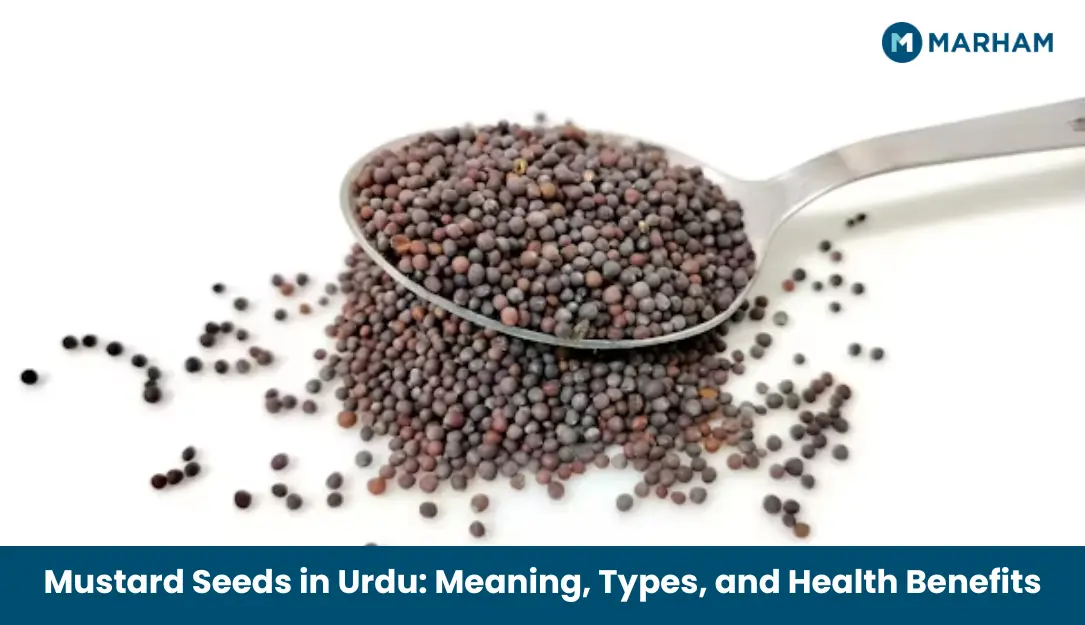
In almost every Pakistani kitchen, you will find small round seeds that add strong flavor to curries, achar, and traditional dishes. These are mustard seeds in Urdu known as “Sarson ke beej” (سرسوں کے بیج).
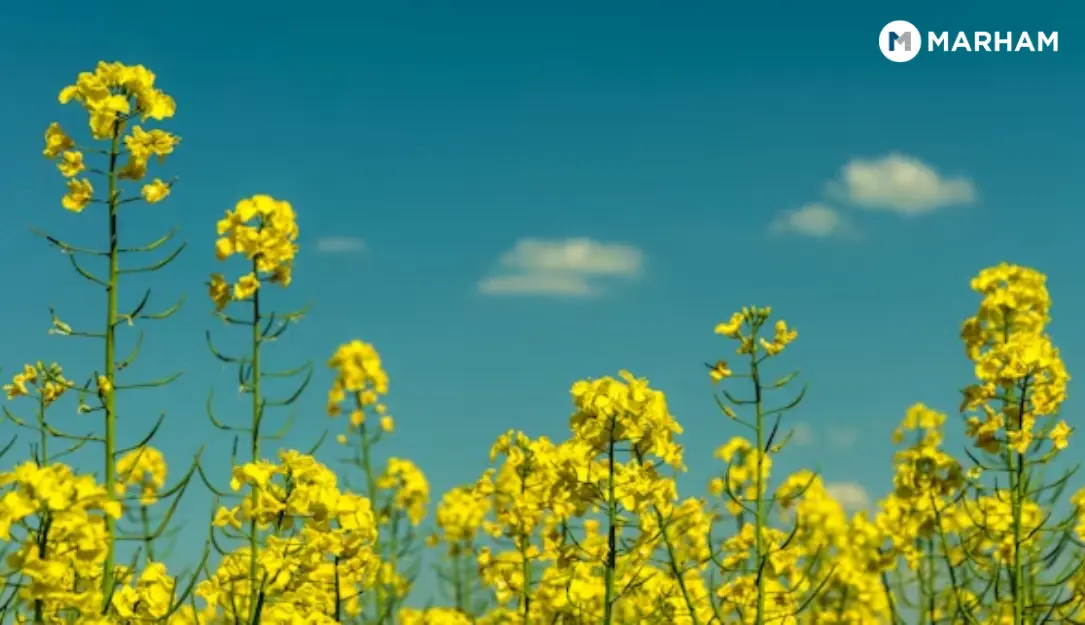
Many people search for mustard seeds meaning in Urdu or ask, what is mustard seed in Urdu? The simple answer is: mustard seeds are called Sarson ke beej, and they come from the mustard plant.
Whether you use black mustard seeds in Urdu cooking (کالی سرسوں), yellow mustard seed in Urdu (پیلی سرسوں), or brown mustard seeds in Urdu (بھوری سرسوں), these tiny seeds are full of flavor and health value.
Let’s understand their nutrition, benefits, and practical uses in daily life.
Nutrition Snapshot
Mustard seeds may be small, but they are rich in nutrients.
They contain:
- Healthy fats (especially omega-3 fatty acids)
- Plant-based protein
- Fiber
- Calcium
- Magnesium
- Phosphorus
- Iron
- Selenium
- Antioxidants
- Active compounds called glucosinolates
These nutrients support digestion, heart health, and overall wellness.
Health Benefits of Mustard Seeds in Urdu
Support Better Digestion
Mustard seeds in Urdu, or Sarson ke beej, are known to improve digestion. They stimulate the production of digestive juices and enzymes in the stomach. This helps break down food properly and reduces bloating.
In Pakistani households, mustard seeds are often added to heavy meals like daal or sabzi. This is not just for taste. It actually helps the stomach handle oily or spicy food better.
The fiber in mustard seeds also supports bowel movement. If used in small amounts regularly, they may help reduce constipation and improve gut health naturally.
Help Reduce Inflammation
Black mustard seeds in Urdu cooking are often used in traditional remedies. They contain selenium and magnesium, which have anti-inflammatory properties.
Inflammation in the body can lead to joint pain, muscle stiffness, and other health problems. Mustard seeds may help reduce mild inflammation when included in a balanced diet.
Mustard oil, made from these seeds, is sometimes used for massage to relieve body pain. While this is a traditional practice, scientific evidence is still limited. However, moderate dietary use is generally considered safe.
Support Heart Health
Mustard seeds contain omega-3 fatty acids, which are good for heart health. These healthy fats may help maintain normal cholesterol levels.
Including small amounts of mustard seeds in Urdu recipes like curries and pickles can add flavor without relying on excessive salt or unhealthy fats.
The magnesium in mustard seeds also supports healthy blood pressure levels. However, they should not replace prescribed heart medications.
Used wisely, Sarson ke beej can be part of a heart-friendly diet.
Improve Skin Health
Mustard seeds are rich in antioxidants. These compounds help protect the body from free radical damage.
Some people use mustard seed paste or mustard oil for skin care. It may help improve circulation and give a natural glow.
However, direct application can cause irritation in sensitive skin. Always do a patch test before using mustard-based remedies on the skin.
Eating mustard seeds in moderate amounts may support healthy skin from within due to their vitamin and mineral content.
Support Metabolism
Mustard seeds contain B vitamins and trace minerals that help the body convert food into energy.
A healthy metabolism supports weight management and overall energy levels. While mustard seeds are not a weight loss miracle, they may slightly boost metabolic activity.
Adding yellow mustard seed in Urdu cooking is a simple way to include beneficial compounds in everyday meals without major dietary changes.
May Help Control Blood Sugar
Some studies suggest that mustard seeds may help regulate blood sugar levels due to their fiber and antioxidant content.
Fiber slows down sugar absorption in the bloodstream. This can help prevent sudden spikes in blood sugar.
However, people with diabetes should not rely only on mustard seeds. They should follow medical advice and use mustard seeds as part of a balanced meal plan.
Support Bone Health
Mustard seeds provide calcium, magnesium, and phosphorus. These minerals are important for strong bones and teeth.
For people who do not consume enough dairy, adding seeds like Sarson ke beej to meals can help improve mineral intake.
Though the amount in a small serving is not very high, regular inclusion in meals may contribute to overall bone health.
Provide Natural Antioxidant Protection
Glucosinolates and other plant compounds in mustard seeds act as antioxidants.
Antioxidants protect cells from damage caused by stress and pollution. This supports long-term health and may reduce the risk of chronic diseases.
Including brown mustard seeds in Urdu dishes like achar or tadka can be a simple way to add protective nutrients to daily meals.
Mustard Seeds Benefits in Urdu | سرسوں کے بیج کے فوائد
سرسوں کے بیج جنہیں اردو میں سرسوں کے بیج کہا جاتا ہے، ہاضمہ بہتر بنانے، جسمانی سوزش کم کرنے اور دل کی صحت کے لیے مفید سمجھے جاتے ہیں۔ ان میں فائبر، کیلشیم اور اینٹی آکسیڈنٹس پائے جاتے ہیں جو مجموعی صحت کو سہارا دیتے ہیں۔ مناسب مقدار میں استعمال کرنا بہتر ہے۔
Practical Uses
Water Benefits
Some people soak mustard seeds in water overnight and drink the water in the morning.
This is believed to support digestion. However, the taste can be strong. Use only a small quantity, about half a teaspoon, and consult a healthcare provider if you have stomach issues.
Tea Benefits
Mustard seed tea is made by boiling crushed seeds in water.
It is sometimes used for congestion or mild cold symptoms. The strong aroma may help clear nasal passages.
Do not drink it in large amounts, as it may irritate the stomach.
Oil Benefits
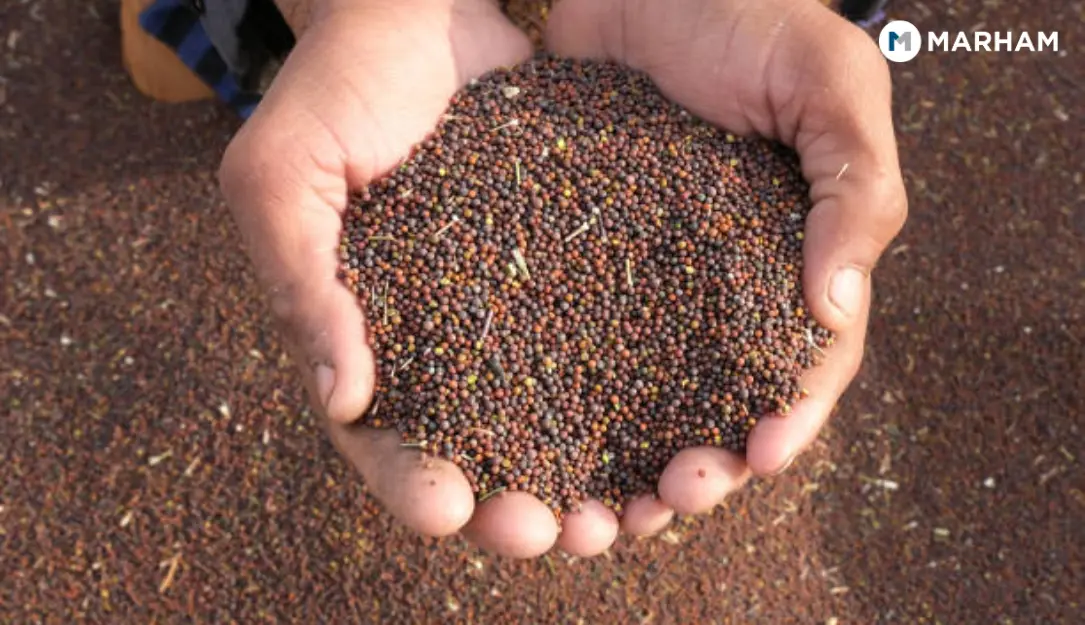
Mustard oil, extracted from black mustard seeds in Urdu known as kali sarson, is commonly used in Pakistan.
It is used for cooking and massage. For cooking, it adds a strong flavor to traditional dishes. For massage, it is believed to improve circulation.
Always use food-grade oil for cooking.
Powder Use
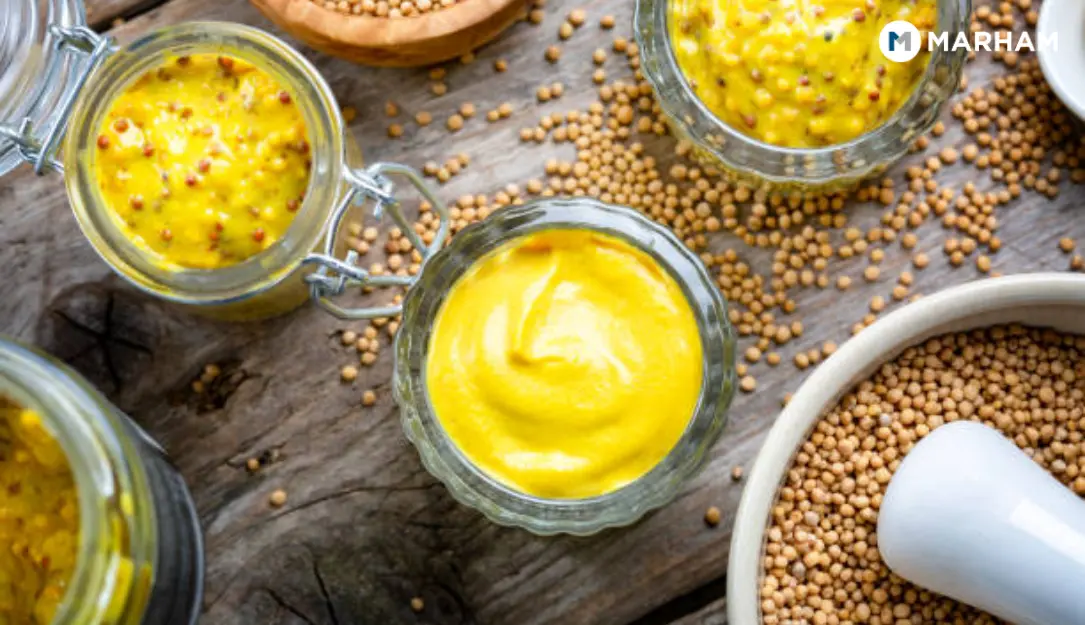
Ground mustard seed powder can be added to sauces, marinades, and spice blends.
It enhances taste and may support digestion when used in small quantities.
Store the powder in an airtight container to maintain freshness.
How Much Should You Use Daily?
For general dietary use:
- ½ to 1 teaspoon per day is usually enough.
- Use as part of cooking rather than consuming directly.
Excess intake may cause stomach irritation. Moderation is key.
Side Effects and Precautions
Pregnancy
Pregnant women should use mustard seeds in normal food quantities only. Avoid consuming large amounts or strong home remedies without medical advice.
Medical Conditions
People with thyroid disorders, ulcers, or severe acid reflux should consult a doctor before increasing mustard seed intake.
Overuse Risks
Too much mustard seed can cause:
- Stomach burning
- Nausea
- Diarrhea
Always stick to small amounts.
Children Caution
For children, mustard seeds should be used only in regular cooked food. Avoid giving concentrated forms like tea or paste.
When to Consult a Nutritionist
If you have diabetes, heart disease, thyroid problems, or digestive disorders, speak with a qualified nutritionist before making dietary changes.
You can consult certified nutritionists through Marham to get personalized guidance based on your health condition and dietary needs.
Conclusion
Mustard seeds in Urdu, known as Sarson ke beej, are a common kitchen ingredient with multiple health benefits. From improving digestion to supporting heart and bone health, these tiny seeds offer valuable nutrients.
However, they are not a cure for any disease. Use them in moderate amounts as part of a balanced diet.
Simple, traditional ingredients like mustard seeds can support overall health when used wisely.
