

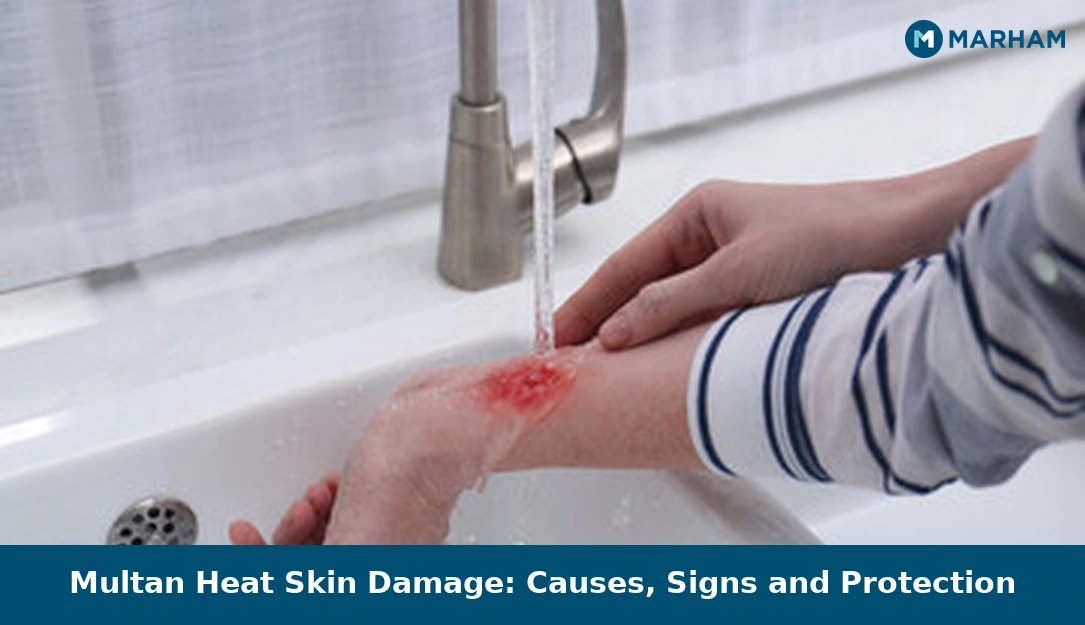
Multan earns its nickname — the City of Saints and Sun — honestly. From May through August, temperatures regularly cross 46°C, and the combination of scorching UV rays, low humidity, and frequent dust storms creates a skin environment unlike anywhere else in Pakistan. Karachi’s problem is humidity; Multan’s is relentless dry heat layered with fine particulate dust that strips the skin’s protective barrier before noon.
Residents who commute on foot or by motorbike, or who work outdoors, often notice skin changes within weeks of summer starting: a rough, tight feeling across the cheeks, dark patches around the forehead, and a persistent itch around the neck and back. These aren’t trivial complaints. They’re the early signs of heat-driven skin damage that, left unaddressed, can worsen into painful infections or lasting pigmentation.
This guide covers the four main ways Multan’s heat injures skin, how to tell each one apart, and a practical protection plan built around what’s actually available and realistic in Multan.
گرمی اور جلد کا نقصان: اہم نکات
ملتان کی شدید گرمی جلد کو چار طریقوں سے نقصان پہنچاتی ہے: گھمری (کانٹے دار دانے)، سن برن، سیاہ دھبے، اور جلد کی خشکی۔ دھول کے طوفان جلد کی حفاظتی تہہ کو کمزور کر دیتے ہیں، جس سے UV شعاعوں کا نقصان اور بھی بڑھ جاتا ہے۔ ہر روز SPF 50 سن اسکرین لگانا، سوتی کپڑے پہننا، اور صبح 11 بجے سے شام 4 بجے تک دھوپ سے بچنا سب سے ضروری احتیاطی تدابیر ہیں۔ اگر جلد پر دانے، جلن یا سیاہ دھبے کئی دنوں تک برقرار رہیں تو ماہر امراض جلد سے رجوع کریں۔
4 Types of Heat Skin Damage Common in Multan
Multan’s heat doesn’t damage skin in one way. It hits through four overlapping mechanisms, and most people are dealing with more than one at the same time.
Heat Rash (Gharami)
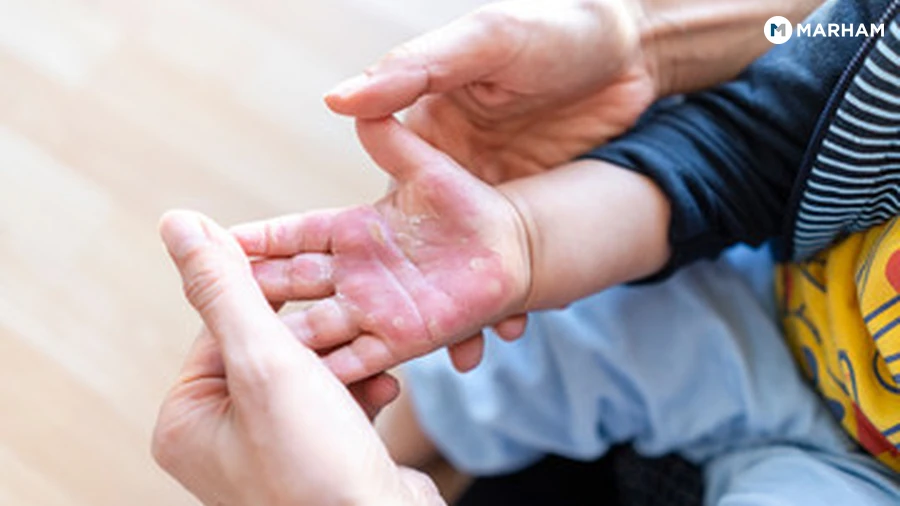
Heat rash, called gharami or ghumri in Urdu, forms when sweat ducts become blocked and sweat gets trapped beneath the skin surface. The result is clusters of small, itchy red bumps — most often on the neck, upper back, and chest where clothing traps heat. In Multan’s dry heat, gharami behaves slightly differently than in humid cities: the bumps tend to be drier and more intensely itchy rather than weepy, and they can spread quickly when someone wears synthetic shalwar kameez fabric that doesn’t breathe.
According to the American Academy of Dermatology, heat rash typically resolves once the skin cools down, though severe or infected cases need medical attention.
Sunburn and UV Damage
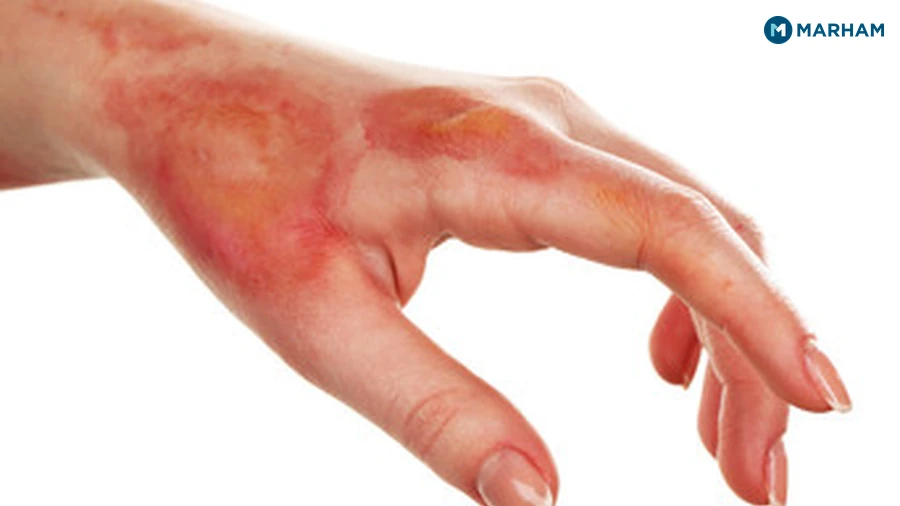
Sunburn is the most immediate form of UV injury. Skin turns red, feels warm to the touch, and may blister in severe cases. What most Multan residents don’t realise is that UV damage also happens at a deeper level: repeated sun exposure breaks down collagen (the protein that keeps skin firm) and raises the long-term risk of skin cancer, according to the American Academy of Dermatology.
Pakistani skin tones carry natural melanin that offers some protection, but this does not make UV damage impossible. Fair-skinned residents of Multan and children can develop sunburn within 10 to 15 minutes of midday exposure. Even darker skin tones accumulate UV damage silently over years.
Hyperpigmentation and Dark Spots
Heat and UV rays both stimulate melanocytes, the skin cells that produce pigment. In Multan’s summer, the two stressors hit simultaneously. The result is melasma (irregular dark patches across the cheeks, forehead, and upper lip) and post-inflammatory dark spots that linger long after a heat rash or sunburn heals. Women are more prone to melasma, and it often worsens during Ramadan when outdoor activity increases during the hotter parts of the day.
Dust Storm Skin Damage
This is the damage type that global skincare blogs miss entirely. Multan experiences frequent dust storms (locally called andhi) between May and June, driven by its proximity to the Thar and Rajasthan deserts. Fine particulate matter from these storms settles on the skin, clogs pores, and — critically — physically abrades the outermost skin barrier. A weakened barrier means UV rays penetrate more easily, moisture escapes faster, and bacterial infections find an easier entry point. After a dust storm, skin often feels gritty, dull, and unusually sensitive.
How Multan’s Heat Affects Your Skin: A Quick Comparison
| Skin Problem | Main Cause | Common Location | Multan-Specific Risk |
|---|---|---|---|
| Heat rash (gharami) | Blocked sweat ducts | Neck, back, chest | High — synthetic fabrics worsen it |
| Sunburn | UV-B rays | Face, arms, shoulders | Very high — UV index peaks in June |
| Hyperpigmentation | UV-A + heat stimulating melanin | Cheeks, forehead | High — especially in women |
| Dry, cracked skin | Low humidity + dust storms | Face, hands, lips | Unique to Multan’s dry heat |
| Bacterial infection | Sweat + dust clogging pores | Neck, underarms | Elevated after andhi storms |
How to Protect Your Skin from Multan’s Summer Heat
Protection in Multan needs to account for both UV radiation and dust, not just one or the other. These steps are ordered by impact.
- Apply SPF 50 broad-spectrum sunscreen every morning. Use a mineral-based formula containing zinc oxide if your skin is oily or acne-prone, as chemical sunscreens can feel heavy in Multan’s heat. Apply 20 minutes before stepping out and reapply every two hours if you’re outdoors. A 50ml tube from local pharmacies in Multan’s Hussain Agahi or New Chowk areas typically costs PKR 400 to 800.
- Wear loose, white or light-coloured cotton shalwar kameez. Cotton allows sweat to evaporate. Synthetic fabrics trap heat against the skin and are the single biggest driver of gharami in working adults. White and light colours reflect rather than absorb solar radiation.
- Wash your face and neck after a dust storm. Use a mild, fragrance-free cleanser. Don’t scrub — the skin barrier is already compromised after andhi exposure. Pat dry gently, then apply a light moisturiser with ceramides or glycerin to help rebuild the barrier.
- Stay indoors or in shade between 11 a.m. and 4 p.m. This is when Multan’s UV index is at its highest. If outdoor work is unavoidable, a wide-brimmed dupatta or hat reduces direct UV exposure on the face and neck significantly.
- Apply fresh aloe vera gel to heat rash or mild sunburn. Aloe vera plants grow in most Multan home gardens and are widely available at local nurseries. The fresh gel directly from a leaf is more potent than bottled versions and helps cool the skin and reduce inflammation. Apply a thin layer, let it absorb, and do not cover with clothing immediately.
- Use multani mitti (fuller’s earth) as a once-weekly cooling mask. Mix two tablespoons of multani mitti with rose water into a smooth paste and apply to the face for 15 minutes. It draws out excess oil and cools the skin. Limit use to once a week — more frequent application can over-dry an already heat-stressed skin barrier.
- Drink at least 2.5 to 3 litres of water daily. Dehydration accelerates skin dryness and makes heat rash worse. Nimbu paani (fresh lime water with a pinch of salt) is a practical way to replace electrolytes lost through heavy sweating in Multan’s summer.
Who Is Most at Risk from Heat Skin Damage in Multan
Some people face a higher risk and need to take extra precautions.
- Outdoor workers (construction, agriculture, rickshaw drivers) — prolonged UV exposure with no shade.
- Children — thinner skin and underdeveloped sweat glands make heat rash and sunburn more likely.
- Women with existing melasma — heat alone can worsen pigmentation even without direct sun exposure.
- People using retinoids or acne antibiotics — these medications increase photosensitivity, meaning less UV exposure causes more damage. A dermatologist‘s guidance is especially important in this group.
- Anyone with eczema — sweating and dust storms can trigger severe flare-ups.
When to See a Dermatologist for Heat Skin Damage
Most mild heat rash and sunburn improve within a few days of staying cool and applying soothing agents. Seek professional advice if the rash develops pus, spreads rapidly, or is accompanied by fever — these signs suggest a bacterial skin infection that needs antibiotic treatment. Persistent dark patches that don’t fade after summer ends also deserve attention, as untreated melasma can deepen with each passing year.
Consulting a dermatologist in Pakistan early is especially worthwhile for anyone on acne medications or with a personal history of skin conditions, since heat significantly changes how those conditions behave. You can also read more about common summer skin problems in Pakistan including prickly heat and fungal infections that often appear alongside sun damage.
Speak to a Skin Specialist on Marham
Getting to a clinic in Multan’s peak summer heat is itself a challenge, especially during a heatwave when stepping outside is the last thing your skin needs. Marham connects you with verified dermatologists in Pakistan who consult online, so you can describe your symptoms, share a photo of the rash or pigmentation, and get a clinical opinion without leaving home.
A short online consultation usually takes 15 to 20 minutes and can clarify whether what you’re seeing is straightforward heat rash or something that needs a prescription treatment. For persistent melasma, post-inflammatory pigmentation, or infected skin, an early consultation prevents the kind of skin damage that takes months to reverse. Marham also connects you with nutritionists in Pakistan if you want guidance on a diet that supports skin recovery during the summer months.
Frequently Asked Questions
How does extreme heat damage your skin?
Extreme heat damages skin through four main mechanisms: blocked sweat ducts causing heat rash, UV radiation causing sunburn and collagen breakdown, heat-stimulated melanin causing dark spots, and dehydration weakening the skin’s protective barrier. In Multan, dust storms add a fifth layer of damage by physically abrading the skin surface.
What is the best sunscreen for Pakistani skin in summer?
A broad-spectrum mineral sunscreen with SPF 50 and zinc oxide works well for most Pakistani skin types. It offers strong UVA protection (the main driver of melasma) and suits oily or acne-prone skin better than chemical formulas in hot weather. Apply 20 minutes before going out and reapply every two hours.
How do you treat heat rash at home in Pakistan?
Move to a cool, shaded area and remove tight or synthetic clothing. Apply fresh aloe vera gel or calamine lotion to the affected area. A multani mitti paste with rose water can also soothe the skin. If the rash doesn’t improve within 3 to 4 days or develops pus, see a dermatologist.
Can heat cause dark spots on the face?
Yes. Heat stimulates melanocytes, the cells that produce skin pigment, even without direct UV exposure. Combined with sun exposure, this can cause melasma (brown patches on the face) and worsen existing dark spots. SPF 50 sunscreen and staying out of peak-hour sun are the most effective ways to prevent this.
Is multani mitti safe for sunburned skin?
Multani mitti can be used on mildly sun-damaged skin once the initial redness and heat have settled, typically 24 to 48 hours after sun exposure. Avoid applying it on actively blistered or raw sunburned skin, as it can cause further irritation. Use it diluted with rose water and limit application to once a week.
When should I see a dermatologist for skin damage from heat?
See a dermatologist if a rash develops pus, spreads significantly, or comes with fever. Also seek advice for dark patches that persist beyond summer, or if you’re on medications that increase sun sensitivity. Early treatment prevents long-term pigmentation and scarring.
Conclusion
Multan’s summer is genuinely harsh on skin, and the combination of dry heat, high UV intensity, and dust storms creates challenges that standard summer skincare advice doesn’t fully address. The practical priorities are consistent SPF 50 sunscreen, breathable cotton clothing, prompt skin cleansing after dust storms, and avoiding outdoor exposure during the hottest midday hours. Most heat-related skin problems respond well to these measures. When they don’t, a dermatologist’s input early in the season saves a great deal of discomfort later.