


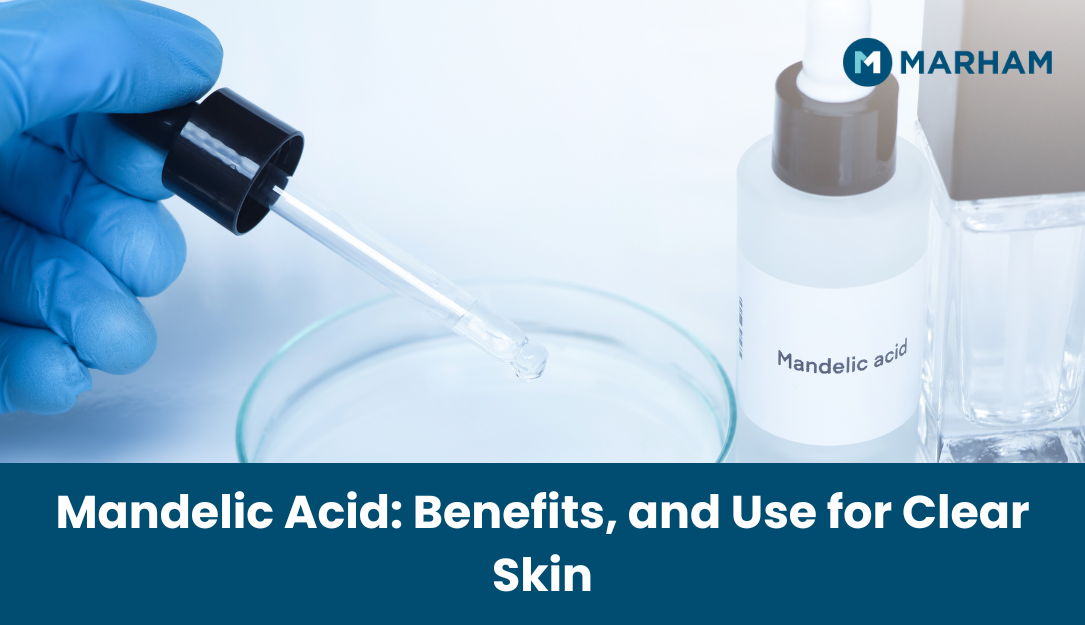
Do you know that mandelic acid has a larger molecular structure than other AHAs like glycolic acid? This means it penetrates the skin more slowly and gently, reducing the risk of irritation while still providing excellent results. Dermatologists often recommend mandelic acid for people who cannot tolerate stronger acids or for those with darker skin tones prone to hyperpigmentation.
In recent years, mandelic acid has gained popularity in Pakistan’s skincare market as people discover its impressive benefits for acne-prone, sensitive, and aging skin. Whether you use it in a face wash, serum, or cream, mandelic acid can transform your skin with consistent use.
In this comprehensive guide, we will explore everything you need to know about mandelic acid, including what it is, its benefits, how to use it, and which products are best for different skin concerns.
What is Mandelic Acid?
Mandelic acid is an alpha hydroxy acid (AHA) derived from bitter almonds. It belongs to the same family of exfoliating acids as glycolic acid and lactic acid, but it has unique properties that make it gentler and more suitable for sensitive skin.
The key difference lies in its molecular size. Mandelic acid has the largest molecular structure among commonly used AHAs. This larger size means it penetrates the skin more slowly, resulting in:
- Less irritation and redness
- Lower risk of burning or stinging
- Gentler exfoliation
- Better tolerance for sensitive skin
Despite being gentle, mandelic acid is highly effective at exfoliating dead skin cells, unclogging pores, promoting cell turnover, and improving overall skin texture and tone.

How Does Mandelic Acid Work?
Mandelic acid works by loosening the bonds between dead skin cells on the surface of your skin. This allows these cells to shed more easily, revealing the fresh, healthy skin underneath.
Additionally, mandelic acid:
- Penetrates pores to dissolve oil, debris, and bacteria
- Stimulates collagen production for firmer, younger-looking skin
- Inhibits melanin production to reduce dark spots and hyperpigmentation
- Has antibacterial properties that help fight acne-causing bacteria
This multi-action approach makes mandelic acid suitable for treating multiple skin concerns simultaneously.
Mandelic Acid Benefits
Mandelic acid offers numerous benefits that make it a valuable addition to any skincare routine.
1. Treats Acne and Prevents Breakouts
One of the most popular uses of mandelic acid is for treating acne. It works by:
- Exfoliating dead skin cells that can clog pores
- Dissolving excess oil and sebum
- Killing acne-causing bacteria (P. acnes)
- Reducing inflammation associated with breakouts
Studies show that mandelic acid is effective for both inflammatory and non-inflammatory acne, making it suitable for blackheads, whiteheads, and pimples.
2. Fades Dark Spots and Hyperpigmentation
If you struggle with post-acne marks, melasma, or sun damage, mandelic acid can help. It reduces pigmentation by:
- Inhibiting tyrosinase, the enzyme responsible for melanin production
- Promoting cell turnover to fade existing dark spots
- Evening out skin tone for a more radiant complexion
Mandelic acid is particularly beneficial for people with darker skin tones because its gentle action reduces the risk of post-inflammatory hyperpigmentation that can occur with harsher acids.
3. Reduces Fine Lines and Wrinkles
As we age, cell turnover slows down, leading to dull skin, fine lines, and wrinkles. Mandelic acid combats aging by:
- Boosting collagen production for firmer, plumper skin
- Improving skin texture and smoothness
- Reducing the appearance of fine lines
- Brightening dull, aging skin
Regular use of mandelic acid can help you achieve younger-looking skin without invasive procedures.
4. Gentle Exfoliation for Sensitive Skin
Many people with sensitive skin cannot use strong exfoliating acids like glycolic acid because they cause irritation. Mandelic acid provides effective exfoliation without the harsh side effects, making it ideal for:
- People with rosacea or eczema
- Those with reactive or easily irritated skin
- Beginners trying chemical exfoliation for the first time
5. Improves Skin Texture and Tone
Mandelic acid smooths rough, uneven skin texture and creates a more refined complexion. It helps with:
- Rough patches
- Bumpy skin
- Enlarged pores (by keeping them clear)
- Overall skin smoothness
6. Reduces Oiliness
For people with oily or combination skin, mandelic acid helps regulate sebum production and keeps pores clear, resulting in less shine and fewer breakouts.
7. Antibacterial and Antimicrobial Properties
Research has shown that mandelic acid has natural antibacterial properties, which help fight the bacteria that cause acne and other skin infections.
Mandelic Acid Uses
Mandelic acid is versatile and can address multiple skin concerns:
- Acne
- Blackheads and whiteheads
- Post-acne marks and scars
- Hyperpigmentation and melasma
- Sun damage and age spots
- Fine lines and wrinkles
- Rough, uneven texture
- Dull, aging skin
- Oily and congested skin
- Sensitive skin that cannot tolerate other acids
Mandelic Acid Face Wash
Mandelic acid face wash is a cleanser that contains mandelic acid as an active ingredient. It provides both cleansing and exfoliating benefits in one step.
Benefits of Mandelic Acid Face Wash
- Removes dirt, oil, and makeup while gently exfoliating
- Unclogs pores to prevent blackheads and breakouts
- Brightens skin with regular use
- Prepares skin for other skincare products
- Convenient for people who prefer simple routines
How to Use Mandelic Acid Face Wash
Step 1: Wet your face with lukewarm water.
Step 2: Apply a small amount of mandelic acid face wash to your hands and create a lather.
Step 3: Gently massage onto your face in circular motions for 30-60 seconds.
Step 4: Rinse thoroughly with lukewarm water.
Step 5: Pat dry with a clean towel.
Step 6: Follow with toner, serum, moisturizer, and sunscreen (if morning).
How Often to Use
Beginners: Start with 2-3 times per week
Regular use: Once daily (preferably at night)
Sensitive skin: 2-4 times per week
Mandelic Acid Serum
Mandelic acid serum is a concentrated formula that delivers a higher percentage of mandelic acid directly to your skin.
Mandelic Acid Serum Benefits
- Higher concentration for faster results
- Targets specific concerns like dark spots or acne
- Lightweight texture that absorbs quickly
- Can be used on face and body
- Often contains additional beneficial ingredients
How to Use Mandelic Acid Serum
Step 1: Cleanse your face thoroughly.
Step 2: Apply toner (optional).
Step 3: Apply 2-3 drops of mandelic acid serum to your face and neck.
Step 4: Gently massage until fully absorbed.
Step 5: Wait 1-2 minutes before applying moisturizer.
Step 6: Apply moisturizer to lock in hydration.
Step 7: Apply sunscreen in the morning.
When to Use
Night: Best used at night as part of your evening routine
Morning: Can be used in the morning but always follow with sunscreen
How Often to Use
Beginners: 2-3 times per week
Regular use: Every other night, gradually increasing to nightly
Sensitive skin: 2-3 times per week
Mandelic Acid Cream
Mandelic acid cream is a moisturizing formula that contains mandelic acid. It provides:
- Exfoliation + hydration in one product
- Good for dry or mature skin
- Longer contact time with skin for better results
- Less drying than serums or washes
Use mandelic acid cream as your night moisturizer, applying it as the last step in your skincare routine.
How to Incorporate Mandelic Acid into Your Routine
Here is a simple guide for adding mandelic acid to your skincare routine:
Morning Routine
- Cleanser (regular gentle cleanser, not mandelic acid)
- Toner (optional)
- Serum (vitamin C or other antioxidants)
- Moisturizer
- Sunscreen (essential!)
Evening Routine
- Mandelic acid face wash or regular cleanser
- Mandelic acid serum (if not using face wash)
- Moisturizer or mandelic acid cream
Important Tips
- Start slowly: Begin with 2-3 times per week and gradually increase
- Never skip sunscreen: Mandelic acid makes your skin more sun-sensitive
- Do not overdo it: Using too much or too often can cause irritation
- Be patient: Results take 4-8 weeks of consistent use
Combining Mandelic Acid with Other Ingredients
Mandelic acid can be combined with certain ingredients for enhanced results:
Safe Combinations
- Hyaluronic acid as it provides hydration
- Niacinamide brightens and strengthens skin barrier
- Peptides boosts anti-aging benefits
- Vitamin E moisturizes and protects
Use with Caution
- Retinol can be combined but use on alternate nights initially
- Some people tolerate the combination of vitamin c but others may experience irritation
- Generally avoid using multiple AHAs/BHAs exfoliating acids together
Avoid Combining
- Benzoyl peroxide: It can cause excessive dryness and irritation when used together
Side Effects and Precautions
Mandelic acid is generally safe and well-tolerated, but there are some precautions:
Possible Side Effects
- Mild tingling or stinging
- Slight redness
- Dryness or flaking
- Increased sun sensitivity
Who Should Avoid Mandelic Acid
- People allergic to almonds
- Those with open wounds or active infections
- People using prescription retinoids
Safety Tips
- Always do a patch test before using on your face
- Start with lower concentrations (5-10%)
- Use sunscreen daily (SPF 30 or higher)
- Do not use on broken skin
- Reduce frequency if irritation occurs
When to Expect Results
Patience is important when using mandelic acid:
- 2-4 weeks: Skin texture begins to improve, slight brightening
- 6-8 weeks: Noticeable reduction in acne and dark spots
- 3-6 months: Significant improvement in pigmentation, texture, and overall skin quality
Consistency is key. Use mandelic acid regularly as directed for best results.
Mandelic Acid vs Other AHAs
How does mandelic acid compare to other popular acids?
Mandelic Acid vs Glycolic Acid
Mandelic acid:
- Larger molecule, gentler penetration
- Better for sensitive skin
- Less irritating
- Slower but steady results
Glycolic acid:
- Smaller molecule, deeper penetration
- More irritating
- Faster results but higher risk of sensitivity
- Better for non-sensitive skin
Mandelic Acid vs Lactic Acid
Mandelic acid:
- Better for acne and antibacterial benefits
- Slightly less hydrating
- Good for oily and combination skin
Lactic acid:
- More hydrating
- Better for dry skin
- Less effective for acne
Mandelic Acid vs Salicylic Acid
Mandelic acid:
- AHA, water-soluble
- Exfoliates surface
- Better for pigmentation and aging
Salicylic acid:
- BHA, oil-soluble
- Penetrates deeper into pores
- Better for stubborn acne and blackheads
Many people use both mandelic acid and salicylic acid on alternate nights for comprehensive acne treatment.
The Bottom Line
Mandelic acid is a gentle yet effective skincare ingredient that addresses multiple concerns such as acne, pigmentation, aging. Its larger molecular size makes it ideal for sensitive skin, beginners, and people with darker skin tones prone to hyperpigmentation.
The key to success with mandelic acid is starting slowly, using sunscreen religiously, and being patient. Most people see significant improvements within 6-12 weeks of regular use.
If you have persistent skin concerns or need personalized skincare advice, consult a dermatologist for professional guidance. We can easily connect with the best skin specialist in Pakistan through Marham. Call 03111222398 for more information.
