

Chest pain is one of the most alarming things a person can feel. Whether it happens after a heavy biryani dinner in Lahore or during a stressful morning commute in Karachi, the first question most Pakistanis ask themselves is the same: is this my heart, or is it just gas?
The honest answer is that even doctors can’t always tell from symptoms alone. According to cardiologists at the National Institute of Cardiovascular Diseases (NICVD) in Karachi, nine in ten of their heart attack patients reported only heaviness or acidity-like discomfort — not the dramatic crushing pain most people expect. That single fact should make every Pakistani take chest discomfort more seriously than they currently do.
The clues that separate cardiac pain from digestive pain are real and worth knowing. They won’t replace a proper medical evaluation, but they can help you decide how urgently you need one.
سینے کا درد: دل کا دورہ یا تیزابیت؟
سینے میں درد محسوس ہونا انتہائی پریشان کن تجربہ ہوتا ہے، خاص طور پر جب یہ واضح نہ ہو کہ یہ دل کا مسئلہ ہے یا معدے کی تیزابیت۔ پاکستان میں دل کے دورے کے مریضوں کی تعداد تیزی سے بڑھ رہی ہے، اور نیشنل انسٹیٹیوٹ آف کارڈیووسکولر ڈیزیزز کراچی کے مطابق تقریباً نصف مریض پچاس سال سے کم عمر کے ہیں۔ تیزابیت یا ایسڈ ریفلکس میں سینے میں جلن کا احساس ہوتا ہے جو کھانے کے بعد بڑھتا ہے، جبکہ دل کے درد میں سینے پر بوجھ یا دباؤ محسوس ہوتا ہے جو بائیں بازو یا جبڑے تک پھیل سکتا ہے۔ اگر درد چند منٹ سے زیادہ رہے، آرام سے بہتر نہ ہو، یا سانس لینے میں تکلیف ہو، تو فوری طبی مدد لینی چاہیے۔
Key Takeaways
- Acidity pain usually burns and stays in the upper chest or throat — heart pain tends to feel like pressure or tightness.
- Heart attack pain often spreads to the left arm, jaw, neck, or back. Acidity pain generally stays local.
- Antacids can relieve acid reflux chest pain. They will not relieve cardiac chest pain.
- Sweating, breathlessness, dizziness, or cold clamminess alongside chest pain are red flags for the heart.
- In Pakistan, nearly half of heart attack patients at NICVD Karachi are under 49 — younger than most people assume.
- When in doubt, go to an emergency room. It is always safer to rule out the heart first.
What Does Acidity Chest Pain Actually Feel Like?
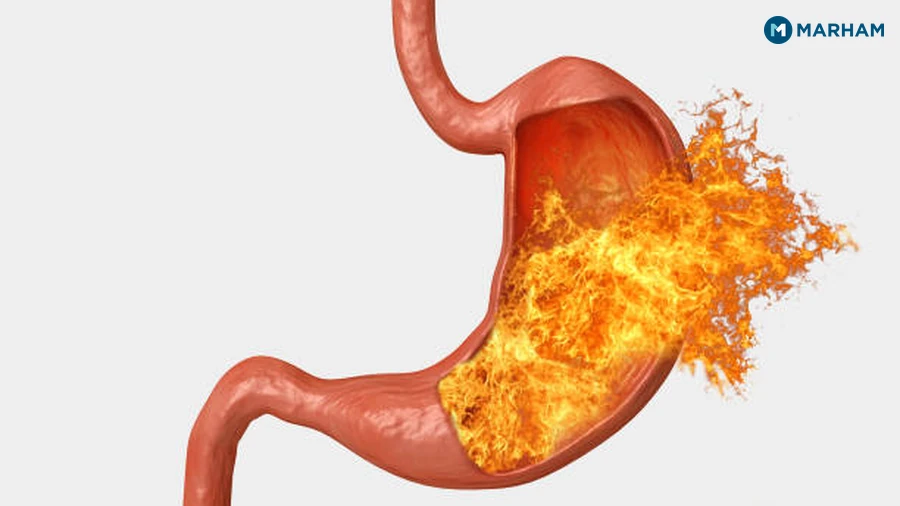
Acidity chest pain, also called heartburn or acid reflux, happens when stomach acid flows back up into the esophagus (the food pipe running through your chest). The esophagus sits right next to the heart, which is why the discomfort lands in the chest rather than the stomach.
The sensation is usually a burning or stinging feeling behind the breastbone. It tends to rise toward the throat and may leave a sour or bitter taste in the mouth. Many Pakistanis notice it after a large meal — a full plate of biryani, a greasy paratha at sehri, or chai on an empty stomach. Lying down or bending forward after eating often makes it worse.
Other signs that point toward acidity rather than the heart:
- Burning that travels upward toward the throat
- Sour or acidic taste in the mouth
- Burping or bloating alongside the chest discomfort
- Pain that started within 30 to 60 minutes of eating
- Improvement after taking an antacid like Gaviscon or a local OTC antacid syrup
If an antacid helps within 15 to 20 minutes, that is a reasonable indicator of an acid-related cause. But it is not a guarantee. Some people have both GERD (chronic acid reflux) and underlying heart disease at the same time.
What Does Cardiac Chest Pain Feel Like?
Heart-related chest pain feels different from acidity — though not always in the dramatic way films portray it. According to the American Heart Association, the classic description is a pressure, tightness, squeezing, or heaviness in the center or left side of the chest, rather than a sharp burning sensation.
Many patients describe it as something heavy sitting on their chest. The pain may radiate outward — down the left arm, into the jaw, up to the neck, or through to the back. It can also come on during physical exertion or emotional stress, and it does not improve with rest, position change, or antacids.
Heart attack pain can also be surprisingly mild. This is the detail that causes the most dangerous delays in Pakistan. A NICVD Karachi study found that the majority of their heart attack patients initially dismissed their symptoms as gas or indigestion. Younger men especially tend to wait hours before seeking care, and that delay costs heart muscle.
Red flags that suggest a cardiac cause:
- Pressure, squeezing, or heaviness rather than burning
- Pain that spreads to the left arm, jaw, neck, or back
- Cold sweating, dizziness, or feeling faint
- Shortness of breath, even at rest
- Nausea or vomiting without an obvious digestive trigger
- Pain that persists for more than a few minutes and does not improve
For Pakistani women specifically: the American Heart Association notes that women are more likely to experience atypical heart attack symptoms such as unusual fatigue, upper back pain, or nausea — without prominent chest pain at all. Women over 40 with diabetes or high blood pressure should be especially alert to these subtler signs.
Side-by-Side: Acidity vs Heart Attack Chest Pain

| Feature | Acidity (Acid Reflux / GERD) | Heart Attack (Cardiac Pain) |
|---|---|---|
| Sensation | Burning, stinging | Pressure, tightness, squeezing |
| Location | Behind breastbone, rises to throat | Center or left chest, may radiate |
| Radiation | Stays local or moves toward throat | Left arm, jaw, neck, back |
| Trigger | Eating, lying down, bending | Exertion, stress, or no trigger |
| Timing | After meals, at night | Any time, including at rest |
| Antacid response | Often improves | No improvement |
| Other symptoms | Sour taste, burping, bloating | Sweating, breathlessness, dizziness |
| Duration | Variable, often improves with time | Persists, may worsen |
Other Causes of Chest Pain Worth Knowing
Not every chest pain is the heart or acidity. A third common cause in Pakistan is musculoskeletal pain — strain of the chest wall muscles from heavy lifting, prolonged sitting at a desk, or even a bad cough. This type of pain usually sharpens when you press on the sore spot or take a deep breath, which cardiac pain typically does not do.
Anxiety and panic attacks are another overlooked cause, particularly in urban Pakistan where financial and work pressures are high. Panic-related chest tightness can feel frightening but is generally not dangerous. You can read more about how financial stress and physical pain connect in ways that genuinely affect the body.
A persistent cough, especially in Karachi’s polluted air, can also cause chest soreness that gets mistaken for something cardiac. If you’ve had a cough alongside chest discomfort, it’s worth understanding whether a persistent cough is always a chest infection.
How to Assess Your Chest Pain: 5 Quick Questions
If you feel chest discomfort right now and are trying to decide how urgent it is, work through these questions in order:
- Did the pain start during or right after eating? If yes, acidity is more likely — but do not stop here if other red flags are present.
- Does the pain feel like burning that rises toward your throat? That pattern strongly suggests acid reflux.
- Does the pain feel like pressure, weight, or squeezing rather than burning? That pattern is more concerning for the heart.
- Does the pain spread to your left arm, jaw, neck, or back? Radiation is a cardiac red flag. Go to a hospital.
- Are you sweating, breathless, dizzy, or feeling unusually weak? If yes to any of these alongside chest pain, call for emergency help immediately — do not wait to see if it passes.
One practical Pakistani tip: if you take an antacid available at any local pharmacy (Gaviscon, Digene, or a standard antacid suspension) and the chest discomfort clears within 15 to 20 minutes, acid reflux is the likely cause. If it does not improve, treat it as cardiac until proven otherwise.
When Should You See a Specialist in Pakistan?

Any chest pain that is new, unexplained, or does not follow a clear pattern after eating deserves professional evaluation. Cardiologists in Pakistan see patients who waited days or even weeks before seeking help, by which point the window for the most effective cardiac treatment had passed.
If you have risk factors — diabetes, high blood pressure, a family history of heart disease, smoking, or obesity — the threshold for getting checked should be lower, not higher. Per NICVD data, up to 15% of heart attack patients in Pakistan are under 40 years old. Age alone is no longer a reliable reassurance.
For recurring acidity symptoms, a gastroenterologist in Pakistan can assess whether you have GERD and advise on management. For chest pain with any cardiac features, a cardiologist in Pakistan should evaluate you with an ECG (electrocardiogram) and, if needed, blood tests for cardiac enzymes.
Get Expert Help from Marham
Living with recurring chest discomfort — and not knowing what is causing it — is stressful. Many Pakistanis put off seeing a specialist because of long waiting times at public hospitals or the difficulty of finding the right doctor in their city.
Marham connects you with verified cardiologists in Pakistan who are available for online and in-clinic consultations across Karachi, Lahore, Islamabad, and other cities. A short consultation can help determine whether your symptoms need an ECG, further testing, or simply a change in diet and medication. You don’t need to keep guessing.
Frequently Asked Questions
Can acidity cause chest pain that feels like a heart attack?
Yes, it can. Acid reflux chest pain can feel intense and alarming, because the esophagus and heart share the same chest space. The key difference is that acidity pain usually burns, responds to antacids, and is linked to eating or lying down.
How do I know if my chest pain is serious?
Seek emergency care if the pain feels like pressure or squeezing, spreads to your arm or jaw, comes with sweating or breathlessness, or does not improve after a few minutes. When in doubt, go to an emergency room rather than waiting.
Does heart attack pain go away with antacids?
No. Antacids work by neutralising stomach acid and have no effect on cardiac pain. If your chest pain improves noticeably after taking an antacid, that points toward an acid-related cause rather than the heart.
Can stress cause chest pain in Pakistan?
Yes. Anxiety and panic attacks are a common cause of chest tightness, particularly in high-stress urban environments. However, stress can also trigger angina (reduced blood flow to the heart) in people with underlying heart disease, so persistent stress-related chest pain should still be evaluated by a doctor.
What are the warning signs of a heart attack in women?
Women may experience less obvious symptoms than men, including unusual fatigue, upper back pain, nausea, or jaw discomfort — sometimes without prominent chest pain. According to the American Heart Association, women over 50 with diabetes or obesity who notice these symptoms should seek emergency care promptly.
Is chest pain after eating always acidity?
Not always. While eating is a common trigger for acid reflux, a heart attack can also occur after a large meal because digestion increases the heart’s workload. If post-meal chest pain is accompanied by sweating, breathlessness, or radiating pain, do not assume it is acidity.
When should I see a cardiologist vs a gastroenterologist for chest pain?
See a cardiologist first if the pain feels like pressure, spreads to other areas, or comes with cardiac red-flag symptoms. See a gastroenterologist if the pain is clearly burning, linked to meals, and has already been assessed as non-cardiac by a doctor.
Conclusion
Chest pain that turns out to be acidity is common and manageable. Chest pain that turns out to be a heart attack is a medical emergency — and in Pakistan, where younger patients are increasingly affected, the cost of dismissing it as gas can be severe. The burning, meal-linked, antacid-responsive pattern of acid reflux is meaningfully different from the pressure, radiating, sweat-accompanied pattern of cardiac pain. Know the difference, use it as a guide, and then get a proper evaluation rather than self-diagnosing. Your heart deserves that much caution.