


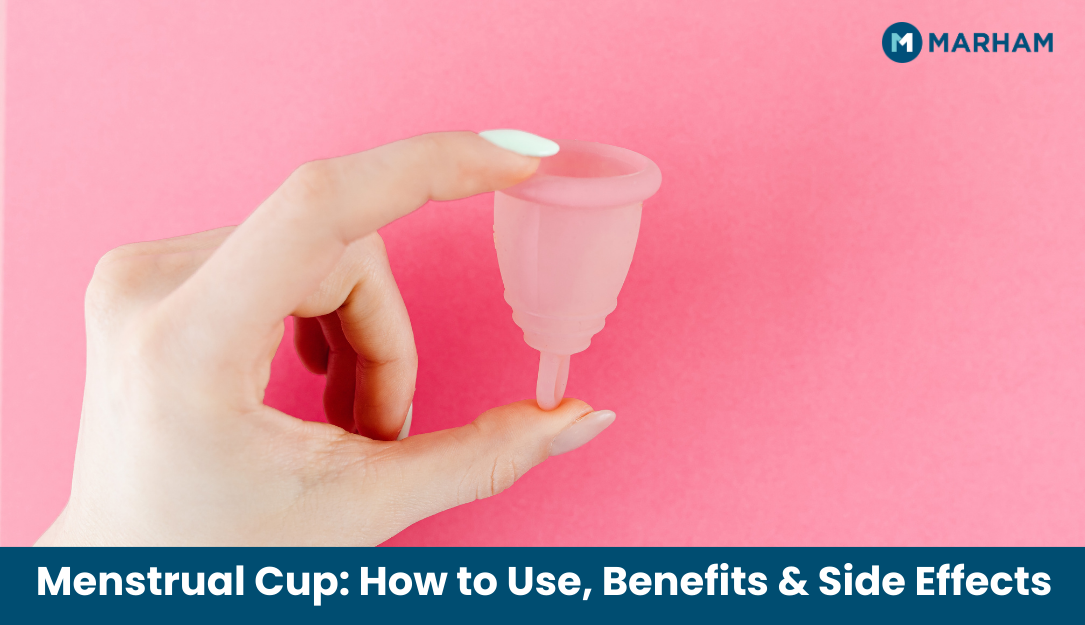
A menstrual cup is a small, bell-shaped cup made from medical-grade silicone. You insert it into your vagina during your period. Instead of absorbing blood like a pad or tampon, it collects it. You empty the cup, wash it, and reuse it. One cup can last up to 10 years with proper care.
Menstrual cups have been around since the 1930s. However, women in Pakistan show high reliance on pads. A 2019 Lancet Public Health review of 43 studies and 3,300 women found that menstrual cups are safe and leak the same or less than pads and tampons. About 73% of women who tried them wanted to keep using them.
Most cups hold 20 to 50 ml of fluid. A regular pad holds only 5 to 15 ml. So a cup collects two to three times more blood, meaning fewer changes throughout the day.
How to Use a Menstrual Cup (Step by Step)
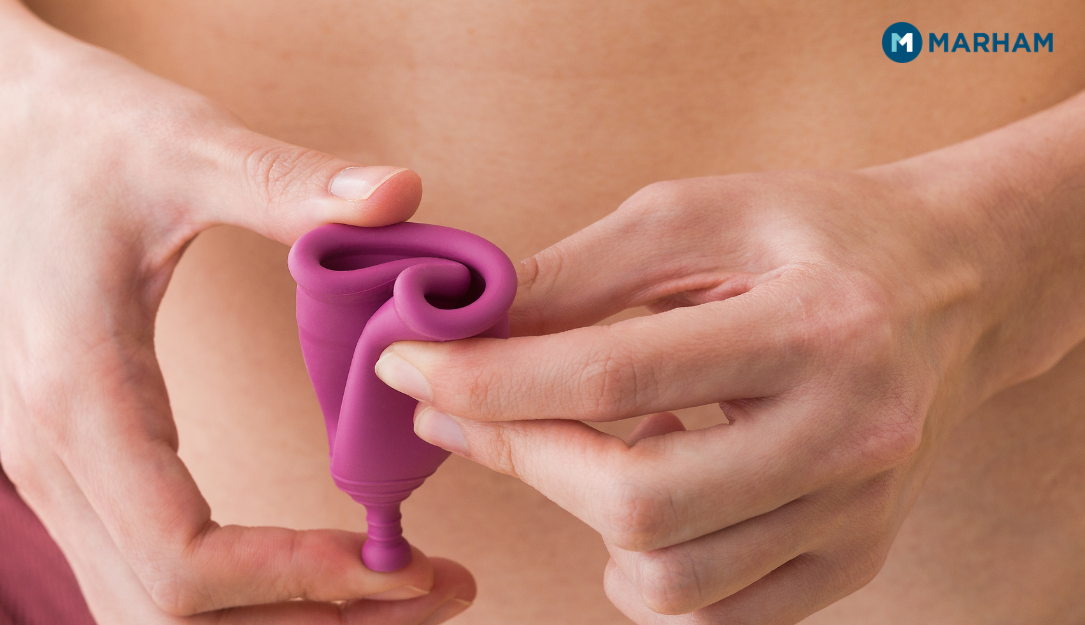
Using it takes a little practice. Most women get comfortable with it by the third cycle. Here is how to do it:
Inserting the Cup:
Here’s how to insert a menstrual cup:
- Wash your hands with soap and water.
- Wet the rim of the cup with clean water.
- Fold the cup in half so the rim forms a “U” shape.
- Hold it with the rim facing up.
- Gently insert it into your vagina, angled toward your tailbone.
- Once inside, it will pop open and create a seal.
- Rotate it slightly to make sure it has opened fully.
Removing the Cup:
- Wash your hands first.
- Insert your thumb and index finger into your vagina.
- Pinch the base of the cup to break the seal.
- Do not pull by the stem alone.
- Slowly pull the cup down and out.
- Empty the blood into the toilet or sink.
- Rinse with water before reinserting.
Cleaning Between Cycles:
- At the end of your period, boil the cup in water for 5 to 7 minutes.
- Let it dry completely.
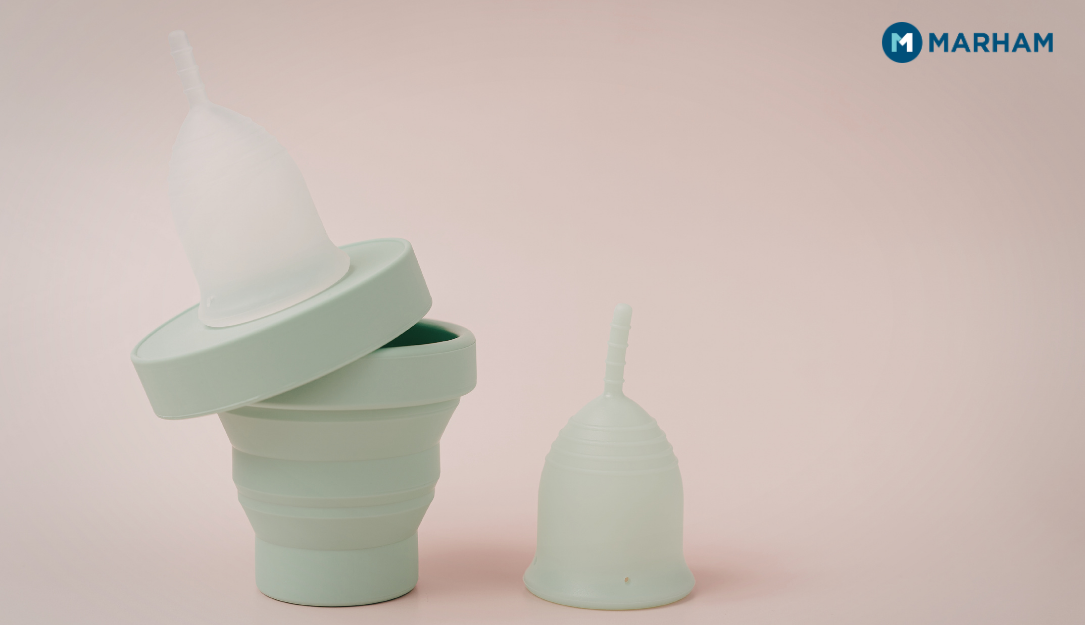
- Store it in a breathable cloth pouch.
- Do not keep it in an airtight container.
Menstrual Cup Benefits
The benefits of a menstrual cup are backed by research. Here is what the evidence says:
Fewer Leaks:
The Lancet review found that leakage with cups was the same or lower than with pads and tampons.
Longer Wear Time:
You can wear a cup for up to 12 hours. Pads need changing every 4 to 6 hours.
Better for Vaginal Health:
A study in PLOS Medicine found that girls using menstrual cups were 26% less likely to develop bacterial vaginosis and had improved vaginal microbiomes.
Saves Money:
One cup costs PKR 600 to PKR 3,000 in Pakistan and replaces years of pad purchases. The Lancet review estimates a cup costs about 5% of what you would spend on pads over 10 years.
Less Waste:
An average woman uses over 10,000 pads in her lifetime. A reusable cup reduces plastic waste by up to 99%.
No Odor:
Since the cup collects blood inside your body, there is no air contact and no smell.
Menstrual Cup Side Effects
Menstrual cups are safe for most women. However, there are a few things to be aware of:
Learning Curve:
Inserting and removing the cup takes practice. A study in Cureus found that most women got comfortable by the third cycle.
Discomfort at First:
Some women feel mild pressure during the first few uses. This goes away once you find the right fold and angle.
Risk of Irritation:
In rare cases, the cup may cause vaginal irritation. If you are sensitive to latex, use a silicone cup instead.
Toxic Shock Syndrome (TSS):
TSS is very rare with cups. The Lancet review found only 5 reported cases across all studies. Emptying the cup every 8 to 12 hours lowers this risk.
IUD Users Should Be Careful:
There have been rare cases where removing a cup dislodged an IUD (intrauterine device). Always break the seal before pulling the cup out. Talk to your gynecologist before using a cup if you have an IUD.
What Size Menstrual Cup Should I Use?
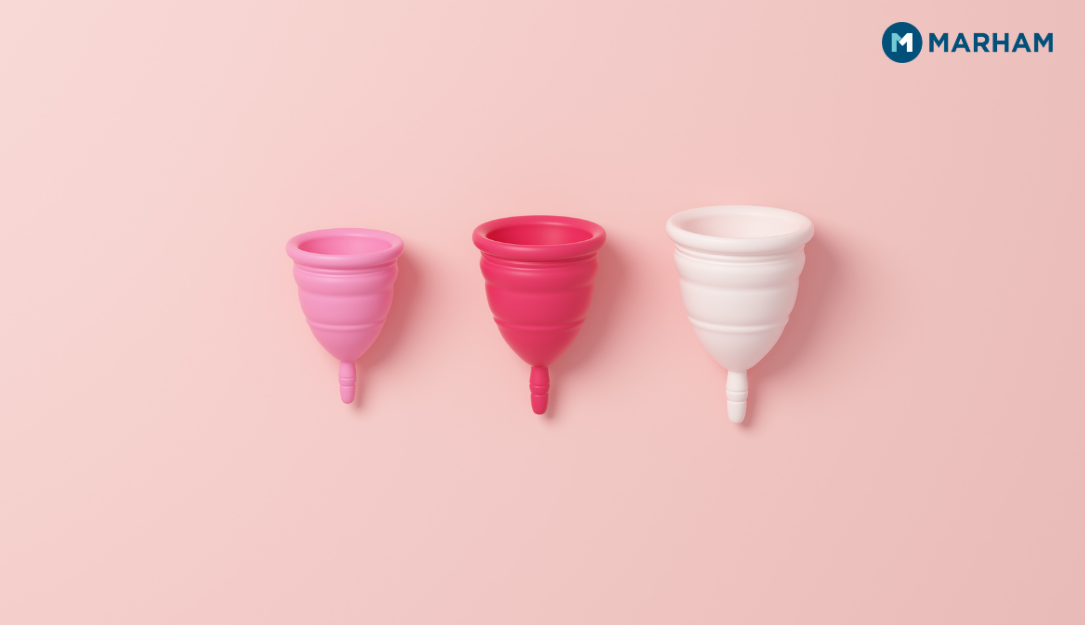
Most brands offer two menstrual cup sizes:
Small Menstrual Cup Size:
It works best if you are under 30, have a light to moderate flow, or have not had a vaginal delivery.
Large Menstrual Cup Size:
It is better if you are over 30, have a heavy flow, or have given birth vaginally.
If unsure, start with a small, soft cup. It is easier to fold and insert for beginners.
Menstrual Cup Price in Pakistan
Menstrual cups are now available in Pakistan through online stores and some pharmacies. Prices range from PKR 600 to PKR 4,500 depending on the brand. Medical-grade silicone cups from Pakistani brands like Lilac and MomDaughts cost PKR 769 to PKR 3000. Even at the higher end, a cup pays for itself within 3 to 4 months.
When to See a Doctor
Talk to a gynecologist before using a menstrual cup if you have an IUD, a history of vaginal infections, or pelvic floor concerns. Stop using it and see a doctor if you notice unusual pain, heavy vaginal discharge, or a foul smell.
Discuss your concerns privately via Marham and choose a menstrual hygiene option that feels comfortable for you. Call 0311-1222398 to book an online or in-person consultation today!
Frequently Asked Questions About Menstrual Cup
What is a menstrual cup?
A menstrual cup is a small, flexible cup made of medical-grade silicone (sometimes rubber or TPE) that is inserted into the vagina during periods. Instead of absorbing blood like pads or tampons, it collects menstrual flow, and you empty, wash, and reuse it.
What is a menstrual cup used for?
It is used to manage menstrual bleeding. You insert it during your period, wear it for several hours, then remove, empty, rinse, and reinsert. Many people use it because it lasts long, is reusable, and reduces the need for frequent changing.
What is menstrual cup meaning in Urdu?
ماہواری کا کپ ایک نرم اور لچکدار پیالہ نما آلہ ہوتا ہے جو حیض کے دوران اندامِ نہانی کے اندر رکھا جاتا ہے۔ یہ خون کو جذب کرنے کے بجائے جمع کرتا ہے، پھر نکال کر صاف کیا جاتا ہے اور دوبارہ استعمال کیا جا سکتا ہے۔
How do you know when your menstrual cup is full?
You may feel slight pressure, notice minor leaking, or reach your usual wearing time of about 6 to 8 hours. On heavy flow days, it fills faster and needs to be emptied more often.
Is a menstrual cup better than pads?
A menstrual cup can be better for people who want longer wear time and a reusable option, while pads may suit those who prefer not to use internal products. The better choice depends on comfort and personal preference.
