

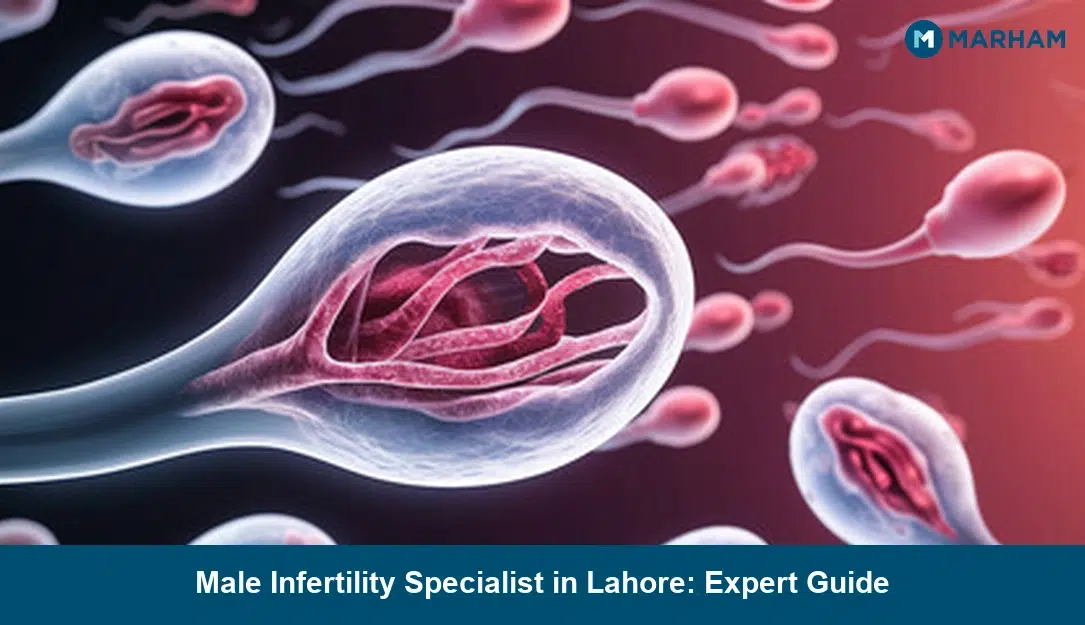

Male infertility in Pakistan carries more stigma than it deserves — and that stigma often delays the very care that could help. Many couples spend years assuming the problem lies with the wife, when research from Pakistan’s own medical institutions shows that male factors contribute to a significant share of conception difficulties. The sooner both partners are evaluated, the sooner a clear path forward emerges.
A study published in the Pakistan Journal of Medical Sciences (2025) found that roughly 22% of couples in Pakistan experience infertility, with male factors identified as the predominant cause in a substantial proportion of those cases. The same research highlighted diabetes, prior infections, and lifestyle habits — including tobacco use, which was reported in nearly 40% of the study’s male participants — as key contributors in Pakistani men.
Understanding what an andrologist does, what tests to expect, and how conditions like low sperm count or varicocele are managed can make the first appointment far less daunting. Dr. Ayesha Nawaz, an andrologist practising in Lahore, works in exactly this space — helping men and couples navigate a problem that is medical, not moral.
مردانہ بانجھ پن: اہم نکات
مردانہ بانجھ پن پاکستان میں ایک عام مسئلہ ہے جو بہت سے جوڑوں کو متاثر کرتا ہے، لیکن اس پر کھل کر بات کم ہی کی جاتی ہے۔ اس کی بنیادی وجوہات میں کم نطفہ، نطفے کی کمزور حرکت، ہارمونل عدم توازن، ورائیکوسیل اور انفیکشن شامل ہیں۔ تشخیص کے لیے سیمن اینالائسس، ہارمون ٹیسٹ اور الٹراساؤنڈ جیسے معائنے کیے جاتے ہیں۔ بہت سے معاملات میں علاج ممکن ہے — چاہے وہ دوائیں ہوں، طرزِ زندگی میں تبدیلی ہو، یا جراحی۔ جتنی جلدی کسی ماہرِ اندرولوجی سے رجوع کیا جائے، اتنا بہتر نتیجہ نکلنے کا امکان ہوتا ہے۔
What Is an Andrologist and What Do They Treat?
An andrologist is a specialist in the male reproductive and urogenital system — the male equivalent of a gynaecologist for women. In Pakistan, andrologists in Lahore diagnose and manage a range of conditions including low sperm count (oligospermia), absent sperm in semen (azoospermia), poor sperm motility, varicocele, hormonal imbalances affecting fertility, erectile dysfunction, and premature ejaculation.
Andrology sits at the intersection of urology, endocrinology, and reproductive medicine. A well-qualified andrologist can order and interpret semen analysis, hormonal blood panels, scrotal ultrasounds, and genetic tests — and then build a treatment plan based on the findings.

Common Causes of Male Infertility in Pakistan
Male infertility rarely has a single cause. According to the American Urological Association (AUA), the most common underlying problems involve sperm production, sperm transport, or both.
In the Pakistani context, research points to several particularly relevant contributors:
- Low sperm count or poor sperm quality — oligospermia and azoospermia together account for a large share of semen abnormalities in Pakistani men, per a meta-analysis published in Austin Journal of Reproductive Medicine and Infertility.
- Varicocele — enlarged veins in the scrotum that raise testicular temperature and impair sperm production; one of the most common and treatable causes globally.
- Infections and STIs — sexually transmitted infections and genital tract infections can damage the reproductive tract or reduce sperm quality.
- Hormonal imbalances — low testosterone or disrupted signalling from the pituitary gland may reduce sperm production.
- Diabetes — a study at Baqai Medical University, Karachi found diabetes present in over 40% of male infertility patients studied, making metabolic health a significant local concern.
- Lifestyle factors — smoking, tobacco (naswar or paan), obesity, and chronic stress all have documented associations with reduced sperm parameters.
- Genetic factors — Pakistan’s high consanguinity rate means genetic causes of infertility are more prevalent here than in many other populations, according to a 2025 systematic review from Pir Mehr Ali Shah Arid Agriculture University, Rawalpindi.
It is worth noting that in roughly half of all male infertility cases worldwide, no specific identifiable cause is found — a category called idiopathic infertility, per the AUA.
Symptoms and Signs That May Indicate a Problem
Most men with fertility difficulties have no obvious symptoms other than the inability to conceive. The condition is generally silent. A semen analysis is the only reliable way to detect sperm problems.
That said, some underlying conditions do produce signs worth noting:

- Pain, swelling, or a lump in the testicles may suggest varicocele, infection, or another structural issue.
- Changes in sexual desire, difficulty with erections, or ejaculatory problems can point to hormonal or neurological factors.
- Decreased facial or body hair alongside enlarged breast tissue may indicate a hormonal imbalance affecting fertility.
None of these symptoms on their own confirm infertility — they are signals to seek professional evaluation, not a self-diagnosis.
How Is Male Infertility Diagnosed?
Diagnosis begins with a detailed history and physical examination, followed by targeted investigations. The standard workup typically includes:
| Test | What It Evaluates |
|---|---|
| Semen analysis | Sperm count, motility, morphology |
| Hormone panel (FSH, LH, testosterone) | Pituitary and testicular function |
| Scrotal ultrasound | Varicocele, structural abnormalities |
| Urine analysis | Retrograde ejaculation, infection |
| Genetic testing | Chromosomal causes (e.g., Klinefelter syndrome) |
A semen analysis is usually the first step. Results are interpreted against WHO reference values; a single abnormal result does not confirm infertility and clinical evaluation by a qualified specialist is always required before any conclusion is drawn.
Treatment Options for Male Infertility
Treatment depends entirely on the underlying cause. There is no universal protocol — plans are individualised based on a man’s medical history, test results, and the couple’s overall fertility picture.
- Lifestyle modification — stopping smoking, reducing tobacco use, managing weight, and controlling diabetes can meaningfully improve sperm parameters in men with modifiable risk factors.
- Hormonal therapy — when a hormonal imbalance is identified, targeted medication may help restore sperm production.
- Antibiotic treatment — infections of the reproductive tract are treated with appropriate antibiotics, which may improve fertility outcomes in some cases.
- Varicocele repair — surgical correction of varicocele is one of the most evidence-backed interventions for male infertility, per the AUA guidelines.
- Assisted reproductive technology (ART) — techniques such as intrauterine insemination (IUI) or intracytoplasmic sperm injection (ICSI) are considered when sperm parameters are severely compromised or other treatments have not been successful.
Andrology specialists in Lahore typically work alongside gynaecologists and embryologists when ART is being considered, ensuring both partners receive coordinated care.
When Should a Pakistani Man See an Andrologist?
The standard clinical recommendation is to seek evaluation after 12 months of regular, unprotected intercourse without conception — or after 6 months if the female partner is over 35. However, earlier evaluation makes sense in certain situations.

A man should consider consulting an andrologist in Pakistan sooner if he has a known history of genital infections, prior testicular surgery or injury, a varicocele diagnosis, diabetes, or significant hormonal symptoms. Early evaluation does not mean something is seriously wrong — it simply means getting answers faster.
Delaying evaluation because of social stigma is one of the most common reasons couples in Pakistan lose months or years of potentially treatable time.
Consult Dr. Ayesha Nawaz on Marham
Dr. Ayesha Nawaz is an andrologist based in Lahore, holding an MBBS from Allama Iqbal Medical College and an MPhil in Molecular Genetics and Microbiology from the University of the Punjab. She brings a background in both clinical andrology and reproductive genetics — a combination that is particularly relevant for couples where genetic factors may be contributing to infertility. She practices at Carex Hospital & Carex Lab in Township, Lahore, and has over 10 years of experience in this field.
Patients who prefer not to travel for an initial discussion can reach her through an online video consultation. Book an appointment with Dr. Ayesha Nawaz through Marham — the platform lists her availability, current consultation fee, and allows direct booking without any additional charges for using the platform.
Frequently Asked Questions
What does an andrologist do in Pakistan?
An andrologist specialises in the male reproductive and urinary system. In Pakistan, andrologists diagnose and manage conditions such as male infertility, low sperm count, varicocele, erectile dysfunction, hormonal imbalances, and related disorders. They are the primary specialists to consult when a couple is having difficulty conceiving and the male partner needs evaluation.
What are the main causes of male infertility in Pakistan?
The most common causes include low or absent sperm count, poor sperm motility or morphology, varicocele, hormonal imbalances, genital tract infections, and lifestyle factors such as smoking and tobacco use. Diabetes is also a notable contributor in Pakistani men, as highlighted by research from Baqai Medical University, Karachi. In a significant proportion of cases, no specific cause is identified.
What tests are done to diagnose male infertility?
Diagnosis typically starts with a semen analysis, which evaluates sperm count, movement, and shape. This is usually followed by a hormone panel measuring testosterone, FSH, and LH. A scrotal ultrasound may be ordered to check for varicocele or structural issues. In some cases, genetic testing is recommended — particularly relevant in Pakistan given higher rates of consanguineous marriages.
Can male infertility be treated?
Many causes of male infertility can be managed or treated. Varicocele repair, hormonal therapy, infection treatment, and lifestyle changes all have evidence supporting their benefit in appropriate cases. When sperm parameters are severely affected, assisted reproductive techniques such as IUI or ICSI may offer a path to conception. The likelihood of a successful outcome depends on the underlying cause and how early treatment begins — which is why early specialist evaluation matters.
When should I book an appointment with a male fertility specialist?
If a couple has been trying to conceive for 12 months without success — or 6 months if the female partner is over 35 — both partners should be evaluated. A man should seek earlier assessment if he has a known history of testicular problems, prior infections, diabetes, or hormonal symptoms. Consulting a qualified andrologist is the right first step; a semen analysis alone cannot give the full picture without clinical interpretation.
Conclusion
Male infertility in Pakistan is a medical condition — one that is far more common, and far more treatable, than the silence around it suggests. A semen analysis and a specialist consultation are the two things most likely to give a couple real answers. Whether the cause turns out to be a varicocele, a hormonal imbalance, a lifestyle factor, or something requiring further investigation, knowing is always better than waiting.