

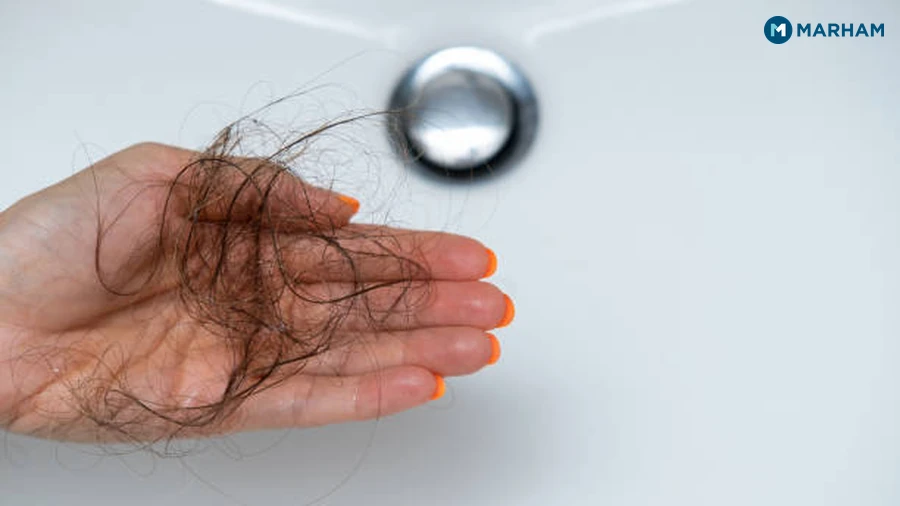
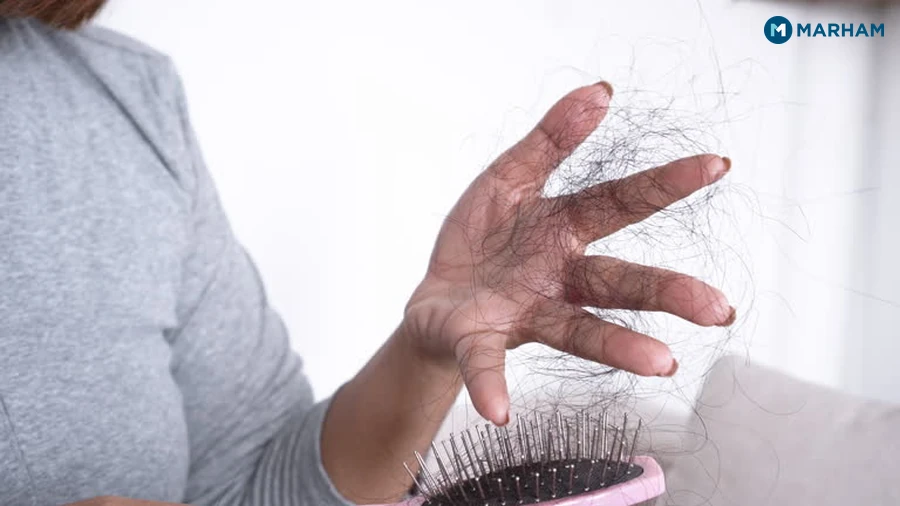
If you have started noticing more hair on your pillow, in your hairbrush, or clogging the bathroom drain, you are searching for the same answer as thousands of people across Pakistan every month, the real causes of hair fall. بالوں کا گرنا (baalon ka girna) is one of the most common concerns dermatologists hear from both men and women, and most causes can be identified once you know what to look for.
Losing more than 100 to 150 strands a day, along with visible thinning at the crown, temples, or hairline, usually points to a specific cause rather than ordinary daily shedding. In this guide we will walk through the real causes of hair fall, how to tell normal shedding from a problem, and when it makes sense to consult a dermatologist online through Marham instead of guessing with random shampoos.
How Much Hair Fall Is Actually Normal?
The average scalp holds around 90,000 to 150,000 hairs, and each one grows for a few years before resting and falling out on its own to make room for a new strand. Because of this natural cycle, losing 50 to 100 hairs a day is considered normal shedding, not hair loss.
Here is how to tell the difference:
- Shedding stays about the same from month to month
- Your ponytail or braid still feels roughly as thick as before
- There is no widening part line or visible scalp showing through
- New hair keeps growing back at the same pace it falls
If any of these have changed for you over the past few months, it is worth reading on to understand what could be causing it.
The Real Causes of Hair Fall
Genetic Hair Thinning (Androgenetic Alopecia)
This is the single most common cause of hair fall worldwide, and it runs in families on either side. In men it usually shows up as a receding hairline and thinning at the crown. In women it tends to show up as gradual thinning along the part line rather than a receding hairline. It develops slowly over years, so early treatment gives the best chance of slowing it down.
Nutritional Deficiencies
Low iron is one of the most common and most reversible causes of hair fall in Pakistani women, especially after heavy periods, pregnancy, or breastfeeding. Vitamin D deficiency is also very common here despite the sunny climate, mostly because of indoor lifestyles and limited sun exposure. Crash dieting and low protein intake can push hair into a shedding phase within weeks.
A simple blood panel checking ferritin, vitamin D, and thyroid function (TSH) can usually confirm or rule this out. Health+ by Marham offers home sample collection for these tests with a 30 percent discount, along with a free doctor call to explain the results, which makes this an easy first step before starting any treatment.
Thyroid and Hormonal Changes
Both an underactive and an overactive thyroid can cause diffuse hair thinning across the whole scalp rather than one area. Women with PCOS often notice hair fall alongside irregular periods or acne. New mothers commonly see a wave of shedding around three to six months after delivery as hormone levels reset, which usually settles on its own.
Stress and Telogen Effluvium
A major illness, high fever, typhoid, dengue, or a stressful life event can push a large batch of hairs into the shedding phase at once. This type of hair fall usually peaks around two to three months after the trigger and gradually improves on its own over the following months once the underlying cause has passed.
Hard Water, Styling, and Product Overuse
Many households across Punjab and parts of Islamabad rely on hard or borewell water, which can leave hair dry, rough, and prone to breakage over time. Frequent heat styling, tight braiding, and repeated chemical treatments add to this and can look like hair fall even when the roots are healthy.
Underlying Scalp Conditions
Dandruff, seborrheic dermatitis, and fungal scalp infections do not directly destroy hair follicles, but an untreated scalp condition can speed up shedding from other causes. Treating the scalp issue often brings a noticeable improvement in hair fall within a few weeks.
| Cause | Common Age Group | Usually Treatable | See a Dermatologist If |
|---|---|---|---|
| Genetic thinning | 20s onward | Yes, with early treatment | Thinning is progressive and visible |
| Iron or vitamin D deficiency | Any age, more common in women | Yes, once diagnosed | Fatigue or pale skin also present |
| Thyroid or PCOS related | 20s to 40s | Yes, with hormone management | Irregular periods, weight changes, or acne alongside hair fall |
| Stress or post illness shedding | Any age | Usually resolves on its own | Shedding continues beyond four to six months |
| Hard water or styling damage | Any age | Yes, with routine changes | Hair feels brittle but scalp looks normal |
Not Sure Which Cause Applies to You?
Dr. Malik Aftab Afzal is a dermatologist with over 15 years of experience treating hair fall, including PRP and laser therapy. Book a consultation to find out exactly what is causing yours.
Or call the Marham helpline: 0311 1222398
When Hair Fall Needs a Dermatologist, Not Just a New Shampoo
Many people try three or four shampoos before ever seeing a doctor, which often delays treatment for a cause that needed a blood test or a prescription from the start.
| Sign | Likely Normal | See a Dermatologist |
|---|---|---|
| Amount shed daily | Roughly the same each week | Clearly increasing over weeks |
| Part line or hairline | No visible change | Widening or receding |
| Bald patches | None | Present, even small ones |
| Duration | A few weeks after a specific trigger | Ongoing beyond three to four months |
| Other symptoms | None | Fatigue, weight change, irregular periods, or scalp itching |
What Happens at a Hair Fall Consultation
A dermatologist starts with a physical examination of the scalp and hair, sometimes using a handheld dermoscope to look closely at the follicles. Based on your history, they may order blood tests such as ferritin, vitamin D, and TSH, and a hormone panel if PCOS is suspected in women.
Once the cause is clear, treatment can range from topical minoxidil and oral medication to PRP (platelet rich plasma) therapy or laser treatment for more stubborn cases. Dr. Malik Aftab Afzal specializes in PRP and laser treatment for hair loss, so a consultation with him can move quickly from diagnosis to an actual treatment plan rather than another round of guesswork.
بالوں کے گرنے کی وجوہات
بالوں کا گرنا ایک عام مسئلہ ہے جو مردوں اور عورتوں دونوں میں پایا جاتا ہے۔ روزانہ پچاس سے سو بال گرنا نارمل سمجھا جاتا ہے کیونکہ یہ بالوں کی قدرتی نشوونما کا حصہ ہے۔ اگر بال معمول سے زیادہ گر رہے ہیں تو اس کی کئی وجوہات ہو سکتی ہیں جن میں موروثی کمزوری، آئرن یا وٹامن ڈی کی کمی، تھائیرائیڈ یا ہارمونل تبدیلیاں، ذہنی دباؤ یا بخار کے بعد کا اثر، سخت پانی اور بار بار اسٹائلنگ، اور خشکی یا اسکیلپ کے انفیکشن شامل ہیں۔
زیادہ تر وجوہات کا علاج ممکن ہے بشرطیکہ صحیح تشخیص ہو جائے۔ اس کے لیے فیریٹن، وٹامن ڈی اور تھائیرائیڈ کا سادہ ٹیسٹ کروانا مفید رہتا ہے۔ اگر بال گرنے کے ساتھ تھکاوٹ، وزن میں تبدیلی، ماہواری کی بے قاعدگی، یا اسکیلپ میں خارش بھی محسوس ہو تو دیر کیے بغیر ڈرمیٹولوجسٹ سے رجوع کریں۔ ڈاکٹر ملک آفتاب افضل پندرہ سال سے زیادہ تجربہ رکھنے والے ماہر ڈرمیٹولوجسٹ ہیں اور بالوں کے علاج کے لیے پی آر پی اور لیزر تھراپی میں مہارت رکھتے ہیں۔ درست تشخیص کے بعد علاج جلد شروع کیا جا سکتا ہے۔
Consult Dr. Malik Aftab Afzal on Marham
Over 15 years of dermatology experience, specializing in PRP and laser treatment for hair fall. Book in person in Jhelum or consult online in minutes.
Helpline: 0311 1222398 (9:00 AM to 11:00 PM)
Frequently Asked Questions
Is it normal to lose hair every day?
Yes, losing 50 to 100 hairs a day is a normal part of the hair growth cycle and is not a cause for concern on its own.
Which vitamin deficiency causes the most hair fall?
Low iron and low vitamin D are the two deficiencies most commonly linked to hair fall in Pakistani women, and both can be confirmed with a simple blood test.
Can hard water cause hair fall?
Hard water can make hair dry and brittle and increase breakage, though it does not usually affect the hair root the way hormonal or nutritional causes do.
How long does stress related hair fall last?
It typically peaks two to three months after the stressful event or illness and improves gradually over the following months once the trigger has passed.
When should I see a dermatologist for hair fall?
See a dermatologist if shedding has clearly increased over several weeks, if you notice a widening part line or bald patches, or if hair fall comes with fatigue, weight changes, or irregular periods.
Final Thoughts
Most causes of hair fall, from iron deficiency to stress related shedding, are identifiable and treatable once you know what to look for. The key is not to wait months trying different shampoos while the underlying cause goes unaddressed. A proper diagnosis, often starting with a simple blood test, is usually all it takes to get a real treatment plan started. If your hair fall has lasted more than a few weeks or come with any other symptoms, book a consultation with Dr. Malik Aftab Afzal to get to the actual cause.