


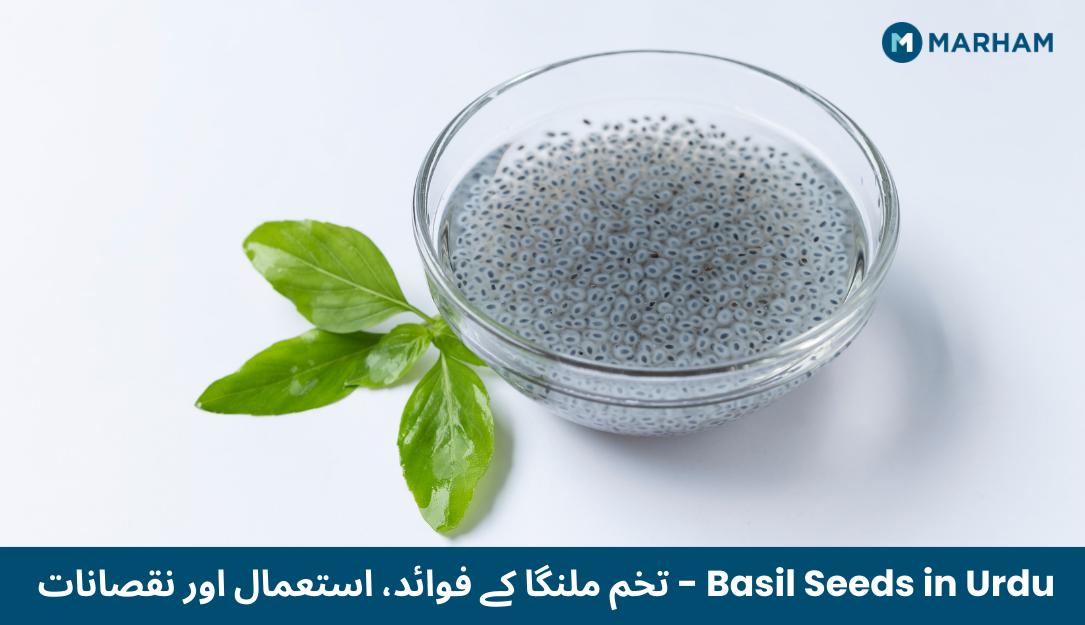
Basil seeds in Urdu are known as تخم ملنگا (Tukh Malanga) in Pakistan. You might also hear them called Sabja seeds, Tukmaria, or تخم ریحان (Tukhm-e-Rehan) depending on the region.
Basil seeds come from the sweet basil plant (Ocimum basilicum) and have been part of South Asian traditional medicine and cooking for centuries. If you’ve ever had falooda, Rooh Afza sharbat, or any refreshing summer drink in Pakistan, you’ve probably seen these seeds floating in your glass.
However, these seeds go far beyond adding texture to your drinks. Research shows they are packed with fiber, omega-3 fatty acids, and essential minerals that support digestive health, weight management, and overall wellbeing.
Basil Seeds Meaning in Urdu
بیزل سیڈز کو اردو میں عام طور پر تخمِ ملنگا یا بعض اوقات سبزہ کے بیج کہا جاتا ہے۔ یہ چھوٹے سیاہ بیج ہوتے ہیں جو پانی میں بھگونے پر پھول جاتے ہیں اور جیلی جیسی شکل اختیار کر لیتے ہیں۔ پاکستان میں انہیں اکثر مشروبات، فالودہ اور دیسی ٹھنڈے ڈرنکس میں استعمال کیا جاتا ہے۔ تخمِ ملنگا فائبر، اینٹی آکسیڈنٹس اور دیگر غذائی اجزاء سے بھرپور ہوتے ہیں، اس لیے انہیں ہاضمہ بہتر بنانے، وزن کنٹرول کرنے اور جسم کو ٹھنڈک پہنچانے کے لیے مفید سمجھا جاتا ہے۔
Apart from that, some regions also use the name بلنگو (Balango) for these seeds. Unlike the basil leaves used in Italian cooking, these seeds are specifically harvested for their nutritional and cooling properties.
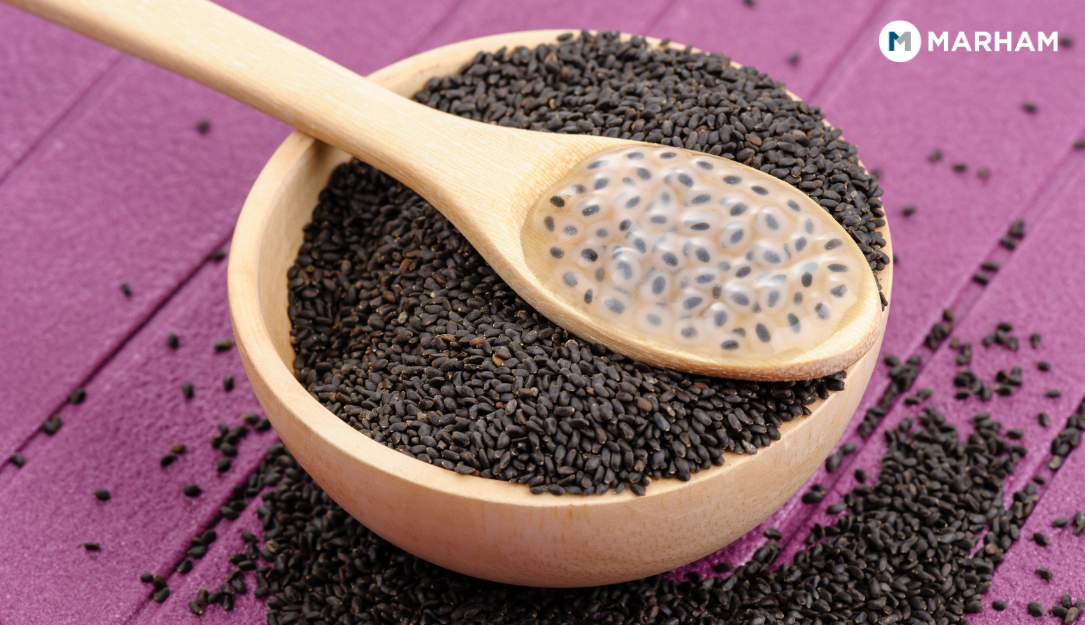
When soaked in water for just 3-5 minutes, these seeds develop a gel-like coating and swell up significantly. This unique property makes them perfect for drinks and desserts.
Basil Seeds Nutritional Facts
When discussing the health advantages of basil seeds in Urdu, most experts highlight their high fiber content and cooling properties. Research published in the journal Foods (PMC) highlights that basil seeds benefits are mainly linked to their impressive nutritional profile. Here’s what one tablespoon (13 grams) of basil seeds provides:
| Nutrient | Amount | % Daily Value |
| Calories | 60 | – |
| Fiber | 7g | 25% |
| Protein | 2g | – |
| Fat | 2.5g | – |
| Calcium | – | 20% |
The high fiber content is perhaps the most significant benefit. Just one tablespoon provides 25% of your daily fiber needs. This fiber helps you feel full longer, supports healthy digestion, and may assist with weight management.
4 Incredible Basil Seeds Benefits | تخمِ ملنگا کے فوائد
Digestive Health Support
The soluble fiber in basil seeds forms a gel-like substance when soaked. This gel helps ease bowel movements and may relieve constipation. Many people in Pakistan traditionally use soaked tukh malanga to soothe stomach discomfort and acidity.
Natural Cooling Effect
One traditional use that generations of Pakistanis swear by is the cooling effect of these seeds. During hot summers, adding soaked basil seeds to nimbu pani, sherbet, or coconut water helps reduce body heat. While this benefit is rooted in traditional medicine rather than clinical trials, millions continue this practice for heat relief.
Blood Sugar Management
A 2016 study found that aqueous extract of basil seeds was effective in lowering blood sugar levels in diabetic rats. No doubt it is promising but human studies are needed to confirm this benefit. These seeds should never replace diabetes medication.
Rich in Omega-3 Fatty Acids
Basil seeds contain alpha-linolenic acid (ALA), a plant-based omega-3 fatty acid. According to research, one tablespoon provides approximately 1,240 mg of ALA, which supports heart health and reduces inflammation.
Benefits of Basil Seeds in Urdu
تخمِ ملنگا صحت کے لیے بے شمار فوائد رکھتے ہیں۔ ان میں فائبر کی مقدار زیادہ ہوتی ہے جو ہاضمہ بہتر بنانے، قبض کم کرنے اور معدے کو صاف رکھنے میں مدد دیتی ہے۔ یہ بیج جسم کو ٹھنڈک پہنچاتے ہیں، اسی لیے گرمیوں میں مشروبات میں استعمال کیے جاتے ہیں۔ ان میں موجود اینٹی آکسیڈنٹس جسم کو نقصان دہ اجزاء سے بچانے اور مدافعتی نظام کو مضبوط بنانے میں مددگار ہوتے ہیں۔
بیسل سیڈز وزن کم کرنے میں بھی معاون ثابت ہو سکتے ہیں کیونکہ یہ معدے میں پھول کر دیر تک پیٹ بھرا ہونے کا احساس دیتے ہیں۔ اس کے علاوہ یہ بلڈ شوگر کو متوازن رکھنے میں مدد دے سکتے ہیں اور جلد کی صحت کے لیے بھی فائدہ مند ہیں۔ باقاعدہ اور مناسب مقدار میں استعمال سے مجموعی صحت بہتر بنانے میں مدد مل سکتی ہے۔
Basil Seeds vs Chia Seeds: Which Is Better?
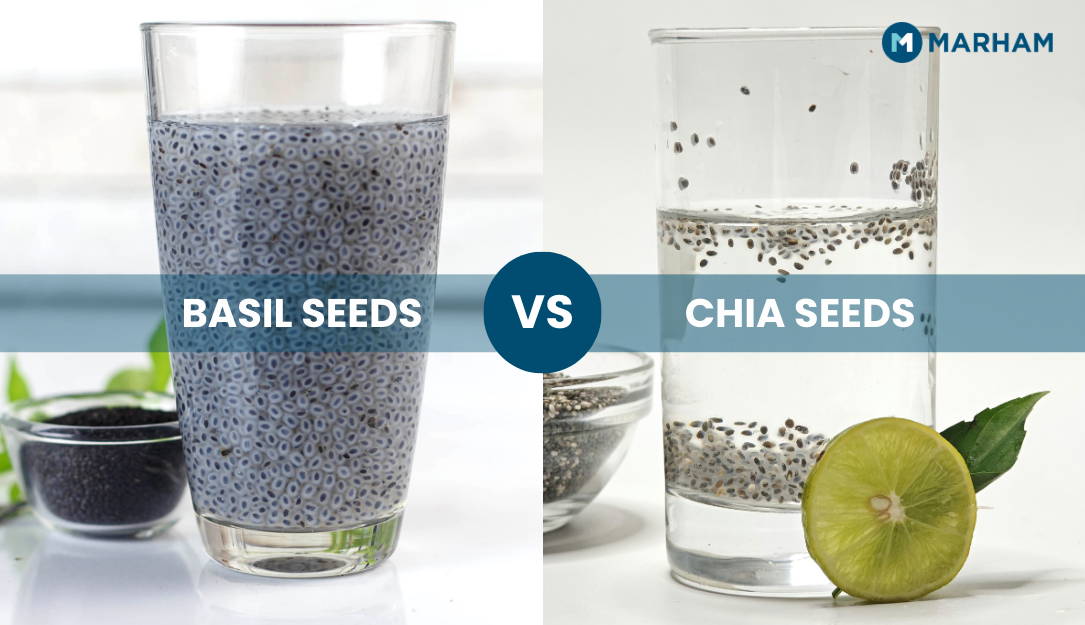
A common confusion exists between basil seeds and chia seeds. Let’s clear this up.
Chia seeds and basil seeds are NOT the same.
They come from completely different plants. Chia seeds come from Salvia hispanica (native to Mexico), while basil seeds come from Ocimum basilicum (native to Asia and Africa).
Here’s how basil seeds vs chia seeds compare:
| Feature | Basil Seeds | Chia Seeds |
| Soaking Time | 3-5 minutes | 20+ minutes |
| Fiber (per 2 tbsp) | ~15 g | ~10 g |
| Omega-3s | Lower | Higher |
| Protein | Complete amino acids lacking | Complete protein |
| Cooling Effect | Yes (traditional) | No |
| Appearance | Completely black, oval | Grey/brown/white, speckled |
The Verdict:
According to registered dietitians quoted in TODAY, basil seeds have the edge in fiber content, while chia seeds contain more omega-3 fatty acids and complete protein. Both seeds provide excellent health benefits and can be used interchangeably in many recipes.
How to Use Basil Seeds | تخمِ ملنگا استعمال کرنے کا طریقہ
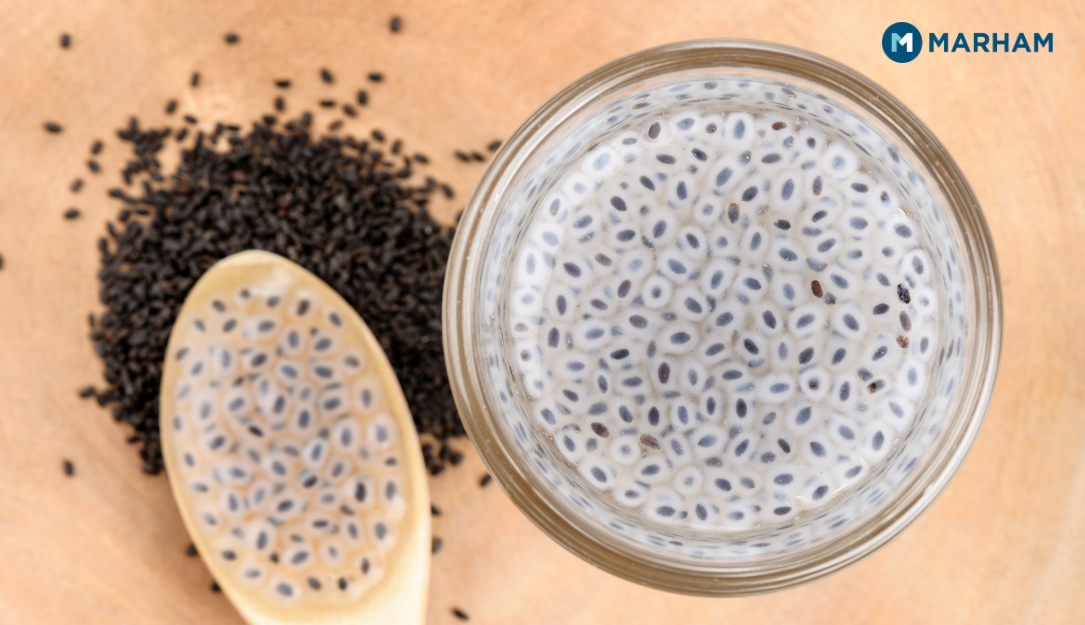
Never eat basil seeds dry. Always soak them first. Here’s the proper method:
- Add one tablespoon of basil seeds to one cup of water.
- Let them soak for 15-30 minutes until they swell and develop a gel coating.
- Add to your favorite drink or recipe.
Popular uses in Pakistan include:
- Adding to falooda.
- Mixing with Rooh Afza.
- Adding to fresh fruit juices.
- Sprinkling on kulfi or ice cream.
- Mixing it into yogurt or lassi.
Basil Seeds Side Effects and Precautions
Although generally safe, basil seeds do have some precautions according to WebMD:
- Eating too many at once may cause digestive problems.
- Start with 1 teaspoon daily and increase gradually.
- High fiber may cause bloating, gas, or stomach discomfort in some people.
- Always soak the seeds before eating.
- Dry seeds can cause choking, especially in children and older adults.
- If you take blood thinners, consult your doctor before use.
- Pregnant and breastfeeding women should talk to their healthcare provider before regular use.
Where to Buy Basil Seeds in Pakistan
Basil seeds are readily available at local pansaar stores, grocery shops, and online platforms like Daraz. Look for clean, debris-free seeds. Store them in an airtight container in a cool, dry place where they can last for years.
Consult a Nutritionist!
Not sure how basil seeds fit into your diet? If you have diabetes, digestive issues, or any medical condition, getting expert guidance can make a real difference.
Connect with a qualified nutritionist through Marham to receive a diet plan tailored to your health needs. Call 0311-1222398 today to book your online or physical consultation today!
Conclusion
Basil seeds in Urdu, known as تخم ملنگا. They are a nutritional powerhouse that has been part of Pakistani food culture for generations. With their high fiber content, cooling properties, and versatility in recipes, they make an excellent addition to a healthy diet.
The benefits of basil seeds in Urdu (تخم ملنگا) are widely discussed in traditional Pakistani households. You can add them to your summer drinks for cooling relief or use them to support digestion. These tiny seeds offer impressive nutrition. Just remember to always soak them before consuming and start with small amounts.
