


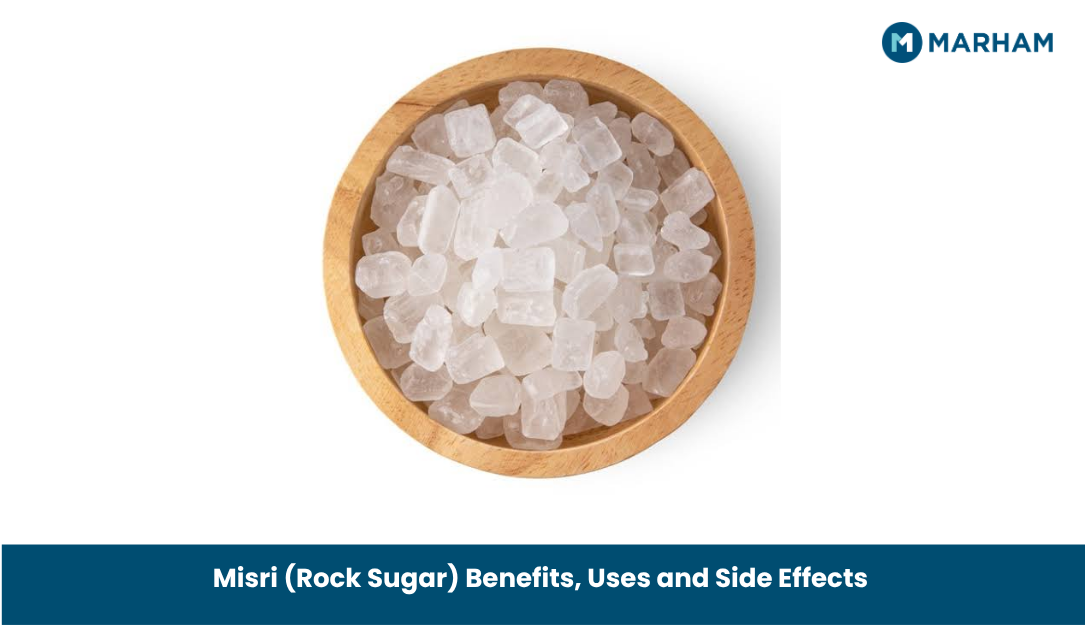
Misri is one of those ingredients that sits quietly in almost every Pakistani kitchen, often tucked next to the saunf in a small steel bowl. Most people know it as the sweet crystal you chew after a heavy meal, but its traditional uses go well beyond a mouth freshener. In Unani and Ayurvedic medicine, misri has been used for centuries to soothe the throat, support digestion, and cool the body during summer heat.
In Pakistani households, a common practice is to mix misri with saunf (fennel seeds) and serve it after lunch or dinner. It’s also dissolved in warm doodh pati for children with a dry cough, or stirred into a glass of chilled water with mint on a hot Karachi afternoon. These habits are not just cultural rituals; many have a practical basis that nutritionists and traditional medicine practitioners still recognise today.
This guide covers what misri actually is, its real and realistic benefits, how to use it in everyday Pakistani cooking and home remedies, who should be careful with it, and when it makes sense to speak to a specialist.
مصری کے فوائد: اہم باتیں
مصری ایک قدرتی کرسٹلائزڈ شکر ہے جو گنے کے رس کو آہستہ آہستہ ٹھنڈا کرنے سے بنتی ہے۔ یہ سفید چینی کی نسبت کم پروسیسڈ ہوتی ہے اور اس میں معدنیات کی معمولی مقدار موجود ہوتی ہے۔ مصری ہاضمے میں مدد کرتی ہے، گلے کی خراش کو سکون دیتی ہے، اور گرمیوں میں جسم کو ٹھنڈک فراہم کرتی ہے۔ تاہم، یہ بنیادی طور پر سوکروز ہی ہے اور ذیابیطس کے مریضوں کو اسے احتیاط سے استعمال کرنا چاہیے۔ روزانہ پانچ سے دس گرام سے زیادہ استعمال نہ کریں اور کسی بھی صحت کی تکلیف میں ڈاکٹر سے رجوع کریں۔
What Is Misri (Rock Sugar)?
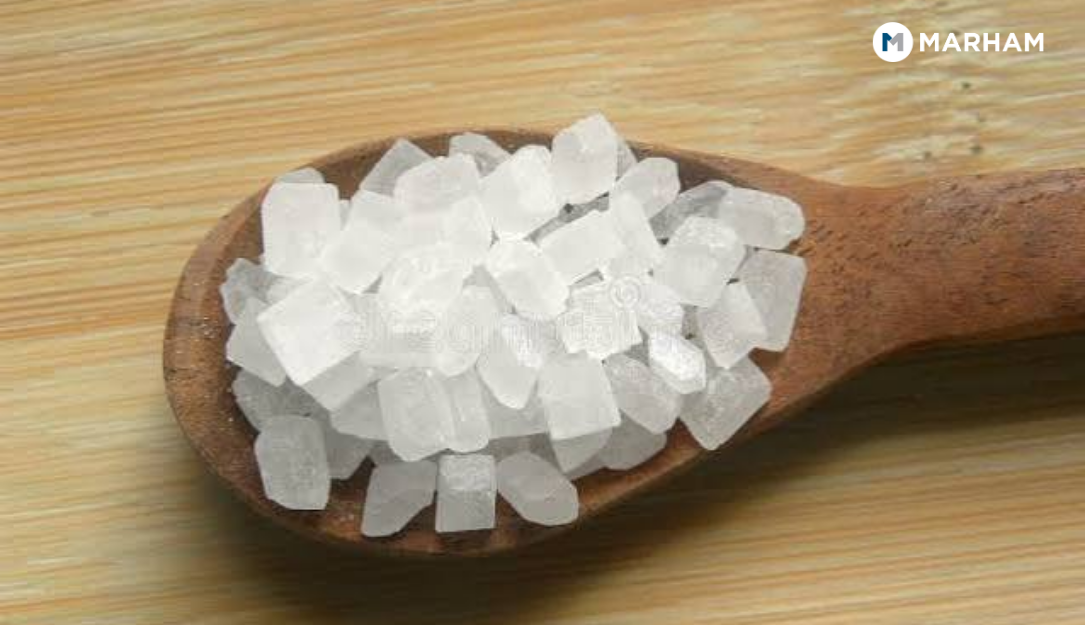
Misri, known in English as rock sugar or crystallized sugar, is made by slowly cooling concentrated sugarcane juice or palm sap until large crystals form naturally. Unlike refined white sugar, which goes through chemical bleaching and multiple processing steps, misri forms through a simple crystallization process that takes several days. The result is a hard, translucent crystal with a mellow, less sharp sweetness than table sugar.
You’ll find two main types in Pakistani bazaars and kiryana stores. Dhaga misri (thread misri) is the traditional kind, where crystals grow around a cotton thread over 15 to 20 days; it’s considered purer and is what Unani practitioners typically recommend. Commercial misri comes in small pre-made lumps and is far more widely available, usually priced between Rs. 150 and Rs. 300 per 250 grams in local markets. Both are primarily sucrose, though dhaga misri retains slightly more trace minerals.
Misri Benefits: What the Evidence Actually Says
Misri carries a long history of use in Unani and traditional South Asian medicine, and several of its practical benefits have a reasonable basis. That said, it’s worth being clear: misri is still a form of sugar. Most of its benefits come from moderate, purposeful use, not from eating large amounts daily.
Soothes a Sore Throat and Dry Cough
This is misri’s best-known use, and it has a sensible mechanism behind it. Dissolving slowly in the mouth, misri coats the throat lining and may reduce irritation from dryness. A traditional Pakistani remedy is to mix half a teaspoon of misri powder with a pinch of kali mirch (black pepper) and a small amount of ghee, then take it at night. The combination is particularly common in Lahore and Rawalpindi during the winter months when dry coughs are frequent. Note that this is a comfort measure for mild symptoms, not a treatment for infection.
Supports Digestion After Meals
Misri with saunf is one of the oldest post-meal rituals in South Asian cuisine, and there’s a practical reason it has lasted. Misri may help stimulate digestive enzymes and reduce mild bloating and acidity. Fennel seeds add their own carminative (gas-relieving) effect, making the combination more effective than either alone. A small amount, around half a teaspoon, eaten with an equal measure of saunf after a heavy biryani or daal chawal, is a reasonable digestive aid.
Provides Quick Energy
Misri is a source of sucrose, which the body breaks down into glucose and fructose for rapid energy. This makes it useful after physical activity, during Ramadan when breaking a fast, or when someone feels faint from low blood sugar. A piece of misri dissolved in water is a traditional first response to lightheadedness in many Pakistani homes. It’s not a substitute for a proper meal, but it works quickly as a short-term energy source.
Cooling Effect in Summer
In Unani medicine, misri is classified as a cooling food, and this is one reason it appears in summer sharbat recipes across Pakistan. Misri dissolved in chilled water with a few mint leaves and a squeeze of lemon makes a simple, refreshing drink that’s easy on the stomach. During Karachi’s peak summer months, when temperatures cross 40°C, this drink is a gentler alternative to heavily sweetened commercial cold drinks.
Acts as a Natural Mouth Freshener
Chewing a small crystal of misri after a meal freshens the breath and leaves a mild, clean taste. Combined with saunf, it also stimulates saliva production, which helps clear food residue from the mouth. This is a practical, low-cost alternative to commercial mouth fresheners sold in Pakistani pharmacies.
Misri vs White Sugar: Key Differences
| Feature | Misri (Rock Sugar) | Refined White Sugar |
|---|---|---|
| Processing | Minimal; slow crystallization | Heavily processed; chemically bleached |
| Taste | Mellow, less sharp | Intensely sweet |
| Trace minerals | Small amounts present | Almost none |
| Calories (per tsp) | ~16 kcal | ~16 kcal |
| Sucrose content | ~95 to 97% | ~99.9% |
| Glycemic impact | Slightly lower (GI ~65) | Higher (GI ~65 to 80) |
| Best use | Home remedies, chai, sharbat | Baking, general cooking |
The honest summary: misri is less processed and may have a marginally lower glycemic impact than refined sugar, but the caloric content is essentially the same. It’s a cleaner choice, not a health food.
How to Use Misri at Home: 5 Practical Ways
- In chai or doodh pati: Replace one teaspoon of white sugar with an equivalent piece of misri. It dissolves more slowly, giving the tea a softer sweetness. This works particularly well in cardamom tea (elaichi chai).
- Saunf misri after meals: Keep a small bowl of misri crystals mixed with saunf on the dining table. Take half a teaspoon of each after lunch or dinner as a digestive aid and mouth freshener.
- Misri and black pepper for cough: Mix half a teaspoon of misri powder with a pinch of kali mirch. Take it before bed during a dry cough. Avoid drinking water immediately after.
- Summer sharbat: Dissolve one tablespoon of misri powder in a glass of chilled water. Add fresh mint leaves and a few drops of lemon juice. This is a lighter, more natural alternative to packaged drinks.
- In kheer or halwa: Substitute misri for refined sugar in small-batch desserts like kheer. The flavour is subtler and the dessert tastes less cloying. Start with 80% of the sugar quantity the recipe calls for, since misri’s sweetness is perceived differently.
Who Should Be Careful with Misri
Misri is still sucrose. Anyone managing diabetes should treat it the same way they would treat white sugar, not as a safe alternative. It raises blood glucose and should only be used with a doctor’s or dietitian’s guidance in that context. People trying to lose weight should also watch their intake; the calories are identical to regular sugar.
Tooth decay is a real concern with any sugar, including misri. Rinsing the mouth after eating it is a simple habit worth keeping. People with sugar addiction patterns should be aware that misri’s pleasant taste can make it easy to overuse.
During winter, Unani medicine traditionally cautions against excessive misri because of its cooling nature. This is a traditional guideline rather than a clinically proven risk, but eating large amounts of any cold-natured food in cold weather is generally not advised.
A safe daily amount for healthy adults is roughly 5 to 10 grams, equivalent to one to two teaspoons. This is in line with general guidance to keep total added sugar intake moderate.
Get Dietary Advice from a Nutritionist on Marham
If you’re managing your weight, blood sugar, or a chronic condition and want to know how much misri (or any sweetener) fits into your diet, a nutritionist can give you a personalised answer based on your actual health profile. General guidelines are a starting point, but they don’t account for individual differences in metabolism, activity level, or existing conditions.
Marham connects you with verified nutritionists in Pakistan through online consultations, so you can get a proper dietary assessment without travelling to a clinic. If your question involves blood sugar management specifically, it may also be worth speaking with an endocrinologist in Pakistan who can review your full picture. You can also read about sugar alternatives for diabetics in Pakistan to understand your broader options.
Frequently Asked Questions
Is misri good for diabetics?
No. Misri is primarily sucrose and raises blood glucose similarly to white sugar. People with diabetes should avoid it or use it only under medical supervision. It is not a safe sugar substitute for diabetic patients.
How much misri should you eat per day?
For healthy adults, 5 to 10 grams per day (roughly one to two teaspoons) is a reasonable amount. Eating more than this regularly adds significant sugar to your diet without meaningful nutritional benefit.
Can you eat misri at night?
Yes, in small amounts. The traditional practice of taking misri with warm milk or as a cough remedy at night is generally safe for healthy adults. Rinse your mouth afterwards to protect your teeth.
Is misri good for weight loss?
Not directly. Misri has the same caloric content as white sugar, around 16 kcal per teaspoon. It does not support fat burning. If you’re managing weight, treat misri the same as any other sweetener and keep portions small.
What are the side effects of misri?
Excessive misri can raise blood sugar, contribute to tooth decay, and add unwanted calories. People with diabetes or insulin resistance are at higher risk from overuse. In Unani tradition, large amounts are also avoided in cold weather due to its cooling properties.
What is misri called in English?
Misri is called rock sugar or crystallized sugar in English. It’s also referred to as candy sugar or khand in some parts of Pakistan and South Asia.
Is misri better than white sugar?
Misri is less processed and may have marginally more trace minerals, but its caloric and sucrose content is nearly identical to white sugar. It’s a cleaner option for specific traditional uses, but not a health food in large quantities.
Conclusion
Misri earns its place in the Pakistani kitchen, not as a superfood, but as a gentle, less-processed sweetener with practical traditional uses. For soothing a dry cough, aiding digestion after a heavy meal, or cooling down in summer, small amounts used purposefully make sense. The key is moderation: misri is still sugar, and the benefits disappear quickly when portions get large. Keep it as a thoughtful kitchen habit rather than a daily indulgence.
