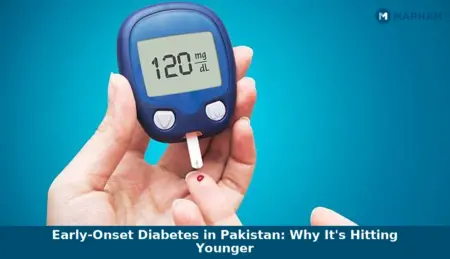

Blood sugar readings can feel confusing when you are staring at a glucometer for the first time. One number before breakfast, another two hours after lunch, and suddenly you are wondering whether what you are seeing is fine or a warning sign worth acting on.
This matters more in Pakistan than in most countries. According to the International Diabetes Federation, Pakistan has one of the highest age-standardised diabetes prevalences in the world, with over 33 million adults living with diabetes as of recent IDF Diabetes Atlas estimates. Millions more are believed to be in the prediabetes range, many without any obvious symptoms. Knowing your normal blood sugar level is the first practical step toward staying on the right side of that line.
This guide gives you the exact ranges for fasting and post-meal blood sugar, how the numbers change by age and during pregnancy, what the HbA1c test adds to the picture, and which readings should prompt a visit to an endocrinologist.
Quick Answer
A normal blood sugar level in Pakistan is below 100 mg/dL fasting and below 140 mg/dL two hours after eating, per ADA guidelines. An HbA1c below 5.7% is considered normal. Fasting readings between 100–125 mg/dL or two-hour readings between 140–199 mg/dL indicate prediabetes. A fasting reading of 126 mg/dL or above, or a two-hour reading of 200 mg/dL or above, may indicate diabetes and requires clinical evaluation.
Blood Sugar Reference Chart: Normal, Prediabetes, and Diabetes
The table below summarises the standard ranges recognised by the American Diabetes Association (ADA) and used in clinical practice across Pakistan.
| Measurement | Normal | Prediabetes | Diabetes (indicative) |
|---|---|---|---|
| Fasting (8+ hours) | Below 100 mg/dL | 100 to 125 mg/dL | 126 mg/dL or above |
| 2 hours after eating | Below 140 mg/dL | 140 to 199 mg/dL | 200 mg/dL or above |
| HbA1c (3-month average) | Below 5.7% | 5.7% to 6.4% | 6.5% or above |
| Random (any time of day) | Below 140 mg/dL | 140 to 199 mg/dL | 200 mg/dL or above with symptoms |
These thresholds are based on ADA guidelines. Diagnosis is never made from a single reading alone. A doctor will consider the full clinical picture before confirming any result.
Fasting Blood Sugar: What Is a Normal Range?
Fasting blood sugar, measured after at least 8 hours without food or drink (other than water), is the baseline reading most doctors look at first. According to the American Diabetes Association, a normal fasting blood glucose level for adults without diabetes is below 100 mg/dL (5.6 mmol/L). Levels from 100 to 125 mg/dL indicate prediabetes, a state where blood sugar is higher than normal but not yet in the diabetic range. A fasting reading of 126 mg/dL or above on two separate occasions may indicate diabetes, though a diagnosis always requires clinical evaluation, not a single home reading.
For Pakistani patients who fast during Ramadan, note that the clinical fasting blood sugar test is done after an overnight fast, not after a longer religious fast. A Ramadan fast lasting 16 to 18 hours can produce a different glucose pattern, and anyone with known diabetes or prediabetes should discuss monitoring adjustments with their doctor before Ramadan begins.
General physicians and endocrinologists in Pakistan recommend testing fasting blood sugar in the morning, before breakfast, for the most consistent and comparable readings.
Post-Meal Blood Sugar: The 1-Hour and 2-Hour Marks
Post-meal blood sugar, also called postprandial glucose, peaks roughly 45 to 60 minutes after you start eating and then falls as insulin does its job. The clinically meaningful reading is taken two hours after the start of a meal, not two hours after you finish eating.
According to the ADA, a postprandial blood sugar reading below 140 mg/dL two hours after eating is considered normal for adults without diabetes. Readings between 140 and 199 mg/dL at the two-hour mark suggest impaired glucose tolerance, which is another way of describing the prediabetes zone. A reading of 200 mg/dL or above on two separate occasions, combined with symptoms, may indicate diabetes and requires a doctor’s assessment.
A Pakistani meal heavy in refined carbohydrates, such as white rice biryani, naan, or a paratha with achaar, will typically push blood sugar higher and faster than a meal with more fibre and protein. That is not a reason to avoid these foods entirely, but it does explain why two people eating the same portion can have noticeably different one-hour readings.
Normal Blood Sugar Levels by Age
Blood sugar targets shift slightly with age. The chart below covers the most common ranges seen in Pakistani clinical practice.
| Age Group | Fasting (mg/dL) | 2 Hours After Eating (mg/dL) |
|---|---|---|
| Children (6–12) | 70 – 100 | Below 140 |
| Adolescents (13–19) | 70 – 100 | Below 140 |
| Adults (20–59) | 70 – 99 | Below 140 |
| Older adults (60+) | 80 – 110 (slightly relaxed) | Below 150 |
| Pregnancy | Below 95 | Below 120 |
For older Pakistani adults, particularly those with heart or kidney conditions, doctors may accept slightly higher fasting readings to reduce the risk of hypoglycaemia (low blood sugar). This is a clinical judgment call and should be discussed with a treating specialist rather than assumed.
Blood Sugar During Pregnancy (Gestational Diabetes)
Gestational diabetes is high blood sugar that develops during pregnancy in women who did not have diabetes before. It is one of the more common pregnancy complications in Pakistan and is usually screened for between weeks 24 and 28 through an oral glucose tolerance test.
Target ranges during pregnancy are tighter than for non-pregnant adults:
- Fasting: below 95 mg/dL
- One hour after a meal: below 140 mg/dL
- Two hours after a meal: below 120 mg/dL
Gestational diabetes often has no obvious symptoms, which is why routine screening is important. Left uncontrolled it raises the risk of a larger-than-average baby, delivery complications, and future type 2 diabetes for the mother. If your reading is elevated, your gynecologist may co-manage your care with an endocrinologist.
Blood Sugar Targets for People Already Diagnosed with Diabetes
People managing diabetes have different targets from healthy adults, and the goal is tighter control rather than waiting for readings to creep toward the diabetic threshold.
The US Centers for Disease Control and Prevention (CDC) recommends the following targets for most adults with diabetes: 80 to 130 mg/dL before a meal, and below 180 mg/dL two hours after the start of a meal. These are general guidelines. An endocrinologist may set slightly different individual targets depending on age, how long someone has had diabetes, kidney function, and whether hypoglycaemia (low blood sugar, below 70 mg/dL) is a concern.
For Pakistani patients taking metformin or insulin, pre-meal and post-meal targets should always be discussed directly with the prescribing doctor. Never adjust medication doses based on a target range read in an article.
What Is HbA1c and Why Does It Matter?
HbA1c (glycated haemoglobin) is a blood test that reflects average blood sugar control over approximately three months. It works because glucose in the bloodstream gradually attaches to red blood cells, and the percentage of those cells that have glucose attached gives a reliable average.
An HbA1c below 5.7% is normal. Between 5.7% and 6.4% indicates prediabetes. At 6.5% or above on two separate tests, a diagnosis of diabetes is typically confirmed, per ADA criteria. For people already managing diabetes, most guidelines recommend keeping HbA1c below 7%, though individual targets vary.
HbA1c testing is widely available at pathology labs in Pakistan. Prices typically range from Rs 800 to Rs 2,000 depending on the lab and city, though rates change over time. For current rates, see our detailed guide on HbA1c test price in Pakistan. A fasting blood sugar test is generally cheaper, ranging from Rs 150 to Rs 500 at most labs.
Not Sure If Your Reading Is Normal?
Speak with a PMC verified endocrinologist online on Marham. Review your test results and get a clear plan in one short consultation.
Consult an Endocrinologist Online
From Rs 500 · No extra booking charges · Helpline: 0311 1222398
Symptoms of High and Low Blood Sugar
Blood sugar that is too high (hyperglycaemia) or too low (hypoglycaemia) both produce distinct symptoms. Recognising them early can prevent complications.
Symptoms of High Blood Sugar (Hyperglycaemia)
- Frequent urination, especially at night
- Unusual thirst that does not go away with drinking water
- Persistent fatigue or drowsiness after meals
- Blurred vision
- Slow-healing cuts, wounds, or infections
- Unexplained weight loss
- Dry mouth and dry skin
- Recurring fungal or urinary tract infections
Symptoms of Low Blood Sugar (Hypoglycaemia, below 70 mg/dL)
- Shakiness or trembling hands
- Sweating, even in cool weather
- Sudden hunger
- Rapid heartbeat
- Irritability, confusion, or difficulty concentrating
- Dizziness or light-headedness
- Headache
- In severe cases, loss of consciousness
Low blood sugar is more common in people already on diabetes medication, particularly insulin or sulfonylureas. If you experience hypoglycaemia symptoms, quickly consume 15 grams of fast-acting carbohydrate (three glucose tablets, half a cup of fruit juice, or a tablespoon of sugar) and re-check your reading after 15 minutes.
Factors That Affect Your Reading in Pakistan
Several everyday habits common in Pakistan can shift blood sugar readings in ways that make a single number misleading.
- Chai with sugar: A cup of Pakistani chai made with full-fat milk and two teaspoons of sugar adds roughly 25 to 30 grams of carbohydrates. Drinking it immediately before a fasting test invalidates the result.
- Late-night meals: Eating a heavy dinner at 11 pm and testing at 7 am may not represent a true 8-hour fast if digestion extended past midnight.
- Physical activity: A 20-minute walk after a meal can meaningfully lower the two-hour postprandial reading. This is one of the most practical tools available without any medication.
- Stress and illness: Both raise cortisol, which pushes blood sugar up temporarily. A reading taken during a fever or an acutely stressful period may not reflect your baseline.
- Steroid medications: Commonly prescribed in Pakistan for allergies, skin conditions, and respiratory illness, corticosteroids can raise blood sugar significantly, sometimes pushing a non-diabetic reading into the prediabetes range while the course lasts.
- Ramadan fasting: Long religious fasts, especially in the summer months, can produce readings that differ from a standard 8-hour clinical fast. Discuss testing timing with your doctor if you fast.
How to Lower Blood Sugar Naturally in Pakistan
If your fasting reading is in the prediabetes range (100–125 mg/dL), lifestyle changes can bring it back into the normal range for many people. These changes are also useful for anyone with a family history of diabetes.
Diet changes that work in a Pakistani context
- Swap white rice for brown rice in biryani, pulao, and khichdi at least half the time. Brown rice releases sugar more slowly.
- Choose whole-wheat atta over maida for roti, paratha, and puri. Refined flour spikes blood sugar sharply.
- Add protein to every meal: chicken, mutton, fish, daal, or eggs. Protein blunts the post-meal glucose spike.
- Eat vegetables first: starting your meal with salad or sabzi before rice or roti can lower the post-meal peak.
- Cut sugar in chai: even reducing from two teaspoons to one adds up over the day.
- Limit sugary drinks: Rooh Afza, cold drinks, packed juice, and lassi with sugar all cause rapid spikes.
Activity changes that work
- Walk 20–30 minutes after your largest meal: the single most effective simple intervention for lowering post-meal blood sugar.
- Aim for 150 minutes of moderate activity per week (30 minutes, 5 days a week).
- Add resistance training such as bodyweight exercises twice a week. Muscle mass improves insulin sensitivity.
- Reduce sitting time: even short standing breaks every hour help.
For personalised diet and activity advice, consulting a nutritionist alongside your endocrinologist gives you the strongest chance of moving out of the prediabetes range.
How to Test Blood Sugar at Home
Home glucometers are widely available in Pakistan for Rs 1,500 to Rs 5,000, and strips typically cost Rs 800 to Rs 1,500 per box of 25 or 50. Testing at home is useful for anyone diagnosed with diabetes, or anyone with borderline readings who wants to track patterns before their next doctor visit. For a lab-based test that gives a three-month average instead of a single-point reading, see our guide to HbA1c test prices in Pakistan.
When to test
- Fasting: first thing in the morning, before breakfast
- Postprandial: two hours after starting a main meal
- Bedtime: useful for people on insulin
- Anytime you feel symptoms of high or low blood sugar
How to test correctly
- Wash your hands with soap and warm water. Dry thoroughly. Do not use alcohol wipes before testing — residue can affect the reading.
- Insert a fresh strip into the glucometer.
- Prick the side of your fingertip (less painful than the pad).
- Gently squeeze until a small drop forms. Do not squeeze hard — it dilutes the sample with tissue fluid.
- Touch the strip to the drop and wait for the reading.
- Log the reading with date, time, and whether it was fasting or post-meal.
Common mistakes that give false readings
- Testing without washing hands (residue from fruit or food can raise readings)
- Using expired strips
- Storing strips in a hot or humid place
- Squeezing the finger too hard
- Not calibrating the meter with a control solution occasionally
When to See a Doctor About Your Blood Sugar
A single reading above the normal range is not a diagnosis. Two or more fasting readings at or above 126 mg/dL, or two-hour postprandial readings consistently at or above 200 mg/dL, should prompt a formal evaluation.
Symptoms that accompany high blood sugar and deserve prompt attention include frequent urination, unusual thirst, blurred vision, unexplained weight loss, and slow-healing cuts or wounds.
Prediabetes, in particular, is often missed in Pakistan because it produces no obvious symptoms. Catching it early gives a real window to bring levels back toward normal through diet and activity changes, before progression to diabetes becomes likely. If you have any of the following, book an appointment with an endocrinologist:
- Fasting readings consistently at 100 mg/dL or above
- Two-hour post-meal readings consistently above 140 mg/dL
- HbA1c of 5.7% or above (see HbA1c test cost in Pakistan if you haven’t tested yet)
- Family history of type 2 diabetes (parent or sibling)
- Any hyperglycaemia or hypoglycaemia symptoms
- Pregnancy with elevated readings
Blood Sugar (Fasting) Test at Marham Lab: Rs 350
Home sample collection in Lahore.
خون میں شکر کی عام سطح پاکستان میں
خون میں شکر کی عام سطح کو سمجھنا ہر پاکستانی کے لیے ضروری ہے۔ روزے کی حالت میں (کم از کم آٹھ گھنٹے بھوکے رہنے کے بعد) خون میں شکر کی عام سطح ستر سے ننانوے mg/dL کے درمیان ہوتی ہے۔ کھانے کے دو گھنٹے بعد یہ سطح ایک سو چالیس mg/dL سے کم رہنی چاہیے۔ اگر روزے کی حالت میں یہ سطح ایک سو سے ایک سو پچیس mg/dL کے درمیان ہو تو اسے پری ڈائیبیٹیز کہا جاتا ہے، اور ایک سو چھبیس mg/dL یا اس سے زیادہ ہو تو ذیابیطس کی علامت ہو سکتی ہے، جس کی تصدیق کے لیے ڈاکٹر سے رجوع کرنا ضروری ہے۔
HbA1c ٹیسٹ پچھلے تین مہینوں کی اوسط شکر کی سطح بتاتا ہے اور ذیابیطس کی نگرانی کا ایک اہم ذریعہ ہے۔ اگر آپ کی رپورٹ نارمل رینج سے باہر ہے تو مرہم پر تصدیق شدہ اینڈوکرینولوجسٹ سے آن لائن مشورہ صرف پانچ سو روپے سے کریں۔ کوئی اضافی بکنگ فیس نہیں۔
Sugar ki Normal Range
Sugar ki normal range kya hoti hai Pakistan mein?
Khali pait (fasting) sugar 70 se 99 mg/dL normal hoti hai. Khaane ke 2 ghantay baad 140 mg/dL se kam honi chahiye. Agar fasting sugar 100 se 125 mg/dL ke darmiyan aa rahi hai to yeh prediabetes ka signal hai — endocrinologist se milna zaroori hai.
Khali pait sugar kitni honi chahiye?
Adult ke liye khali pait sugar 70 se 99 mg/dL ke beech honi chahiye. 100 se 125 mg/dL prediabetes hai. 126 mg/dL ya us se zyada 2 dafa aaye to diabetes ka test aur doctor se consultation zaroori hai. Bache ke liye range thodi zyada relaxed hoti hai.
Khaane ke baad sugar barhna normal hai ya nahi?
Ji haan, khaane ke baad sugar barhna bilkul normal hai. Sugar 45 se 60 minute mein peak karti hai aur phir insulin ke through wapas kam ho jati hai. Do ghantay ke baad reading 140 mg/dL se kam honi chahiye. Agar consistently 140 se zyada aa rahi hai to endocrinologist se mashwara karain.
Ghar par sugar test kaise karain?
Glucometer aur strips medical stores par milte hain (Rs 1,500 se 5,000 tak). Haath dho kar sukhaein, strip meter mein daalein, ungli ki side par prick karein, aur reading note karain. Fasting subha khali pait aur post-meal 2 ghantay baad meal ke start hone se — yeh do sab se important timings hain.
HbA1c test ka kya matlab hai aur kitne ka hota hai?
HbA1c test aap ki pichle 3 mahine ki average sugar batata hai — daily fluctuations se zyada reliable hai. Pakistan mein Rs 800 se Rs 2,000 tak hota hai. Puri details aur city-wise rate ke liye humari HbA1c test price guide dekhein.
Frequently Asked Questions
What is a normal blood sugar level 1 hour after eating?
Blood sugar typically peaks around 45 to 60 minutes after you start eating. For adults without diabetes, levels at the one-hour mark generally stay below 180 mg/dL, though no universal clinical threshold exists for the one-hour reading the way there is for the two-hour mark.
What is the prediabetes blood sugar range in Pakistan?
Prediabetes is defined as a fasting blood sugar of 100 to 125 mg/dL, or a two-hour postprandial reading of 140 to 199 mg/dL, per ADA criteria. Millions of Pakistanis are estimated to fall in this range, many without any symptoms, which is why routine screening matters.
Can blood sugar return to normal after being high?
For people in the prediabetes range, yes. Consistent dietary changes, regular physical activity, and weight management can bring fasting and post-meal readings back within the normal range. For established diabetes, blood sugar can be well controlled but the condition is managed, not reversed, through lifestyle and medication.
Is it normal for blood sugar to spike after a heavy Pakistani meal?
A temporary rise after eating is normal and expected. A large meal high in refined carbohydrates, such as biryani or several rotis, will cause a sharper spike than a meal with more fibre and protein. The key question is whether the reading returns below 140 mg/dL within two hours. If it consistently doesn’t, that pattern deserves medical attention.
What is the normal blood sugar level for pregnant women?
During pregnancy, target blood sugar ranges are tighter: below 95 mg/dL fasting, below 140 mg/dL one hour after eating, and below 120 mg/dL two hours after eating. Gestational diabetes is usually screened between weeks 24 and 28 of pregnancy. Elevated readings should be discussed with your gynecologist and possibly an endocrinologist.
What is a dangerous blood sugar level?
A fasting reading above 250 mg/dL or a random reading above 300 mg/dL usually requires urgent medical attention, particularly if accompanied by nausea, vomiting, confusion, or heavy breathing. Very low readings below 54 mg/dL can also be dangerous and require immediate sugar intake and medical follow-up.
When should I see a doctor about my blood sugar readings?
See a doctor if your fasting reading is 100 mg/dL or above on more than one occasion, or if your two-hour post-meal reading is consistently above 140 mg/dL. You should also seek evaluation if you have symptoms like frequent urination, persistent thirst, or unexplained fatigue, regardless of what your home glucometer shows.
Conclusion
A normal blood sugar level sits below 100 mg/dL when fasting and below 140 mg/dL two hours after eating, per ADA guidelines. HbA1c below 5.7% is the equivalent three-month benchmark. Readings in the prediabetes range are common in Pakistan and often silent, which makes routine testing a practical habit — particularly for adults with a family history of diabetes, a high-carbohydrate diet, or a sedentary lifestyle.
A single abnormal reading is not a diagnosis. A pattern of elevated numbers is worth taking seriously with a qualified clinician. If your fasting sugar is borderline, or your HbA1c is above 5.7%, an online consultation with an endocrinologist on Marham is the fastest way to get a clear plan for what to do next.
This article is for general information and awareness. Ranges are based on ADA and CDC guidelines valid as of 2026 and are not a substitute for professional medical advice. Always consult a qualified doctor about your health. Medically reviewed by Marham Medical Team. Updated July 2026.