
چھاتی کا کینسر (breast cancer) پاکستان میں خواتین کو سب سے زیادہ متاثر کرنے والا کینسر ہے۔ بہت سی خواتین اس کی ابتدائی علامات کو نظرانداز کر دیتی ہیں کیونکہ وہ درد کے بغیر ظاہر ہوتی ہیں۔ چھاتی کے کینسر کے بارے میں مزید جانیں
According to the WHO Pakistan office, roughly 90,000 new breast cancer cases are diagnosed in Pakistan every year, and around 40,000 women lose their lives annually — largely because the disease is caught too late. Pakistan has the highest breast cancer rate in Asia, with 1 in 9 women likely to develop it in her lifetime. That number is a signal, not a sentence — because catching it early changes everything.
The sections below walk through the warning signs in both Urdu and English, explain the key risk factors for Pakistani women, and describe what a simple monthly self-check involves.
چھاتی کے کینسر کی علامات — اہم نکات
چھاتی کا کینسر پاکستان میں خواتین میں سب سے عام کینسر ہے اور ہر 9 میں سے 1 خاتون کو اپنی زندگی میں اس کا خطرہ ہوتا ہے۔ ابتدائی علامات میں چھاتی میں گلٹی، نپل سے رطوبت، جلد کا سکڑنا یا سرخ ہونا، اور بغل میں سوجن شامل ہیں۔ ماہانہ خود معائنہ (breast self-exam) اور 40 سال کی عمر کے بعد میموگرافی بروقت تشخیص کے لیے ضروری ہیں۔ علامات کو نظرانداز کرنا خطرناک ہو سکتا ہے کیونکہ پاکستان میں تقریباً 69 فیصد خواتین کینسر کی تیسری یا چوتھی اسٹیج پر تشخیص کرواتی ہیں۔ بروقت ڈاکٹر سے رجوع کریں اور صحت کو ترجیح دیں۔
Breast Cancer Symptoms in Urdu: 8 Warning Signs
Breast cancer symptoms (چھاتی کے کینسر کی علامات) are often painless in the early stages, which is why monthly self-checks matter so much. Here are the eight signs every Pakistani woman should know:
- چھاتی میں گلٹی (Lump in the breast) — A hard, irregularly shaped lump that does not move easily is the most recognised warning sign. Most lumps are benign, but any new lump deserves a medical check.
- چھاتی کے سائز یا شکل میں تبدیلی (Change in size or shape) — One breast becoming noticeably larger or differently shaped than the other.
- جلد کا سکڑنا یا نارنجی جیسی ساخت (Skin dimpling or orange-peel texture) — The skin over the breast may pucker, dimple, or develop a texture resembling the skin of an orange.
- نپل کا اندر دھنسنا (Nipple inversion) — A nipple that turns inward when it was not like that before.
- نپل سے رطوبت (Nipple discharge) — Any fluid — clear, bloody, or milky — from the nipple outside of breastfeeding.
- چھاتی یا نپل کی جلد کا سرخ ہونا (Redness or scaling of skin) — Persistent redness, flaking, or thickening of the skin on the breast or nipple area.
- بغل میں سوجن (Swelling in the armpit) — A lump or swelling near the armpit or collarbone, where lymph nodes sit.
- چھاتی میں مسلسل درد (Persistent breast pain) — Pain unrelated to the menstrual cycle that does not go away.
A study published in the Asian Pacific Journal of Cancer Prevention (2023) found that only 37.4% of Pakistani women surveyed had adequate knowledge of breast cancer — and only 53% recognised a breast lump as a warning sign. Knowing all eight signs, not just the lump, is what makes the difference.
Causes of Breast Cancer in Pakistani Women
No single cause triggers breast cancer. Several risk factors together raise the likelihood, and Pakistani women face some specific patterns worth understanding.
Genetic factors play a significant role. Women whose mother, sister, or daughter has had breast or ovarian cancer carry a higher risk. Mutations in the BRCA1 and BRCA2 genes are particularly relevant in South Asian families.
Hormonal exposure is another driver. Long-term use of combined hormone replacement therapy, early onset of menstruation (before age 12), or late menopause (after age 50) all increase lifetime estrogen exposure, which can stimulate breast cell growth.
Lifestyle factors common in Pakistani urban settings also matter. A diet heavy in processed foods, physical inactivity, and obesity — especially after menopause — are all linked to higher risk, per WHO data. Women who never breastfeed, or who have their first child after age 30, also face a modestly elevated risk.
Delayed diagnosis compounds every other factor. Per WHO Pakistan data, roughly 40,000 women die of breast cancer annually in Pakistan — most at an advanced stage — because cultural hesitation and limited awareness delay the first doctor visit.
How to Do a Breast Self-Exam at Home
A breast self-exam (خود معائنہ) is a simple monthly check that takes about five minutes. The best time is a few days after a menstrual period ends, when the breasts are least tender.
- Stand in front of a mirror with your arms at your sides. Look for any visible changes in shape, size, or skin texture.
- Raise both arms overhead and check again for the same changes.
- Press your hands on your hips and flex your chest muscles. Look for any dimpling or puckering.
- Lie down flat and place your right hand behind your head. Use the pads of the three middle fingers of your left hand to feel your right breast.
- Move in small circles from the outer edge toward the nipple, covering the entire breast including the armpit area.
- Gently squeeze the nipple to check for any discharge.
- Repeat on the other side. If you notice anything unusual — a new lump, a skin change, or any discharge — note it and get it checked promptly.
A study from Mayo Hospital, Lahore found that 87.7% of women surveyed had never performed a breast self-exam. Monthly self-checks are a simple habit that can shift a diagnosis from Stage 3 to Stage 1.
Breast Cancer vs Benign Breast Lump: Key Differences
Not every lump is cancer. Understanding the difference helps Pakistani women act calmly rather than in panic.
| Feature | Cancerous Lump | Benign Lump (Fibroadenoma / Cyst) |
|---|---|---|
| Texture | Hard, irregular edges | Smooth, rubbery |
| Mobility | Feels fixed, does not move | Moves easily under the skin |
| Pain | Usually painless at first | Often tender, especially before periods |
| Skin changes | May cause dimpling or redness | Skin looks normal |
| Nipple changes | Possible discharge or inversion | Rare |
| Growth speed | Gradual but persistent | May fluctuate with menstrual cycle |
This table is a guide, not a diagnosis. Any new lump — regardless of how it feels — should be evaluated by a qualified doctor.
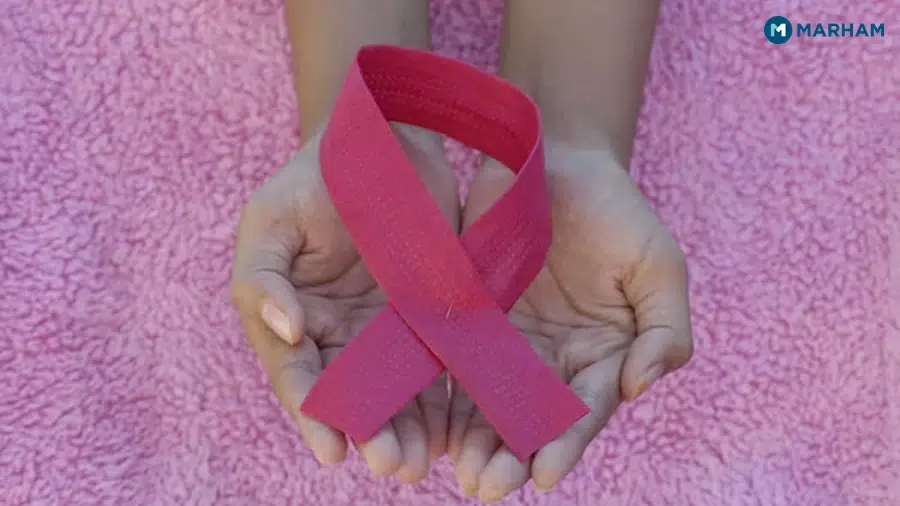
When to See a Doctor for Breast Cancer Symptoms
Any symptom that persists for more than two to three weeks warrants a medical visit. Do not wait for pain — early breast cancer is usually painless. Specific triggers for an urgent appointment include a new lump anywhere in the breast or armpit, nipple discharge that appears without squeezing, visible skin changes like dimpling or persistent redness, and any sudden change in the shape of one breast.
Oncologists and gynecologists in Pakistan recommend that women aged 40 and above have a mammogram every one to two years. Women with a first-degree relative who had breast cancer may need to start screening earlier — sometimes from age 30. Consulting an oncologist in Pakistan is the right first step if any of the above signs appear.
Consult a Specialist on Marham
Getting an expert opinion on a breast concern should not require a long wait or an expensive hospital visit. Marham connects Pakistani women with verified oncologists and gynecologists across Lahore, Karachi, Islamabad, and other cities — through both in-person and online consultations.
If you have noticed any of the warning signs described above, or simply want to understand your personal risk, speaking with a specialist is the right move. You can find a gynecologist in Pakistan on Marham and book an appointment at a time that suits you — without the stigma or the delay that too often comes between Pakistani women and the care they need.
Frequently Asked Questions
What are the early signs of breast cancer in Urdu?
ابتدائی علامات میں چھاتی میں نئی گلٹی، نپل کا اندر دھنسنا، نپل سے رطوبت، اور جلد کا سکڑنا شامل ہیں۔ In English: the earliest signs are a new lump in the breast or armpit, a change in breast shape, nipple discharge, and skin dimpling. These signs are often painless, which is why monthly self-checks are so important.
What causes breast cancer in Pakistani women?
Breast cancer in Pakistani women is linked to a combination of genetic factors (BRCA1/BRCA2 mutations, family history), hormonal influences (early periods, late menopause, hormone therapy), and lifestyle factors such as obesity and physical inactivity. Delayed diagnosis due to cultural barriers and low awareness also worsens outcomes significantly in Pakistan.
How do I check for breast cancer at home?
A monthly breast self-exam is the most accessible tool. Stand before a mirror and look for shape or skin changes, then lie down and use your fingertips to feel for lumps across the entire breast and armpit. Any new lump, skin change, or nipple discharge should be reported to a doctor promptly. The best time to do this check is a few days after your period ends.
Is breast cancer curable in Pakistan?
Yes — breast cancer detected at Stage 1 or 2 has a very high survival rate, with studies showing over 90% of women surviving five years or more when diagnosed early. The challenge in Pakistan is that roughly 69% of women are diagnosed at Stage 3 or 4. Earlier detection through regular self-exams and mammography can dramatically improve survival outcomes.
When should I see a doctor for breast cancer symptoms?
See a doctor if you notice a new lump in the breast or armpit, any nipple discharge, skin dimpling, persistent breast pain unrelated to your period, or a change in breast shape — especially if the change lasts more than two to three weeks. Women aged 40 and above should also discuss routine mammography screening with a specialist, even without symptoms.
Conclusion
Breast cancer symptoms in Urdu and English are the same — a new lump, skin changes, nipple discharge, or armpit swelling — and recognising them early is what separates a manageable diagnosis from a difficult one. Pakistani women face the highest breast cancer burden in Asia, but the disease responds well to treatment when caught in its early stages. A monthly self-check, awareness of the risk factors, and a timely visit to a specialist are three habits that genuinely save lives.